
Description
ACER PALMATUM ‘SPRING DELIGHT’
What if you could have a Japanese maple that actually performs beautifully in Connecticut’s unpredictable spring weather? Most gardeners think they have to choose between delicate foliage that gets zapped by late frosts or boring, hardy alternatives. Spring Delight laughs at that false choice. This cultivar combines the ethereal beauty you crave with the resilience you need to actually succeed in New England. It’s a game-changer for anyone who’s watched their precious Japanese maple struggles through our temperamental springs only to finally thrive in July.
What it looks like
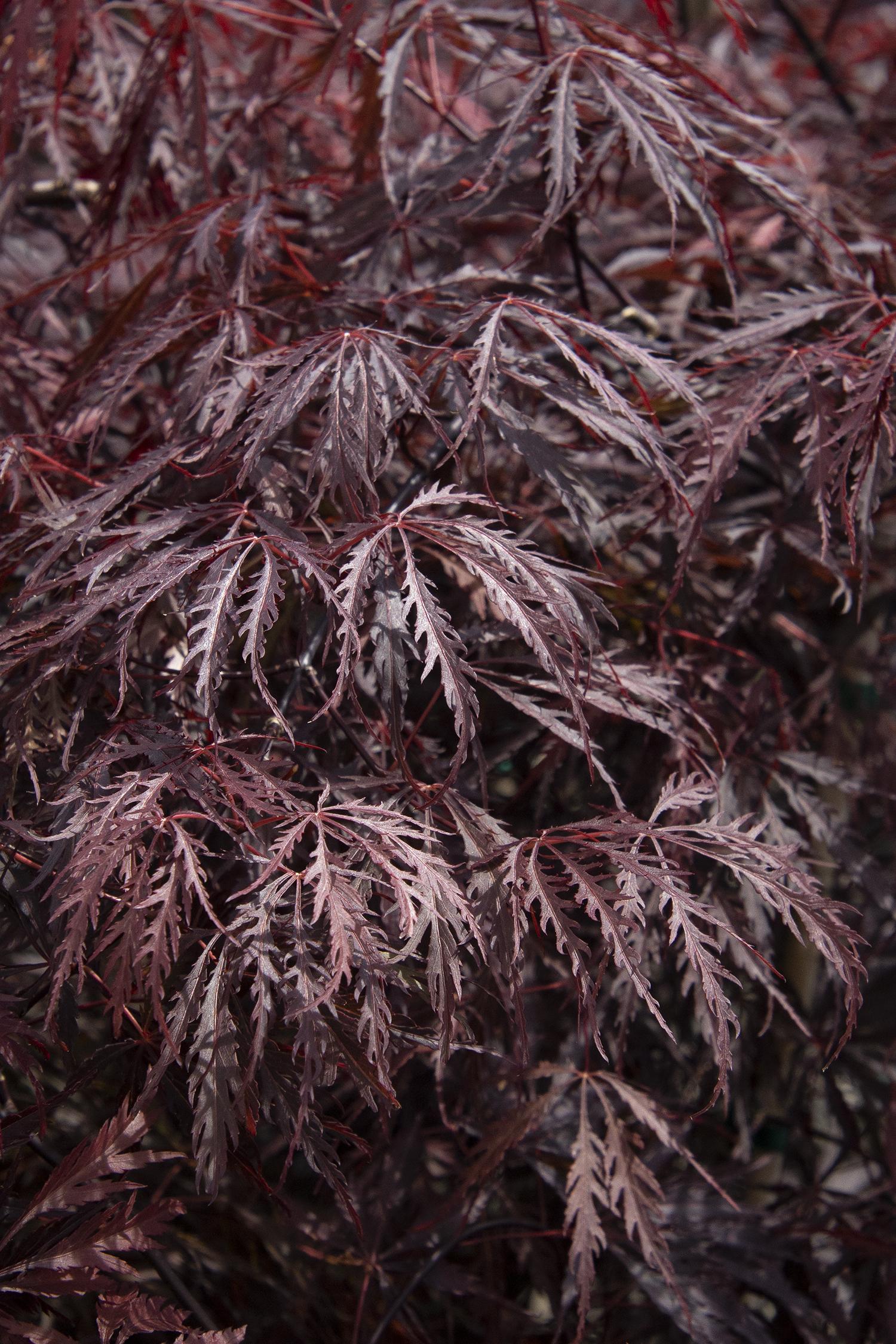
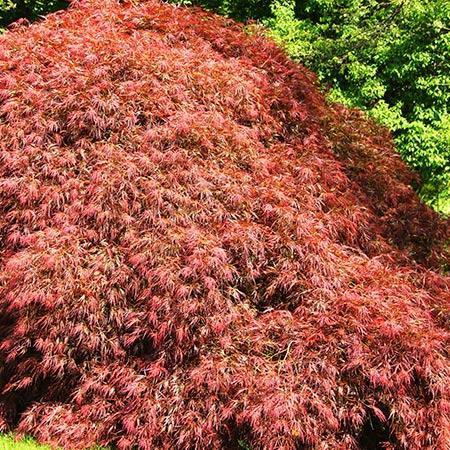
Spring Delight is a vision of delicate refinement. The deeply dissected foliage emerges in shades of brilliant coral-red and orange in spring, then transitions to a vibrant chartreuse-green as the season progresses—creating an almost two-tone effect that catches light like nothing else in the garden. The leaves are finely cut with that characteristic Japanese maple elegance, creating an open, airy canopy that moves gracefully in the slightest breeze. Unlike some of the more compact Japanese maples, Spring Delight grows into a lovely upright form with a somewhat vase-like silhouette, eventually becoming a small tree rather than a shrub. In autumn, the foliage puts on a final spectacular show with warm golden-orange and red tones before dropping.
Growing it in your garden
Here’s what makes Spring Delight special: it actually handles Connecticut’s growing conditions without the constant anxiety. Plant it in a location with dappled shade or morning sun with afternoon protection—you want to shield it from intense afternoon heat and wind, which can scorch those tender leaves. The soil should be well-draining and slightly acidic, rich with organic matter. Spring Delight appreciates consistent moisture but absolutely refuses to sit in waterlogged soil, so amend heavy clay with compost before planting. Unlike some Japanese maples that sulk in our region, this one’s relatively forgiving about our spring weather swings. Still, protect it from harsh winds and late-spring frosts if you can—a sheltered location on the east side of a building or near taller plants offers ideal conditions.
Through the seasons
Spring arrives with those stunning coral and orange emerging leaves that seem to glow against the pale April sky. By late spring, the foliage settles into that luminous chartreuse, and small flowers appear—nothing showy, but they’re there if you look closely. Summer is when Spring Delight truly shines: the bright green canopy provides dappled shade and movement without the heavy weight of larger trees. It’s perfect for reading under or positioning near a seating area. Fall transforms the whole picture again with warm golden-orange and russet tones. Winter reveals the elegant branching structure, with its attractive gray bark visible against the snow, providing quiet garden interest through the dormant season.
Where it shines
This is your solution for shade gardens that need sophistication. Plant Spring Delight as a focal point near a patio or seating area where you can enjoy its changing colors throughout the year. It works beautifully as a specimen tree in foundation plantings, bringing year-round interest without dominating the space. In woodland gardens, it’s perfect for that transitional zone between deep shade and dappled light. Because it eventually develops some height and structure, it’s also excellent for screening an unsightly view or creating a subtle privacy buffer. Container planting is possible, though it will need regular watering and some winter protection in Connecticut.
Perfect companions
Surround Spring Delight with shade-loving understory plants that won’t compete with its delicate canopy. Hostas with chartreuse or gold foliage echo the maple’s color play beautifully. Hellebores, heucheras, and Japanese painted ferns add texture and color without visual heaviness. Shade-tolerant sedges like Carex oshimensis ‘Evergold’ provide groundcover at the base. In spring, plant shade-tolerant bulbs like ERYTHRONIUM or TRILLIUM beneath it for early-season interest. Avoid planting heavy-foliaged shrubs nearby that would compete for visual space—Spring Delight deserves to be seen.
Care tips
Water regularly during establishment and through dry spells, aiming for consistent moisture rather than wet or dry extremes. In Connecticut, spring mulching helps regulate soil temperature and protect the root zone from frost heave. Minimal pruning is needed—this maple naturally grows into an attractive form. If you must prune, do it in late summer rather than spring to avoid excessive bleeding. Fertilizer is rarely necessary if you’ve amended soil well at planting. Watch for Japanese beetle damage in midsummer and address it promptly. A light winter mulch in exposed locations can help protect against damage from harsh Connecticut winters.
Quick facts
- Hardiness Zone: 5b-8 (perfect for Connecticut)
- Mature Height & Spread: 15-20 feet tall, 12-15 feet wide
- Bloom Season: Spring flowers (inconspicuous); foliage is the star
- Light Requirements: Dappled shade to morning sun with afternoon protection
- Water Needs: Consistent moisture; well-draining soil essential
- Available at: Both our retail and wholesale locations.