Blue Ice Bluestar

AMSONIA HUBRICHTII ‘BLUE ICE’

What if one plant could give you delicate, sky-blue flowers in spring, feathery texture that looks good all season long, and brilliant golden-orange foliage in fall? Blue Ice Bluestar does all three—without being fussy, without needing constant attention, and without taking up half your garden. This is the kind of plant that makes gardeners look smarter than they actually are.

What it looks like

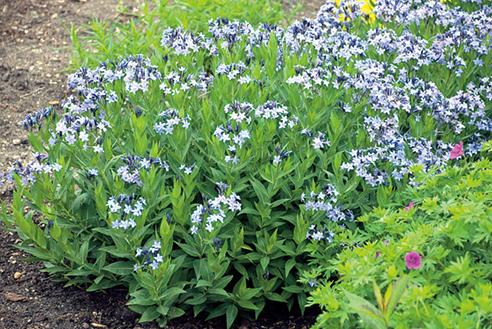
Blue Ice is a refined, airy shrub with a naturally neat, vase-like shape. In late spring, it produces delicate clusters of pale blue flowers—the kind that make you lean in closer to admire them. But the real magic is in the foliage. The needle-like leaves are impossibly fine and feathery, creating an almost cloud-like texture that catches light beautifully. It’s the kind of texture that makes borders feel softer and less rigid. Come autumn, those fine leaves transform into warm golden-orange tones that persist for weeks, giving you a second season of real garden interest. Even after the leaves drop, the stems remain attractive through winter.

Growing it in your garden

Blue Ice Bluestar is remarkably adaptable to Connecticut conditions. It’s not picky about soil—it handles clay, sandy soil, and everything in between. What it does want is good drainage and full sun to part shade. Plant it somewhere it gets at least four to six hours of direct sunlight for best flowering and strongest fall color. It’s incredibly drought-tolerant once established, which makes it a smart choice for New England gardens where summer moisture can be unpredictable. It won’t get leggy or sparse like some shrubs do in our climate.

Through the seasons

Spring is when Blue Ice announces itself with those charming pale blue flowers—subtle but lovely, appearing in May into early June. Summer is about texture and presence; even without flowers, the feathery foliage makes the plant feel fresh and alive in the garden. Fall is when it becomes a real showstopper, transforming those delicate leaves into warm golden-orange. Winter? The architectural branching adds structure to the dormant garden. This is a plant that earns its space twelve months a year.

Where it shines

Blue Ice Bluestar belongs in mixed borders where its airy texture contrasts beautifully with broader-leaved neighbors. It’s perfect for cottage gardens and pollinator gardens—bees and butterflies love those spring flowers. Use it as a specimen in a small space, or plant it in groups of three for dramatic effect in larger gardens. It also makes an excellent choice for modern, minimalist landscapes because of its clean lines and refined shape. If you’re trying to soften the edges of a deck, patio, or transition zone, this does the job elegantly.

Perfect companions

Blue Ice pairs beautifully with plants that have bold foliage or strong color presence. Pair it with Knock Out roses for continuous color contrast. It looks stunning next to ornamental grasses like Karl Foerster feather reed grass, which echo its vertical lines. Combine it with sedums, coreopsis, or daylilies for a low-maintenance border that looks garden-magazine-worthy without requiring much fussing. In spring shade combinations, it works well alongside hellebores and emerging hostas.

Care tips

Blue Ice Bluestar is genuinely low-maintenance. Water regularly during its first growing season to help establish a deep root system, then it becomes quite drought-tolerant. No special fertilizing needed—in fact, overly rich soil can make it leggy. Prune lightly in early spring if you want to maintain a tighter shape, but honestly, it naturally grows into a pleasing form without much intervention. It’s not troubled by Connecticut pests or diseases. This is a plant you plant and let do its thing.

Quick facts

  • Hardiness Zone: 5-9 (thrives in Connecticut)
  • Mature Height & Spread: 3-4 feet tall and wide
  • Bloom Season: Late May through early June
  • Light Requirements: Full sun to part shade (4-6 hours minimum)
  • Water Needs: Low to moderate; drought-tolerant once established
  • Available at: Both our retail and wholesale locations.

Blue Ice Bluestar

This long flowering, more compact bluestar blooms more vigorously than the species, forming a dense mound of dark green leaves that turn a brilliant yellow in the fall. Vivid dark lavender flowers appear in early spring for a wonderful show. An herbaceous perennial.

Pot Size (gallons), Height: #2

Description

Blue Ice Bluestar

AMSONIA HUBRICHTII ‘BLUE ICE’

What if one plant could give you delicate, sky-blue flowers in spring, feathery texture that looks good all season long, and brilliant golden-orange foliage in fall? Blue Ice Bluestar does all three—without being fussy, without needing constant attention, and without taking up half your garden. This is the kind of plant that makes gardeners look smarter than they actually are.

What it looks like

Blue Ice is a refined, airy shrub with a naturally neat, vase-like shape. In late spring, it produces delicate clusters of pale blue flowers—the kind that make you lean in closer to admire them. But the real magic is in the foliage. The needle-like leaves are impossibly fine and feathery, creating an almost cloud-like texture that catches light beautifully. It’s the kind of texture that makes borders feel softer and less rigid. Come autumn, those fine leaves transform into warm golden-orange tones that persist for weeks, giving you a second season of real garden interest. Even after the leaves drop, the stems remain attractive through winter.

Growing it in your garden

Blue Ice Bluestar is remarkably adaptable to Connecticut conditions. It’s not picky about soil—it handles clay, sandy soil, and everything in between. What it does want is good drainage and full sun to part shade. Plant it somewhere it gets at least four to six hours of direct sunlight for best flowering and strongest fall color. It’s incredibly drought-tolerant once established, which makes it a smart choice for New England gardens where summer moisture can be unpredictable. It won’t get leggy or sparse like some shrubs do in our climate.

Through the seasons

Spring is when Blue Ice announces itself with those charming pale blue flowers—subtle but lovely, appearing in May into early June. Summer is about texture and presence; even without flowers, the feathery foliage makes the plant feel fresh and alive in the garden. Fall is when it becomes a real showstopper, transforming those delicate leaves into warm golden-orange. Winter? The architectural branching adds structure to the dormant garden. This is a plant that earns its space twelve months a year.

Where it shines

Blue Ice Bluestar belongs in mixed borders where its airy texture contrasts beautifully with broader-leaved neighbors. It’s perfect for cottage gardens and pollinator gardens—bees and butterflies love those spring flowers. Use it as a specimen in a small space, or plant it in groups of three for dramatic effect in larger gardens. It also makes an excellent choice for modern, minimalist landscapes because of its clean lines and refined shape. If you’re trying to soften the edges of a deck, patio, or transition zone, this does the job elegantly.

Perfect companions

Blue Ice pairs beautifully with plants that have bold foliage or strong color presence. Pair it with Knock Out roses for continuous color contrast. It looks stunning next to ornamental grasses like Karl Foerster feather reed grass, which echo its vertical lines. Combine it with sedums, coreopsis, or daylilies for a low-maintenance border that looks garden-magazine-worthy without requiring much fussing. In spring shade combinations, it works well alongside hellebores and emerging hostas.

Care tips

Blue Ice Bluestar is genuinely low-maintenance. Water regularly during its first growing season to help establish a deep root system, then it becomes quite drought-tolerant. No special fertilizing needed—in fact, overly rich soil can make it leggy. Prune lightly in early spring if you want to maintain a tighter shape, but honestly, it naturally grows into a pleasing form without much intervention. It’s not troubled by Connecticut pests or diseases. This is a plant you plant and let do its thing.

Quick facts

  • Hardiness Zone: 5-9 (thrives in Connecticut)
  • Mature Height & Spread: 3-4 feet tall and wide
  • Bloom Season: Late May through early June
  • Light Requirements: Full sun to part shade (4-6 hours minimum)
  • Water Needs: Low to moderate; drought-tolerant once established
  • Available at: Both our retail and wholesale locations.