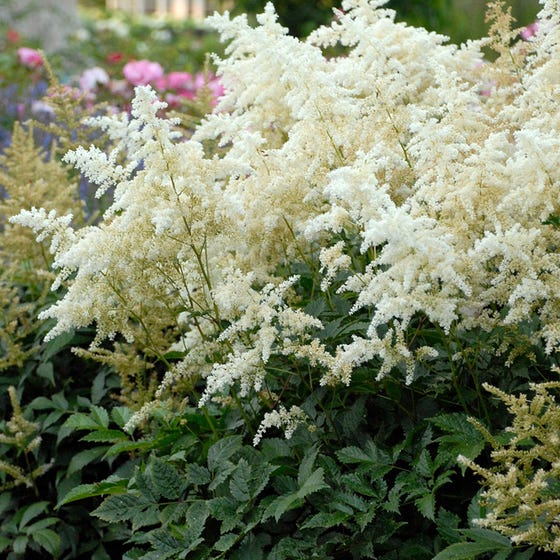
Deutschland False Spirea

ASTILBE x ARENDSII ‘DEUTSCHLAND’

What if you could have that lush, cloud-like elegance of astilbe—with flowers that actually stay pristine longer and hold their color like they’ve been painted on? Deutschland False Spirea does exactly that. This is the astilbe that makes gardeners stop mid-stride and ask, “Where did you get that?” Deep crimson-red plumes rise above finely textured foliage in early summer, creating a drama that doesn’t fade or brown at the edges the way some astilbes do. It’s reliable, it’s stunning, and it genuinely loves the cool, moist conditions that Connecticut naturally provides.

What it looks like

Deutschland is a visual powerhouse in a compact package. The plant grows into a dense mound of delicate, ferny foliage—deep green and almost lacy in texture—that stays attractive from spring through frost. Starting in early June, brilliant deep red plumes emerge on sturdy stems, rising 24 to 28 inches above the foliage. These aren’t thin, wispy flowers; they’re full and substantial, with a velvety quality that makes you want to reach out and touch them. The flowers maintain their rich color throughout their bloom period, which is rarer than you’d think in the astilbe world. Unlike lighter astilbes that can fade or develop brown tips, Deutschland holds its intensity.

Growing it in your garden

This is where Deutschland earns its reputation as the most reliable astilbe for Connecticut gardeners. It thrives in partial shade to shade—those tricky spots under deciduous trees, along the north side of your home, or in woodland gardens where afternoon sun is filtered. While astilbes appreciate consistent moisture, Deutschland is particularly forgiving about soil conditions. Plant it in fertile, organic-rich soil that retains moisture without becoming waterlogged. If your Connecticut soil runs heavy or you’re dealing with clay, work in compost before planting. The plant appreciates afternoon shade in full sun locations during our warmest months.

Through the seasons

Early spring brings fresh green foliage as the plant emerges—reliable as clockwork. By late spring, you’ll notice the flower buds forming, and by early June, those magnificent crimson plumes open fully. The flowers persist beautifully through mid-July, and even as they mature, they age gracefully—transitioning to attractive rust tones rather than browning and falling apart. Many gardeners cut the spent flower heads in late summer, but if you leave them, they dry to burnished copper and add architectural interest through fall. The foliage itself remains dark and attractive until frost.

Where it shines

Deutschland is unbeatable in shaded border plantings, woodland edges, and alongside shade-loving perennials. It’s exceptionally valuable in rain gardens and boggy areas—those spots where you’ve had trouble finding color and texture. Plant it in groups of three or five for maximum impact; a drift of Deutschland creates a stunning focal point even at midsummer when many gardens are starting to look tired. It’s also wonderful in containers, where you can position it on a shaded porch or patio, and it never needs to be brought inside.

Perfect companions

Deutschland pairs beautifully with hostas—the fine astilbe foliage contrasts gorgeously with broad hosta leaves. Try it alongside Japanese painted fern (ATHYRIUM NIPONICUM) for a foliage combination that’s purely elegant. Blue-flowering shade plants like brunnera and pulmonaria complement the red tones perfectly. Hellebores and bleeding heart work wonderfully nearby for spring interest. In moist areas, pair it with Louisiana iris or cardinal flower for an extended season of garden color.

Care tips

Water consistently during dry spells—astilbes are moisture lovers and will let you know if they’re thirsty by drooping slightly. A 2- to 3-inch layer of mulch around the base keeps soil cool and moist and suppresses weeds. Deadhead spent flowers if you prefer a neater appearance, but honestly, they age beautifully if you let them be. Divide plants every three to four years in spring or fall to maintain vigor and create more plants. Deutschland is also essentially pest and disease-free—no special spraying required. Every three years or so, work a bit of compost into the soil around the plant; astilbes are never too picky about nutrition, but they appreciate the organic matter.

Quick facts

  • Hardiness Zone: Zones 3–9 (extremely winter-hardy for Connecticut)
  • Mature Height & Spread: 24–28 inches tall, 18–24 inches wide
  • Bloom Season: Early June through mid-July
  • Light Requirements: Partial shade to full shade
  • Water Needs: Consistent moisture; thrives in moist to boggy soil
  • Available at: Both our retail and wholesale locations

Deutschland False Spirea

Deutschland’ Astilbe’s pure white plumes are lovely in the moonlight and can brighten the shade garden with grace. Soft and feathery flowerheads play beautifully against the glossy green, mounding foliage. Very showy and very easy to care for, like most astilbes, this one is resistant to both deer and rabbits. Try pairing with any fern for a gorgeous, contrasting look. (Astilbe japonica)

Pot Size (gallons), Height: #2

Description

Deutschland False Spirea

ASTILBE x ARENDSII ‘DEUTSCHLAND’

What if you could have that lush, cloud-like elegance of astilbe—with flowers that actually stay pristine longer and hold their color like they’ve been painted on? Deutschland False Spirea does exactly that. This is the astilbe that makes gardeners stop mid-stride and ask, “Where did you get that?” Deep crimson-red plumes rise above finely textured foliage in early summer, creating a drama that doesn’t fade or brown at the edges the way some astilbes do. It’s reliable, it’s stunning, and it genuinely loves the cool, moist conditions that Connecticut naturally provides.

What it looks like

Deutschland is a visual powerhouse in a compact package. The plant grows into a dense mound of delicate, ferny foliage—deep green and almost lacy in texture—that stays attractive from spring through frost. Starting in early June, brilliant deep red plumes emerge on sturdy stems, rising 24 to 28 inches above the foliage. These aren’t thin, wispy flowers; they’re full and substantial, with a velvety quality that makes you want to reach out and touch them. The flowers maintain their rich color throughout their bloom period, which is rarer than you’d think in the astilbe world. Unlike lighter astilbes that can fade or develop brown tips, Deutschland holds its intensity.

Growing it in your garden

This is where Deutschland earns its reputation as the most reliable astilbe for Connecticut gardeners. It thrives in partial shade to shade—those tricky spots under deciduous trees, along the north side of your home, or in woodland gardens where afternoon sun is filtered. While astilbes appreciate consistent moisture, Deutschland is particularly forgiving about soil conditions. Plant it in fertile, organic-rich soil that retains moisture without becoming waterlogged. If your Connecticut soil runs heavy or you’re dealing with clay, work in compost before planting. The plant appreciates afternoon shade in full sun locations during our warmest months.

Through the seasons

Early spring brings fresh green foliage as the plant emerges—reliable as clockwork. By late spring, you’ll notice the flower buds forming, and by early June, those magnificent crimson plumes open fully. The flowers persist beautifully through mid-July, and even as they mature, they age gracefully—transitioning to attractive rust tones rather than browning and falling apart. Many gardeners cut the spent flower heads in late summer, but if you leave them, they dry to burnished copper and add architectural interest through fall. The foliage itself remains dark and attractive until frost.

Where it shines

Deutschland is unbeatable in shaded border plantings, woodland edges, and alongside shade-loving perennials. It’s exceptionally valuable in rain gardens and boggy areas—those spots where you’ve had trouble finding color and texture. Plant it in groups of three or five for maximum impact; a drift of Deutschland creates a stunning focal point even at midsummer when many gardens are starting to look tired. It’s also wonderful in containers, where you can position it on a shaded porch or patio, and it never needs to be brought inside.

Perfect companions

Deutschland pairs beautifully with hostas—the fine astilbe foliage contrasts gorgeously with broad hosta leaves. Try it alongside Japanese painted fern (ATHYRIUM NIPONICUM) for a foliage combination that’s purely elegant. Blue-flowering shade plants like brunnera and pulmonaria complement the red tones perfectly. Hellebores and bleeding heart work wonderfully nearby for spring interest. In moist areas, pair it with Louisiana iris or cardinal flower for an extended season of garden color.

Care tips

Water consistently during dry spells—astilbes are moisture lovers and will let you know if they’re thirsty by drooping slightly. A 2- to 3-inch layer of mulch around the base keeps soil cool and moist and suppresses weeds. Deadhead spent flowers if you prefer a neater appearance, but honestly, they age beautifully if you let them be. Divide plants every three to four years in spring or fall to maintain vigor and create more plants. Deutschland is also essentially pest and disease-free—no special spraying required. Every three years or so, work a bit of compost into the soil around the plant; astilbes are never too picky about nutrition, but they appreciate the organic matter.

Quick facts

  • Hardiness Zone: Zones 3–9 (extremely winter-hardy for Connecticut)
  • Mature Height & Spread: 24–28 inches tall, 18–24 inches wide
  • Bloom Season: Early June through mid-July
  • Light Requirements: Partial shade to full shade
  • Water Needs: Consistent moisture; thrives in moist to boggy soil
  • Available at: Both our retail and wholesale locations