ECHINACEA PURPUREA

What if one plant could handle your Connecticut garden’s toughest challenges while simultaneously turning into a wildflower masterpiece? The Coneflower does exactly that. Native to the prairies of the American Midwest, this tough-as-nails perennial has proven itself equally at home in New England gardens, thriving in conditions that make other plants sulk. It’s the kind of plant that rewards your confidence with years of effortless beauty—brilliant purple-pink petals radiating from a golden-orange cone that practically glows in summer sunshine.

What it looks like

Coneflower is unmistakable once you know what to look for. The distinctive papery petals—ranging from deep magenta to pale rose depending on the variety—sweep gracefully backward, creating that signature spiky cone at the center. This architectural form is what makes it so valuable in garden design; the blooms hold their shape from mid-summer straight through until frost, never looking bedraggled or past their prime. Individual flowers can reach 3 to 4 inches across, and they appear in profusion on sturdy, branching stems clothed in deep green, lance-shaped leaves. The plants grow in tidy mounds, becoming fuller and more substantial as the season progresses.

Growing it in your garden

Here’s what every Connecticut gardener should know: Coneflower isn’t fussy. It genuinely prefers full sun—at least six hours daily—and well-draining soil. Once established, it’s remarkably drought-tolerant, making it perfect for those hot, dry stretches we get in July and August. Plant it in spring or early fall, spacing plants about 18 inches apart. The first season, you might see modest growth, but by year two, you’ll have dense, flowering clumps that only get better with age. Unlike many perennials that demand frequent division, Coneflower is content to stay put for five years or more before you might want to split it up.

Through the seasons

Spring brings emergence of tidy green mounds that quickly fill in with compound leaf growth. By early summer, flower buds form at the tips of each stem, building anticipation. Mid-July through September is pure magic—peak bloom time when the garden becomes a feeding station for butterflies and bees. The seed heads that follow the faded flowers are nearly as valuable as the blooms themselves, providing food for goldfinches and visual interest into November. Even in winter, those dark seed cones add texture to the sleeping garden.

Where it shines

Coneflower belongs in meadow-style plantings, cottage gardens, and anywhere you want long-lasting color without demanding constant attention. It’s excellent in perennial borders where its upright form provides vertical interest among lower-growing plants. Plant it in mass for maximum impact—three, five, or seven plants clustered together create far more drama than scattered singles. It’s also invaluable for pollinator gardens; the open, flat flower face welcomes butterflies, bees, and beneficial insects throughout the season. Along sunny fence lines, in island beds, or fronting taller shrubs, Coneflower earns its place through sheer reliability and beauty.

Perfect companions

Coneflower plays beautifully with other sun-loving perennials. Pair it with Black-eyed Susans (RUDBECKIA) for a warm, golden-purple combination that echoes prairie gardens. Add Russian Sage (PEROVSKIA) nearby for airy texture and complementary blue tones. Ornamental grasses like Karl Foerster Feather Reed Grass (CALAMAGROSTIS X ACUTIFLORA) provide movement that sets off Coneflower’s sturdy form. In late season, plant Autumn Sedum nearby to carry color after the coneflowers fade. Shasta Daisies and Bee Balm create a cheerful, pollinator-friendly grouping.

Care tips

Coneflower asks for very little. Deadhead spent flowers early in the season if you want to encourage more blooms, but leave the last flowers standing in late August—let them set seed for both the birds and for natural self-seeding next year. In spring, cut back last year’s dried stems to about 3 inches, and the new growth will emerge fresh and vigorous. Water regularly the first season to establish deep roots, then you can back off significantly. Fertilizer is unnecessary; in fact, rich soil tends to produce floppy growth. Divide mature clumps in spring if you want to propagate them or rejuvenate overcrowded plantings. That’s genuinely all there is to it.

Quick facts

  • Hardiness Zone: 3 to 9
  • Mature Height & Spread: 24 to 36 inches tall and 18 to 24 inches wide
  • Bloom Season: July through September
  • Light Requirements: Full sun (6+ hours daily)
  • Water Needs: Moderate; drought-tolerant once established
  • Available at: Both our retail and wholesale locations.

Coneflower

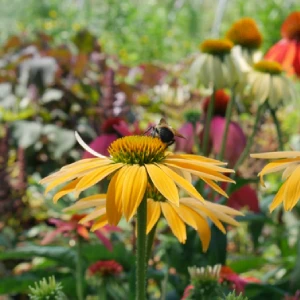
Echinacea ‘Cheyenne Spirit’ (Cheyenne Spirit Coneflower) provide a mix of flower colors including gold, scarlet, orange, rose-red, cream, purple and yellow. Buy three or more plants to get a colorful blend for your garden.

Pot Size (gallons), Height: #1

Description

ECHINACEA PURPUREA

What if one plant could handle your Connecticut garden’s toughest challenges while simultaneously turning into a wildflower masterpiece? The Coneflower does exactly that. Native to the prairies of the American Midwest, this tough-as-nails perennial has proven itself equally at home in New England gardens, thriving in conditions that make other plants sulk. It’s the kind of plant that rewards your confidence with years of effortless beauty—brilliant purple-pink petals radiating from a golden-orange cone that practically glows in summer sunshine.

What it looks like

Coneflower is unmistakable once you know what to look for. The distinctive papery petals—ranging from deep magenta to pale rose depending on the variety—sweep gracefully backward, creating that signature spiky cone at the center. This architectural form is what makes it so valuable in garden design; the blooms hold their shape from mid-summer straight through until frost, never looking bedraggled or past their prime. Individual flowers can reach 3 to 4 inches across, and they appear in profusion on sturdy, branching stems clothed in deep green, lance-shaped leaves. The plants grow in tidy mounds, becoming fuller and more substantial as the season progresses.

Growing it in your garden

Here’s what every Connecticut gardener should know: Coneflower isn’t fussy. It genuinely prefers full sun—at least six hours daily—and well-draining soil. Once established, it’s remarkably drought-tolerant, making it perfect for those hot, dry stretches we get in July and August. Plant it in spring or early fall, spacing plants about 18 inches apart. The first season, you might see modest growth, but by year two, you’ll have dense, flowering clumps that only get better with age. Unlike many perennials that demand frequent division, Coneflower is content to stay put for five years or more before you might want to split it up.

Through the seasons

Spring brings emergence of tidy green mounds that quickly fill in with compound leaf growth. By early summer, flower buds form at the tips of each stem, building anticipation. Mid-July through September is pure magic—peak bloom time when the garden becomes a feeding station for butterflies and bees. The seed heads that follow the faded flowers are nearly as valuable as the blooms themselves, providing food for goldfinches and visual interest into November. Even in winter, those dark seed cones add texture to the sleeping garden.

Where it shines

Coneflower belongs in meadow-style plantings, cottage gardens, and anywhere you want long-lasting color without demanding constant attention. It’s excellent in perennial borders where its upright form provides vertical interest among lower-growing plants. Plant it in mass for maximum impact—three, five, or seven plants clustered together create far more drama than scattered singles. It’s also invaluable for pollinator gardens; the open, flat flower face welcomes butterflies, bees, and beneficial insects throughout the season. Along sunny fence lines, in island beds, or fronting taller shrubs, Coneflower earns its place through sheer reliability and beauty.

Perfect companions

Coneflower plays beautifully with other sun-loving perennials. Pair it with Black-eyed Susans (RUDBECKIA) for a warm, golden-purple combination that echoes prairie gardens. Add Russian Sage (PEROVSKIA) nearby for airy texture and complementary blue tones. Ornamental grasses like Karl Foerster Feather Reed Grass (CALAMAGROSTIS X ACUTIFLORA) provide movement that sets off Coneflower’s sturdy form. In late season, plant Autumn Sedum nearby to carry color after the coneflowers fade. Shasta Daisies and Bee Balm create a cheerful, pollinator-friendly grouping.

Care tips

Coneflower asks for very little. Deadhead spent flowers early in the season if you want to encourage more blooms, but leave the last flowers standing in late August—let them set seed for both the birds and for natural self-seeding next year. In spring, cut back last year’s dried stems to about 3 inches, and the new growth will emerge fresh and vigorous. Water regularly the first season to establish deep roots, then you can back off significantly. Fertilizer is unnecessary; in fact, rich soil tends to produce floppy growth. Divide mature clumps in spring if you want to propagate them or rejuvenate overcrowded plantings. That’s genuinely all there is to it.

Quick facts

  • Hardiness Zone: 3 to 9
  • Mature Height & Spread: 24 to 36 inches tall and 18 to 24 inches wide
  • Bloom Season: July through September
  • Light Requirements: Full sun (6+ hours daily)
  • Water Needs: Moderate; drought-tolerant once established
  • Available at: Both our retail and wholesale locations.