
Description

EVOLVULUS ‘BLUE MY MIND’ (CONVOLVULUS SABATIUS)
What if one plant could solve the eternal New England gardener’s dilemma: how to get brilliant, unrelenting color in containers and baskets without fussing constantly? Meet Blue My Mind—a cascading wonder that behaves less like a typical annual and more like a reliable friend who shows up, does the work, and doesn’t need hand-holding. This is the kind of plant that makes gardeners around Connecticut look genuinely skilled, even in their first season.
What it looks like
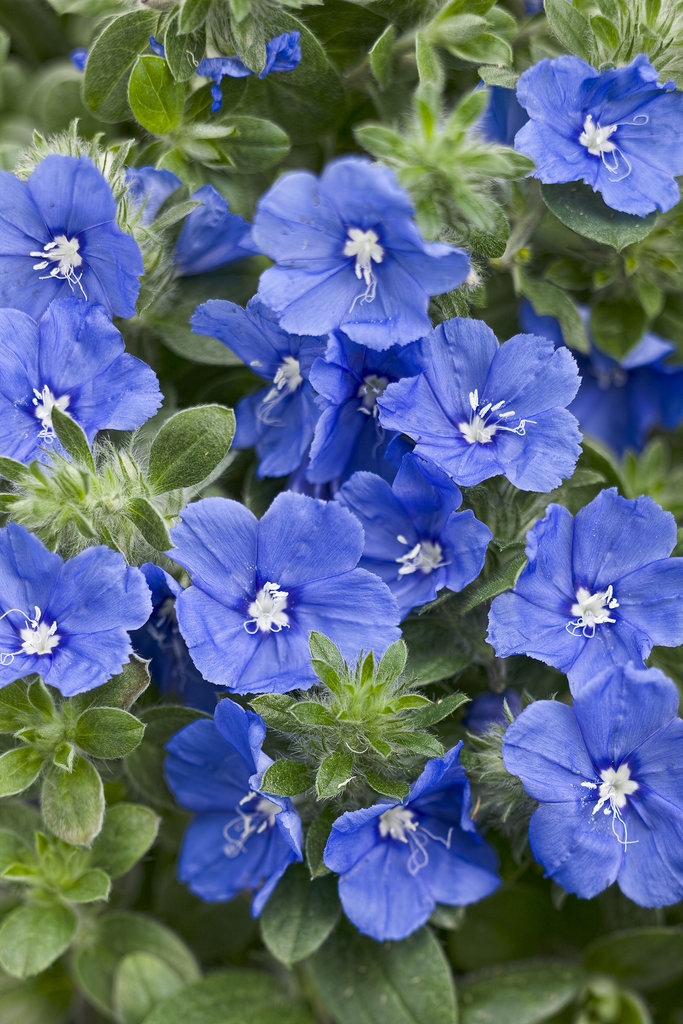
Blue My Mind is a vision of delicate simplicity. Imagine thousands of tiny, trumpet-shaped flowers in the most captivating sky blue imaginable—the color of a New England summer sky just after a morning rain. The blooms are small but profuse, emerging continuously from threadlike stems clothed in narrow, silvery-green foliage that’s almost ferny in appearance. The whole plant has an airy, graceful quality, as if it might float away if you didn’t anchor it in a pot. The growth habit is sprawling and trailing, making it absolutely perfect for hanging baskets, window boxes, and the edges of containers where you want that cascading effect.
Growing it in your garden
Here’s what makes Blue My Mind special: it’s almost absurdly easy to grow once you understand its simple needs. This sun-loving plant absolutely demands bright light—give it at least six hours of direct sun daily, and it will reward you with the kind of bloom abundance that makes neighbors ask what your secret is. The soil preference is well-draining and on the lean side; this plant actually prefers moderate fertility over rich, heavily amended soil. Think of it as preferring a simple life. Once established, it’s quite drought-tolerant, which means less daily watering than you’d expect from something so delicate-looking. Water when the top inch of soil feels dry, and you’re golden.
Connecticut’s humid summers? Blue My Mind handles them beautifully. Unlike some blue-flowering plants that can get leggy or stressed in our heat and moisture, this trailing beauty just keeps producing flowers steadily from late spring straight through until frost.
Through the seasons
Blue My Mind starts slowly in spring as a tender annual—it won’t tolerate frost, so plant it out after your last frost date (usually mid-May in Connecticut). Give it a few weeks to establish, and then it suddenly shifts into high gear. By mid-June, you’ll notice the first flowers appearing, and from that point forward, it’s a non-stop show of blue through July, August, September, and into early October. The flowers seem impervious to deadheading requirements—unlike some annuals that demand your constant attention, Blue My Mind self-cleans beautifully. The display only intensifies as the season progresses, with the plant becoming fuller and more generous with its blooms. When frost finally arrives in October, the show ends, but you’ll have had months of color.
Where it shines
This is genuinely a versatile performer. In containers and hanging baskets, Blue My Mind is perhaps most spectacular—that trailing habit means you get a waterfall of blue from every angle. Use it in mixed containers with complementary plants, or let it star solo in a simple pot where the purity of color can shine. It’s equally stunning spilling over the edges of raised beds or trailing down sunny banks. Some gardeners even use it as a delicate edging plant along garden borders, though it’s not aggressive enough to take over. If you have a sunny patio, deck, or entryway where you want months of color with minimal fuss, Blue My Mind is practically made for that purpose.
Perfect companions
Blue My Mind plays beautifully with warm colors—try pairing it with apricot or coral marigolds, pale pink petunias, or creamy white dusty miller. A combination of Blue My Mind with purple trailing verbena creates a jewel-toned container that’s absolutely stunning. For a more sophisticated palette, combine it with silver-foliaged plants like senecio or artemisia. It also looks gorgeous rising behind taller sun-loving annuals in a mixed planting.
Care tips
Fertilizing is minimal—a light feeding every few weeks is plenty; over-fertilizing actually reduces flowering. Pests and diseases are rarely an issue. The only real requirement is sun: don’t try to grow this in partial shade or it will become sparse and flower-shy. As an annual in Connecticut’s climate, there’s no winter care needed; simply let it finish its season and compost the remains when frost arrives.
Quick facts
- Hardiness Zone: Tender annual (zones 9-11 outdoors; grown as annual in Connecticut)
- Mature Height & Spread: 6-12 inches tall; spreads 12-18 inches or more when trailing
- Bloom Season: June through first frost
- Light Requirements: Full sun (6+ hours direct sunlight daily)
- Water Needs: Moderate; drought-tolerant once established
- Available at: Both our retail and wholesale locations