
Description
HIBISCUS SYRIACUS
What if you could have a small ornamental tree that blooms for months on end, handles the heat and humidity of Connecticut summers, and comes back reliably year after year? The Rose of Sharon in tree form is that plant. Unlike its shrubby cousins, this cultivated version develops a single main trunk topped with an airy, open canopy of blooms—giving you all the carefree flowering power of the species with the architectural elegance of a small tree. It’s the kind of plant that makes you wonder why it isn’t in every Connecticut garden.
What it looks like
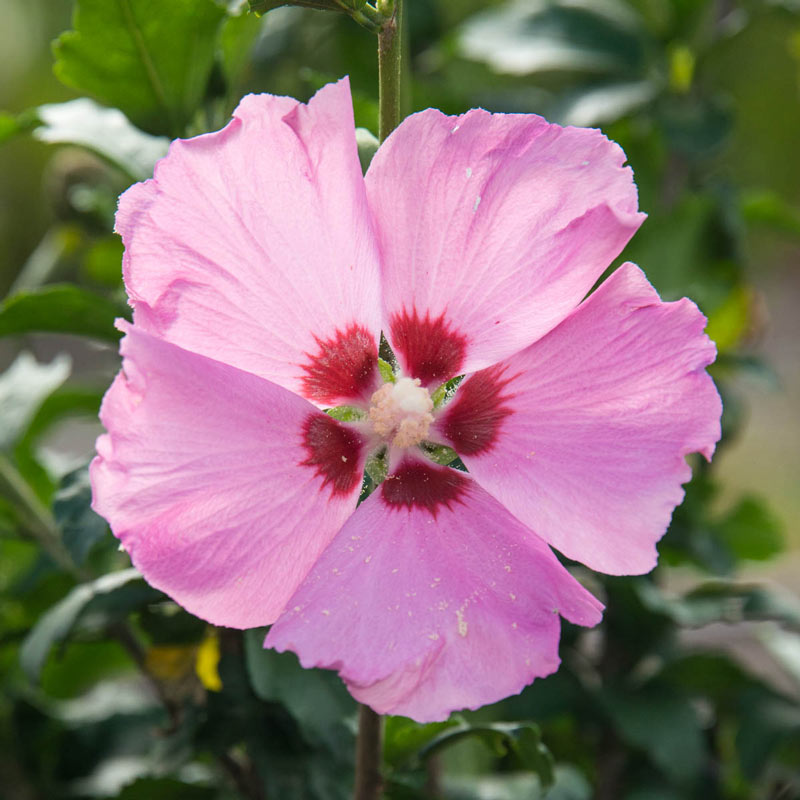
The Rose of Sharon tree form presents a refined silhouette. A clean, manageable trunk rises to a naturally spreading crown, creating a vase-shaped or slightly rounded form that softens any garden space without overwhelming it. The foliage is fine-textured and bright green, almost delicate looking, which makes the flowers appear to float among the branches rather than hide within dense growth. Blooms arrive in shades of pink, purple, blue, white, or bicolors depending on the variety you choose—each flower is a flamboyant hibiscus with crinkled petals and prominent stamens that seem to attract every passing bee and butterfly. The flowers open fresh each morning and typically drop by evening, but with the sheer abundance of buds, you’ll see continuous blooms from midsummer straight through early fall.
Growing it in your garden
Rose of Sharon is remarkably forgiving, which explains why it thrives throughout Connecticut and across New England. It wants full sun—at least six hours daily—to produce the best flower show, and it’s genuinely unfussy about soil. Rich, well-draining earth is ideal, but this plant will grow in sandy soil, clay, or anything in between. Once established, it’s quite drought-tolerant, so while regular water in its first year is important, you won’t need to fuss over it endlessly. It actually performs better with a bit of restraint than with coddling. The tree form does benefit from some light annual pruning to maintain its shape and promote branching, but it’s not demanding. In late winter or early spring, simply remove any crossing branches and lightly head back the crown to keep it dense and graceful.
Through the seasons
Spring arrives late with Rose of Sharon—don’t panic if your neighbors’ trees have leafed out while yours still looks bare. This is normal. Wait until mid-May before assuming anything is wrong. Once it leafs out in late spring, the plant puts on steady vegetative growth through June. July brings the first buds, and by August, you’re in full flowering mode. September and October are peak bloom months when this plant becomes the star of the late-season garden. Even as temperatures drop and other plants fade, Rose of Sharon keeps delivering flowers. Winter shows off the clean architecture of the trunk and branches, especially lovely when dusted with snow. The bare stems are almost architectural in their beauty.
Where it shines
Plant this where you want a focal point. A specimen Rose of Sharon tree in the center of a perennial border, at the corner of a house, or anchoring the end of a driveway stops people in their tracks when it’s in bloom. It’s excellent as a backdrop to shorter plantings, as a screen for an ugly view (the summer foliage is substantial enough to block sightlines), or as a vertical accent in a small space where you can’t fit a full-sized shade tree. Because it blooms so late, it’s invaluable in gardens where you want color right through fall. It also does well in containers—a large pot on a patio or deck showcases the flowers beautifully and brings the pollinators closer.
Perfect companions
Pair your Rose of Sharon with cooler-toned perennials that bloom before it takes center stage. Russian Sage (PEROVSKIA) works wonderfully, its airy blue-purple spikes echoing the delicate texture of the hibiscus foliage. Black-eyed Susan (RUDBECKIA) and Coreopsis provide warm yellow accents. For something more subtle, Calamagrostis or other tall ornamental grasses soften the tree’s base and add movement. Late-blooming sedums and asters at ground level extend the color show into November and create a layered look.
Care tips
Prune lightly in early spring before growth begins. Deadheading isn’t necessary—the plant will keep blooming without it, though you can remove spent flowers if you prefer a tidy appearance. Watch for Japanese beetles in July, but resist the urge to spray; the tree usually recovers just fine. Mulch around the base in fall, keeping it back from the trunk. In severe Connecticut winters, you might see some dieback on the outermost branches, but the plant revives from the main structure every spring.
Quick facts
- Hardiness Zone: 5-9 (reliable in Connecticut)
- Mature Height & Spread: 8-12 feet tall, 4-8 feet wide (smaller than shrub form)
- Bloom Season: July through October
- Light Requirements: Full sun (6+ hours)
- Water Needs: Moderate; drought-tolerant once established
- Available at: Both our retail and wholesale locations.