Harlequin Blueflag

IRIS VERSICOLOR ‘HARLEQUIN’

What if you could have a wetland wildflower that’s also a garden showstopper? The Harlequin Blueflag is exactly that—a striking iris with a personality as bold as its name suggests. Unlike those finicky bearded irises that demand perfect drainage and full sun, this native beauty thrives in the exact conditions Connecticut gardeners often struggle with: moist soil, boggy spots, and part shade. It’s the plant that transforms a problem area into a feature you’ll actually look forward to visiting each spring.

What it looks like

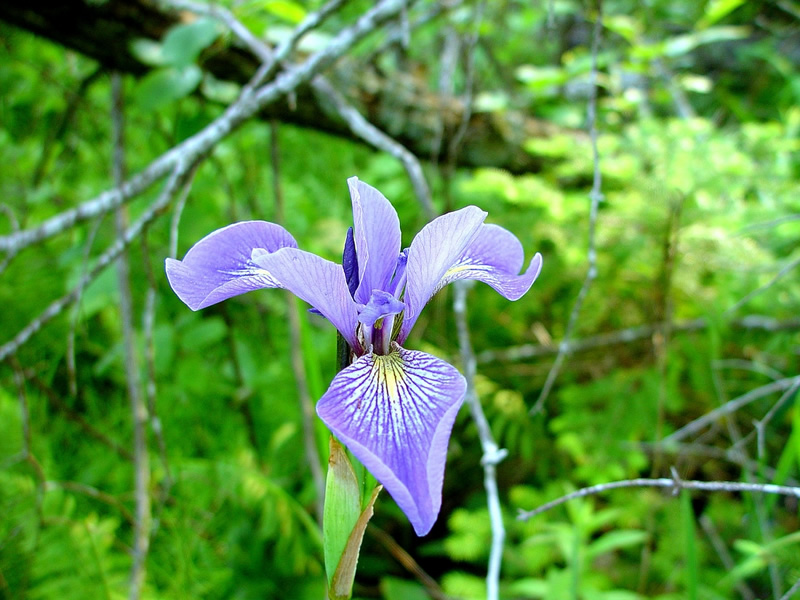
Harlequin Blueflag earned its name through its stunning bicolor flowers. Picture deep purple-blue upright petals (called “standards”) contrasted with ruffled, drooping petals in lighter lavender or white (called “falls”). The bloom has an almost theatrical quality—like it’s dressed up for opening night at the botanical theater. The flowers emerge on sturdy stems above clumps of sword-like, bright green foliage that stays ornamental all season long. Even when the blooms fade in early summer, the architectural foliage continues to earn its place in the garden, creating structure and height that lasts right through fall.

Growing it in your garden

This is where Harlequin Blueflag becomes your garden’s unsung hero. Unlike most irises, this variety absolutely loves moisture. Plant it in low spots, along the edges of rain gardens, beside water features, or anywhere your soil stays consistently moist. It will also happily grow in average garden soil with regular watering. In Connecticut’s humid summers, it doesn’t skip a beat. Plant it in part shade to full sun—it’s flexible enough to work in either condition, though part shade is ideal in our hot climate. Space plants about 18 inches apart and plant the rhizomes so the top is just barely at soil level. They’ll establish quickly and reward you with more flowers each year as the clumps expand.

Through the seasons

Spring brings the main event: those gorgeous bicolor blooms typically appearing in May and June. In New England’s variable spring weather, you’ll appreciate that the sturdy stems hold up well to wind and rain. After bloom time, the foliage transitions through shades of green, remaining tidy and attractive all season. In autumn, the leaves take on golden tones before fading back as winter approaches. Even in dormancy, the dried foliage can look interesting in winter gardens, providing vertical interest during those long months. Cut it back in early spring before new growth emerges.

Where it shines

Harlequin Blueflag is at home in rain gardens and bioswales—anywhere you’re trying to manage stormwater sustainably. It’s perfect for the low spot near your downspout that stays soggy, or along a pond or stream edge. Native plant enthusiasts love it for wetland restoration projects. In the perennial border, it adds unexpected height and structure. Plant it with other moisture-loving perennials like Joe-Pye weed, black-eyed Susan, and cardinal flower for a naturalistic, Connecticut-native garden that practically takes care of itself.

Perfect companions

Since Harlequin Blueflag thrives in moist conditions, pair it with other wetland-loving plants. Tall Joe-Pye weed creates a striking backdrop. Cardinal flower provides brilliant red contrast in the same moisture zone. Black-eyed Susans add cheerful yellow nearby. Sedges and marsh marigold make excellent ground-level companions. For layered interest, tuck some astilbe in nearby areas where afternoon shade provides relief. These combinations feel natural together—like they belong in a New England wetland—while creating a garden tapestry that’s visually complex and low-maintenance.

Care tips

Harlequin Blueflag asks for very little once established. Deadhead spent flowers if you want to tidy the plant, though leaving them creates interesting seed heads. Divide established clumps every 3-4 years in late summer or early fall to rejuvenate them and share with friends. The foliage is largely pest and disease-free—a welcome change from the fungal issues that plague some irises in our humid climate. In very dry spells, water deeply. Otherwise, let your region’s natural moisture do most of the work. That’s it. No staking, no fussy divisions or special amendments.

Quick facts

  • Hardiness Zone: 3-9 (Connecticut is perfect)
  • Mature Height & Spread: 24-28 inches tall, 18-24 inches wide
  • Bloom Season: May-June
  • Light Requirements: Full sun to part shade
  • Water Needs: Loves moisture; thrives in wet soil
  • Available at: Both our retail and wholesale locations

Harlequin Blueflag

Category:

Iris versicolor has a deep blue to purple, rarely white flower. The spreading sepals have purple veins as they gradually narrow to a white base, with a pubescent, greenish yellow signal. Northern blue flag iris flowers in late spring on a compact two to four flowered inflorescence. The bluish-green leaves are wide arching, up to four feet long and arise from shallowly rooted, large, branching rhizomes forming clumps.

Pot Size (gallons), Height: #2

Description

Harlequin Blueflag

IRIS VERSICOLOR ‘HARLEQUIN’

What if you could have a wetland wildflower that’s also a garden showstopper? The Harlequin Blueflag is exactly that—a striking iris with a personality as bold as its name suggests. Unlike those finicky bearded irises that demand perfect drainage and full sun, this native beauty thrives in the exact conditions Connecticut gardeners often struggle with: moist soil, boggy spots, and part shade. It’s the plant that transforms a problem area into a feature you’ll actually look forward to visiting each spring.

What it looks like

Harlequin Blueflag earned its name through its stunning bicolor flowers. Picture deep purple-blue upright petals (called “standards”) contrasted with ruffled, drooping petals in lighter lavender or white (called “falls”). The bloom has an almost theatrical quality—like it’s dressed up for opening night at the botanical theater. The flowers emerge on sturdy stems above clumps of sword-like, bright green foliage that stays ornamental all season long. Even when the blooms fade in early summer, the architectural foliage continues to earn its place in the garden, creating structure and height that lasts right through fall.

Growing it in your garden

This is where Harlequin Blueflag becomes your garden’s unsung hero. Unlike most irises, this variety absolutely loves moisture. Plant it in low spots, along the edges of rain gardens, beside water features, or anywhere your soil stays consistently moist. It will also happily grow in average garden soil with regular watering. In Connecticut’s humid summers, it doesn’t skip a beat. Plant it in part shade to full sun—it’s flexible enough to work in either condition, though part shade is ideal in our hot climate. Space plants about 18 inches apart and plant the rhizomes so the top is just barely at soil level. They’ll establish quickly and reward you with more flowers each year as the clumps expand.

Through the seasons

Spring brings the main event: those gorgeous bicolor blooms typically appearing in May and June. In New England’s variable spring weather, you’ll appreciate that the sturdy stems hold up well to wind and rain. After bloom time, the foliage transitions through shades of green, remaining tidy and attractive all season. In autumn, the leaves take on golden tones before fading back as winter approaches. Even in dormancy, the dried foliage can look interesting in winter gardens, providing vertical interest during those long months. Cut it back in early spring before new growth emerges.

Where it shines

Harlequin Blueflag is at home in rain gardens and bioswales—anywhere you’re trying to manage stormwater sustainably. It’s perfect for the low spot near your downspout that stays soggy, or along a pond or stream edge. Native plant enthusiasts love it for wetland restoration projects. In the perennial border, it adds unexpected height and structure. Plant it with other moisture-loving perennials like Joe-Pye weed, black-eyed Susan, and cardinal flower for a naturalistic, Connecticut-native garden that practically takes care of itself.

Perfect companions

Since Harlequin Blueflag thrives in moist conditions, pair it with other wetland-loving plants. Tall Joe-Pye weed creates a striking backdrop. Cardinal flower provides brilliant red contrast in the same moisture zone. Black-eyed Susans add cheerful yellow nearby. Sedges and marsh marigold make excellent ground-level companions. For layered interest, tuck some astilbe in nearby areas where afternoon shade provides relief. These combinations feel natural together—like they belong in a New England wetland—while creating a garden tapestry that’s visually complex and low-maintenance.

Care tips

Harlequin Blueflag asks for very little once established. Deadhead spent flowers if you want to tidy the plant, though leaving them creates interesting seed heads. Divide established clumps every 3-4 years in late summer or early fall to rejuvenate them and share with friends. The foliage is largely pest and disease-free—a welcome change from the fungal issues that plague some irises in our humid climate. In very dry spells, water deeply. Otherwise, let your region’s natural moisture do most of the work. That’s it. No staking, no fussy divisions or special amendments.

Quick facts

  • Hardiness Zone: 3-9 (Connecticut is perfect)
  • Mature Height & Spread: 24-28 inches tall, 18-24 inches wide
  • Bloom Season: May-June
  • Light Requirements: Full sun to part shade
  • Water Needs: Loves moisture; thrives in wet soil
  • Available at: Both our retail and wholesale locations