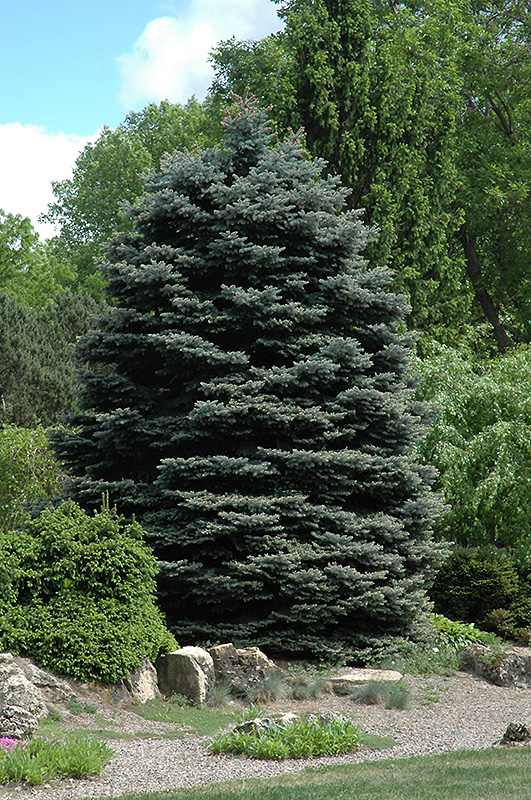
PICEA PUNGENS ‘FAT ALBERT’

What if the perfect Colorado blue spruce wasn’t actually hard to find? FAT ALBERT SPRUCE is that rare plant that delivers everything you want from a blue spruce without the finicky temperament. This isn’t a delicate beauty that demands your constant attention—it’s a sturdy, adaptable tree that laughs off Connecticut winters while putting on a stunning color show that’ll make your neighbors jealous.

What it looks like

FAT ALBERT is the compact overachiever of the spruce world. Unlike its leaner relatives, this cultivar grows dense and full, almost pyramidal in shape, with a stocky branching habit that fills out nicely from bottom to top. The needles are a gorgeous steel-blue to blue-gray color that’s most intense on new growth in spring—truly eye-catching. The branching is rigid and sturdy, giving the tree that architectural presence that makes it work as both a specimen plant and a screening element. At maturity, you’re looking at a tree that’s wide and solid, not tall and spindly.

Growing it in your garden

FAT ALBERT is genuinely one of the easier blue spruces to establish in New England. It prefers full sun—at least six hours daily—but it’s more forgiving about soil than many ornamental conifers. Well-draining soil is important, yes, but this tree handles moderately acidic to neutral pH without fussing. Once established, it’s quite drought-tolerant, which is a huge advantage during Connecticut’s dry summers. Plant it in a location with good air circulation to minimize disease pressure, and you’re set. The compact growth habit means you can use it in landscapes where a full-size blue spruce would overwhelm the space.

Through the seasons

Spring brings the real show with FAT ALBERT. New growth emerges in the most vibrant blue imaginable—almost glowing in April and May light. This is when the tree looks its absolute best, practically luminous in the garden. As summer settles in, the color deepens slightly but remains striking through the hottest months. Fall and winter are where FAT ALBERT really proves its worth in Connecticut. While deciduous trees are dropping leaves and looking bare, this spruce maintains its architectural structure and that beautiful blue tone, providing year-round interest and color that actually deepens in winter cold. It holds its needles reliably, never turning brown or dull.

Where it shines

FAT ALBERT is perfect as a specimen planting—somewhere prominent where you want a focal point that looks good every single day of the year. It’s equally valuable as a screening plant or windbreak, especially if you need something that won’t grow too tall. Xeriscaping gardens love this tree because of its drought tolerance once established. It’s beautiful in modern landscapes where clean lines matter. It also works wonderfully in transitional zones between open lawn and woodland, and it’s an excellent choice for coastal Connecticut gardens that deal with salt spray and wind—blue spruces generally handle salt better than many evergreens.

Perfect companions

Plant FAT ALBERT with other plants that appreciate similar conditions. Summer-blooming coneflowers and black-eyed Susans give you color that plays beautifully against the blue foliage. Low-growing junipers make excellent companions in the understory, as do sedums and ornamental grasses that won’t compete for resources. Deciduous shrubs like serviceberry or red-twig dogwood provide seasonal interest alongside the evergreen structure. If you’re going for a conifer-heavy design, pair FAT ALBERT with golden arborvitae or darker green eastern hemlocks to create depth and contrast.

Care tips

Water regularly during the first year to establish a deep root system. After that, you can back off—FAT ALBERT actually prefers drier conditions to overly wet ones. Prune only as needed to maintain shape; this tree naturally forms a nice pyramid. In Connecticut’s humid summers, watch for spruce spider mites if the tree gets stressed by drought, though this is rare with established plants. Never fertilize blue spruces with high-nitrogen products; they don’t need it and can develop weak, lanky growth. A light mulch around the base helps retain moisture during establishment without encouraging disease.

Quick facts

  • Hardiness Zone: 3 to 8
  • Mature Height & Spread: 10 to 13 feet tall, 8 to 10 feet wide
  • Bloom Season: Evergreen (new growth in spring)
  • Light Requirements: Full sun
  • Water Needs: Low to moderate once established
  • Available at: Both our retail and wholesale locations.

Fat Albert ‘ Spruce

A dense and compact spire-shaped evergreen accent tree for general landscape use with large stout branches and long, very pointy silvery-blue needles, very showy and colorful, an ideal size for smaller home landscapes, extremely hardy and rugged

Pot Size (gallons), Height: 30-36″

Description

PICEA PUNGENS ‘FAT ALBERT’

What if the perfect Colorado blue spruce wasn’t actually hard to find? FAT ALBERT SPRUCE is that rare plant that delivers everything you want from a blue spruce without the finicky temperament. This isn’t a delicate beauty that demands your constant attention—it’s a sturdy, adaptable tree that laughs off Connecticut winters while putting on a stunning color show that’ll make your neighbors jealous.

What it looks like

FAT ALBERT is the compact overachiever of the spruce world. Unlike its leaner relatives, this cultivar grows dense and full, almost pyramidal in shape, with a stocky branching habit that fills out nicely from bottom to top. The needles are a gorgeous steel-blue to blue-gray color that’s most intense on new growth in spring—truly eye-catching. The branching is rigid and sturdy, giving the tree that architectural presence that makes it work as both a specimen plant and a screening element. At maturity, you’re looking at a tree that’s wide and solid, not tall and spindly.

Growing it in your garden

FAT ALBERT is genuinely one of the easier blue spruces to establish in New England. It prefers full sun—at least six hours daily—but it’s more forgiving about soil than many ornamental conifers. Well-draining soil is important, yes, but this tree handles moderately acidic to neutral pH without fussing. Once established, it’s quite drought-tolerant, which is a huge advantage during Connecticut’s dry summers. Plant it in a location with good air circulation to minimize disease pressure, and you’re set. The compact growth habit means you can use it in landscapes where a full-size blue spruce would overwhelm the space.

Through the seasons

Spring brings the real show with FAT ALBERT. New growth emerges in the most vibrant blue imaginable—almost glowing in April and May light. This is when the tree looks its absolute best, practically luminous in the garden. As summer settles in, the color deepens slightly but remains striking through the hottest months. Fall and winter are where FAT ALBERT really proves its worth in Connecticut. While deciduous trees are dropping leaves and looking bare, this spruce maintains its architectural structure and that beautiful blue tone, providing year-round interest and color that actually deepens in winter cold. It holds its needles reliably, never turning brown or dull.

Where it shines

FAT ALBERT is perfect as a specimen planting—somewhere prominent where you want a focal point that looks good every single day of the year. It’s equally valuable as a screening plant or windbreak, especially if you need something that won’t grow too tall. Xeriscaping gardens love this tree because of its drought tolerance once established. It’s beautiful in modern landscapes where clean lines matter. It also works wonderfully in transitional zones between open lawn and woodland, and it’s an excellent choice for coastal Connecticut gardens that deal with salt spray and wind—blue spruces generally handle salt better than many evergreens.

Perfect companions

Plant FAT ALBERT with other plants that appreciate similar conditions. Summer-blooming coneflowers and black-eyed Susans give you color that plays beautifully against the blue foliage. Low-growing junipers make excellent companions in the understory, as do sedums and ornamental grasses that won’t compete for resources. Deciduous shrubs like serviceberry or red-twig dogwood provide seasonal interest alongside the evergreen structure. If you’re going for a conifer-heavy design, pair FAT ALBERT with golden arborvitae or darker green eastern hemlocks to create depth and contrast.

Care tips

Water regularly during the first year to establish a deep root system. After that, you can back off—FAT ALBERT actually prefers drier conditions to overly wet ones. Prune only as needed to maintain shape; this tree naturally forms a nice pyramid. In Connecticut’s humid summers, watch for spruce spider mites if the tree gets stressed by drought, though this is rare with established plants. Never fertilize blue spruces with high-nitrogen products; they don’t need it and can develop weak, lanky growth. A light mulch around the base helps retain moisture during establishment without encouraging disease.

Quick facts

  • Hardiness Zone: 3 to 8
  • Mature Height & Spread: 10 to 13 feet tall, 8 to 10 feet wide
  • Bloom Season: Evergreen (new growth in spring)
  • Light Requirements: Full sun
  • Water Needs: Low to moderate once established
  • Available at: Both our retail and wholesale locations.