Spiderwort

TRADESCANTIA VIRGINIANA

What if one plant could give you three petals of pure joy every single morning, then start the whole show over again the next day? Spiderwort is a Connecticut gardener’s secret weapon—a cheerful, unfussy perennial that blooms prolifically throughout late spring and early summer, treating you to an endless parade of delicate three-petaled flowers. The blooms last just one day (hence the common nickname “Dayflower”), but the plant produces them with such generous abundance that you’ll never notice the brief curtain calls. This is the kind of plant that makes gardening feel like magic, especially when you realize it practically takes care of itself.

What it looks like

Spiderwort is an airy, graceful plant with narrow, strappy green foliage that grows in loose clumps reaching about 2 to 3 feet tall. The real show comes from those enchanting flowers—delicate, papery-textured blossoms in shades of blue, purple, pink, or occasionally white, depending on the variety. Each flower sits atop a wispy stem, giving the whole plant an ethereal quality that floats above the garden like a cloud of spring color. The foliage is attractive enough on its own, though it does tend to look a bit tired by midsummer heat, which is why strategic companion planting is such a game-changer.

Growing it in your garden

Here’s what makes Spiderwort such a blessing for Connecticut gardeners: it tolerates a remarkable range of conditions. Yes, it prefers part shade and consistently moist (but not waterlogged) soil, and yes, it will reward you with more abundant blooms in those conditions. But Spiderwort is genuinely forgiving. It can handle full sun in cooler Connecticut locations, and it won’t hold grudges if your soil stays on the drier side—it just might bloom a touch less enthusiastically. It’s practically impossible to kill, which makes it perfect for beginners or for those “I-don’t-have-time-for-fussy-plants” gardeners we all know (even if they’re sometimes us).

Plant Spiderwort in spring or fall, spacing plants about 18 inches apart. It’s not a plant that demands perfection, but it does appreciate soil that’s been amended with a bit of compost. Once established, it settles in like a good neighbor and gets on with the business of blooming without demanding your attention.

Through the seasons

Spring arrives, and Spiderwort emerges with its fresh, green foliage—a welcome sign that the garden is waking up. By late May or early June (depending on our unpredictable New England weather), those first delicate flowers appear. The blooming season is generous, often lasting through July if you’re deadheading spent flowers, though this plant is so prolific that even without deadheading, you’ll have plenty of fresh blooms each morning. Come midsummer heat, the foliage may look a bit weathered, which is why cutting the plant back in July can give it a second wind—fresh growth and another round of flowers often follow as temperatures cool. By autumn, Spiderwort fades gracefully into dormancy, and come winter, it settles in beneath Connecticut’s snow, perfectly hardy and content.

Where it shines

Spiderwort is at its very best in shade gardens where it brings morning color and life to corners that many plants overlook. It’s wonderful in woodland settings, delightful along shaded pathways, and charming in cottage gardens where its casual elegance feels completely at home. It also performs beautifully in part-shade borders, where its airy texture provides a lovely foil for bolder-leaved perennials. If you have moist soil and partial shade—the kind of spot that might have been challenging before—Spiderwort transforms it into a color-filled asset.

Perfect companions

Since Spiderwort’s foliage can look tired by midsummer, pair it with plants that shine during the heat: ornamental grasses like PANICUM or MISCANTHUS add texture and visual interest as Spiderwort fades. Plant Spiderwort alongside shade-loving hostas or hellebores for foliage contrast, or companion it with coral bells for color play. Late-blooming perennials like Japanese anemones or autumn asters pick up the color torch as Spiderwort quiets down. In part-shade borders, combine it with HEUCHERA, ferns, and other fine-textured perennials for a sophisticated, layered look.

Care tips

Spiderwort is genuinely low-maintenance. Water during dry spells, particularly in the first season while it’s establishing itself. Deadheading spent flowers will encourage more blooms, though it’s not strictly necessary. If foliage looks tired by mid-July, cut the plant back by about half—you’ll get fresh growth and often another round of flowers. Spiderwort doesn’t require fertilizing; it’s not a plant that benefits from coddling. Let it be itself, and it will thrive.

Quick facts

  • Hardiness Zone: 4–9 (perfect for Connecticut)
  • Mature Height & Spread: 2–3 feet tall, 18–24 inches wide
  • Bloom Season: Late May through July (sometimes into August with deadheading)
  • Light Requirements: Part shade to full shade (tolerates part sun)
  • Water Needs: Moderate; prefers consistently moist soil but tolerates drier conditions once established
  • Available at: Both our retail and wholesale locations

Spiderwort

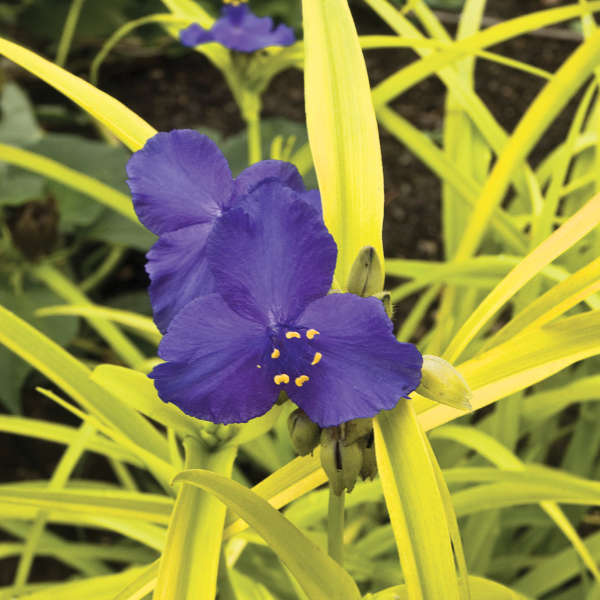
‘Sweet Kate’ is a compact, clump-forming, hybrid spiderwort that is noted for its unique yellow foliage. It typically grows to 12” tall. Three-petaled, purplish-blue flowers (to 1.5” diameter) accented by contrasting yellow stamens are borne in terminal clusters (umbels) atop stiff stems.

Pot Size (gallons), Height: #1

Description

Spiderwort

TRADESCANTIA VIRGINIANA

What if one plant could give you three petals of pure joy every single morning, then start the whole show over again the next day? Spiderwort is a Connecticut gardener’s secret weapon—a cheerful, unfussy perennial that blooms prolifically throughout late spring and early summer, treating you to an endless parade of delicate three-petaled flowers. The blooms last just one day (hence the common nickname “Dayflower”), but the plant produces them with such generous abundance that you’ll never notice the brief curtain calls. This is the kind of plant that makes gardening feel like magic, especially when you realize it practically takes care of itself.

What it looks like

Spiderwort is an airy, graceful plant with narrow, strappy green foliage that grows in loose clumps reaching about 2 to 3 feet tall. The real show comes from those enchanting flowers—delicate, papery-textured blossoms in shades of blue, purple, pink, or occasionally white, depending on the variety. Each flower sits atop a wispy stem, giving the whole plant an ethereal quality that floats above the garden like a cloud of spring color. The foliage is attractive enough on its own, though it does tend to look a bit tired by midsummer heat, which is why strategic companion planting is such a game-changer.

Growing it in your garden

Here’s what makes Spiderwort such a blessing for Connecticut gardeners: it tolerates a remarkable range of conditions. Yes, it prefers part shade and consistently moist (but not waterlogged) soil, and yes, it will reward you with more abundant blooms in those conditions. But Spiderwort is genuinely forgiving. It can handle full sun in cooler Connecticut locations, and it won’t hold grudges if your soil stays on the drier side—it just might bloom a touch less enthusiastically. It’s practically impossible to kill, which makes it perfect for beginners or for those “I-don’t-have-time-for-fussy-plants” gardeners we all know (even if they’re sometimes us).

Plant Spiderwort in spring or fall, spacing plants about 18 inches apart. It’s not a plant that demands perfection, but it does appreciate soil that’s been amended with a bit of compost. Once established, it settles in like a good neighbor and gets on with the business of blooming without demanding your attention.

Through the seasons

Spring arrives, and Spiderwort emerges with its fresh, green foliage—a welcome sign that the garden is waking up. By late May or early June (depending on our unpredictable New England weather), those first delicate flowers appear. The blooming season is generous, often lasting through July if you’re deadheading spent flowers, though this plant is so prolific that even without deadheading, you’ll have plenty of fresh blooms each morning. Come midsummer heat, the foliage may look a bit weathered, which is why cutting the plant back in July can give it a second wind—fresh growth and another round of flowers often follow as temperatures cool. By autumn, Spiderwort fades gracefully into dormancy, and come winter, it settles in beneath Connecticut’s snow, perfectly hardy and content.

Where it shines

Spiderwort is at its very best in shade gardens where it brings morning color and life to corners that many plants overlook. It’s wonderful in woodland settings, delightful along shaded pathways, and charming in cottage gardens where its casual elegance feels completely at home. It also performs beautifully in part-shade borders, where its airy texture provides a lovely foil for bolder-leaved perennials. If you have moist soil and partial shade—the kind of spot that might have been challenging before—Spiderwort transforms it into a color-filled asset.

Perfect companions

Since Spiderwort’s foliage can look tired by midsummer, pair it with plants that shine during the heat: ornamental grasses like PANICUM or MISCANTHUS add texture and visual interest as Spiderwort fades. Plant Spiderwort alongside shade-loving hostas or hellebores for foliage contrast, or companion it with coral bells for color play. Late-blooming perennials like Japanese anemones or autumn asters pick up the color torch as Spiderwort quiets down. In part-shade borders, combine it with HEUCHERA, ferns, and other fine-textured perennials for a sophisticated, layered look.

Care tips

Spiderwort is genuinely low-maintenance. Water during dry spells, particularly in the first season while it’s establishing itself. Deadheading spent flowers will encourage more blooms, though it’s not strictly necessary. If foliage looks tired by mid-July, cut the plant back by about half—you’ll get fresh growth and often another round of flowers. Spiderwort doesn’t require fertilizing; it’s not a plant that benefits from coddling. Let it be itself, and it will thrive.

Quick facts

  • Hardiness Zone: 4–9 (perfect for Connecticut)
  • Mature Height & Spread: 2–3 feet tall, 18–24 inches wide
  • Bloom Season: Late May through July (sometimes into August with deadheading)
  • Light Requirements: Part shade to full shade (tolerates part sun)
  • Water Needs: Moderate; prefers consistently moist soil but tolerates drier conditions once established
  • Available at: Both our retail and wholesale locations