
Description
CEDRUS ATLANTICA ‘GLAUCA PENDULA’
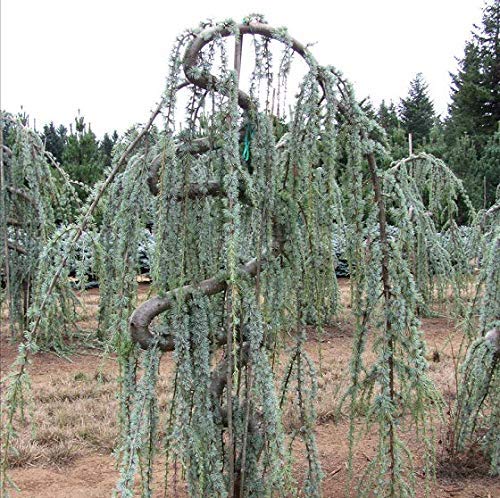
Imagine a waterfall frozen in blue-green foliage, cascading from a single trunk like something from a storybook garden. The Weeping Blue Atlas Cedar is that rare plant that stops visitors mid-conversation—it’s dramatic, sculptural, and undeniably present in any landscape. This isn’t just another conifer tucked into a foundation planting. This is a statement piece, a focal point, a conversation starter that transforms your garden into something memorable.
What it looks like
The Weeping Blue Atlas Cedar is unmistakable once you’ve seen it. Soft, powdery blue-gray needles clothe long, gracefully pendulous branches that stretch downward and outward like a living fountain. The needles are short and dense, arranged in clusters on the weeping branchlets, creating an almost feathery texture. Unlike the rigid, columnar habit of its parent species, CEDRUS ATLANTICA, this cultivar develops a loose, cascading silhouette that becomes more pronounced and elegant as it matures. You’ll notice the foliage maintains its cool blue-gray tone year-round—there’s no dull, tired look in winter that plagues some conifers in Connecticut.
Growing it in your garden
Here’s what you need to know upfront: the Weeping Blue Atlas Cedar prefers excellent drainage and full sun. If you have heavy clay soil—and let’s be honest, much of Connecticut does—you’ll want to amend generously or plant in a raised bed. This is a tree that doesn’t appreciate wet feet, especially in our New England winters when soil stays saturated for weeks. Once established, however, it’s remarkably tough and low-maintenance. It’s not fussy about pH and actually appreciates our generally neutral to slightly acidic Connecticut soils. The real gift is that it’s hardy right here in our region, unlike some weeping forms that struggle with our cold snaps.
This cedar develops at its own pace. It won’t race skyward like a Norway Spruce. Instead, it grows steadily, gradually gaining stature and presence. That patience pays dividends—you’re investing in a tree that will still be magnificent decades from now.
Through the seasons
Spring brings fresh new growth at the branch tips, even lighter blue-gray than the mature foliage, creating a lovely subtle color variation. Summer is when the Weeping Blue Atlas Cedar truly earns its keep—the foliage is luminous in bright light, almost glowing on overcast Connecticut afternoons. The pendulous form is most apparent during these months, when you can see the architecture of the weeping branches without distraction.
Fall and winter are equally appealing. While deciduous trees around it turn and drop, your Atlas Cedar maintains its ethereal blue tone, providing essential color and form when the landscape needs it most. The structure becomes even more apparent without summer’s surrounding greenery. On snow-covered days, the blue-gray needles create a stunning contrast against white.
Where it shines
A specimen tree in the landscape, absolutely. Plant it where it can be viewed from multiple angles—a corner of the property, a focal point in a larger garden bed, or even as a striking accent in a Japanese or meditation garden. The Weeping Blue Atlas Cedar also works beautifully as a tall container specimen on a terrace or patio, especially if you’re looking for year-round interest in a defined space.
It’s also worth considering for sites that need visual interest in winter months. Connecticut gardeners know that December through March can feel visually bare; this tree fills that gap with grace and presence.
Perfect companions
Plant this specimen where it has room to be the star. Lower-growing companions like dwarf hebes, blue fescue, or creeping junipers repeat the blue tones and create a cohesive composition without competing. Evergreen shrubs with contrasting foliage—perhaps a dark green boxwood or burgundy-tinged dwarf Alberta spruce—can anchor the base and ground the tree visually. For seasonal color, spring bulbs and shade-tolerant perennials around the drip line add interest without disrupting the cedar’s show.
Care tips
Water regularly during the establishment year and during prolonged dry spells in summer—even drought-tolerant plants need help when newly planted. Mulch lightly around the base to retain moisture and keep soil temperature moderate. Avoid deep mulching against the trunk, which can invite rot. Pruning is rarely necessary; this tree naturally develops its beautiful form. If you need to remove a wayward branch, do it in late winter. The cedar is remarkably pest and disease-resistant in our region, another point in its favor for Connecticut gardeners.
Quick facts
- Hardiness Zone: Zones 6-9 (perfect for Connecticut)
- Mature Height & Spread: 20-30 feet tall and 8-12 feet wide at maturity
- Bloom Season: Small cones develop; valued for foliage
- Light Requirements: Full sun (6+ hours daily)
- Water Needs: Moderate; prefers well-draining soil; drought-tolerant once established
- Available at: Both our retail and wholesale locations