
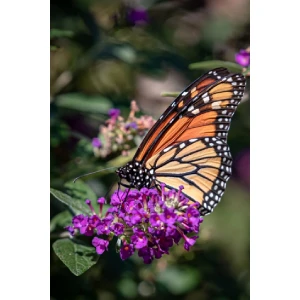
Description
BUDDLEJA DAVIDII
What if one plant could deliver months of fragrant, nectar-rich blooms that turn your garden into a butterfly sanctuary? The Butterfly Bush does exactly that—and it does it with showstopping style. This deciduous shrub is a New England gardener’s secret weapon for creating that cottage garden magic while supporting pollinators throughout summer and into fall. If you’ve ever wanted a plant that works as hard as you do, this is it.
What it looks like
Butterfly Bush is an elegant, upright shrub with graceful, arching branches clothed in narrow, lance-shaped leaves that have a soft, grayish-green tone. But the real show is in the flowers. Long, slender panicles of tiny, fragrant blooms emerge in mid-summer, drooping slightly like botanical chandeliers. Colors range from rich purples and deep lilacs to pink, white, and sunny yellow, depending on the variety you choose. The overall effect is romantic and ethereal—like something plucked from a Victorian garden plan, yet surprisingly modern in appeal.
Growing it in your garden
Butterfly Bush thrives in full sun and well-draining soil, making it perfect for Connecticut’s varied garden sites. It’s not fussy about soil pH and actually performs better in leaner soils—rich, overly amended beds can encourage excessive foliage at the expense of flowers. Give it room to reach its mature size; these shrubs appreciate space and air circulation. Plant in spring for best establishment in our New England climate. The plant will establish quickly and begin flowering in its first year, which is rare and wonderful.
Through the seasons
Spring arrives with fresh green foliage emerging on sturdy canes. By early summer, flower buds form at the branch tips, and by mid-summer, the plant is absolutely covered in blooms. These flowers continue without pause until the first hard freeze—sometimes into November in milder Connecticut years. Hummingbirds and dozens of butterfly species will visit constantly, creating a living, fluttering display. The plant is deciduous, so come winter, it goes dormant, making it easy to prune back hard in early spring without worry.
Where it shines
This is your go-to shrub for mixed borders where you want extended color and movement. Plant it along sunny fence lines, at the back of perennial beds, or as a focal point in a pollinator garden. Butterfly Bush works beautifully in cottage-style plantings and modern landscapes alike. It’s particularly valuable in Connecticut gardens because it blooms prolifically during the exact window when other shrubs are beginning to fade—mid-July through September. If you’re trying to create a wildlife-friendly garden, this plant is non-negotiable.
Perfect companions
Pair Butterfly Bush with other pollinator-friendly plants like ECHINACEA (purple coneflower), ASCLEPIAS (milkweed), and ornamental grasses such as PANICUM or MISCANTHUS. The height works well with shorter plants in front—think NEPETA (catmint) or SALVIA. White varieties pair beautifully with Russian Sage (PEROVSKIA) for a cooling effect, while purple cultivars create drama alongside golden-leafed shrubs. The airy texture also plays well with ornamental grasses, creating movement and depth.
Care tips
Early spring is the time to prune Butterfly Bush hard—cut back to about 12-18 inches from the ground, removing any winter-damaged wood. This might seem drastic, but the plant will respond by growing fuller and blooming more prolifically. Deadhead spent flower panicles regularly throughout the season to encourage continuous blooming; it’s an easy and rewarding task. Water regularly during establishment and through the first season, then the plant becomes quite drought-tolerant once settled. In harsh Connecticut winters, occasionally the plant may die back significantly, but it almost always returns from the roots come spring.
Quick facts
- Hardiness Zone: Zone 5 (marginal in Zone 4; best grown in protected sites)
- Mature Height & Spread: 8-12 feet tall and wide, depending on variety
- Bloom Season: Mid-July through first frost
- Light Requirements: Full sun (6+ hours daily)
- Water Needs: Moderate; drought-tolerant once established
- Available at: Both our retail and wholesale locations