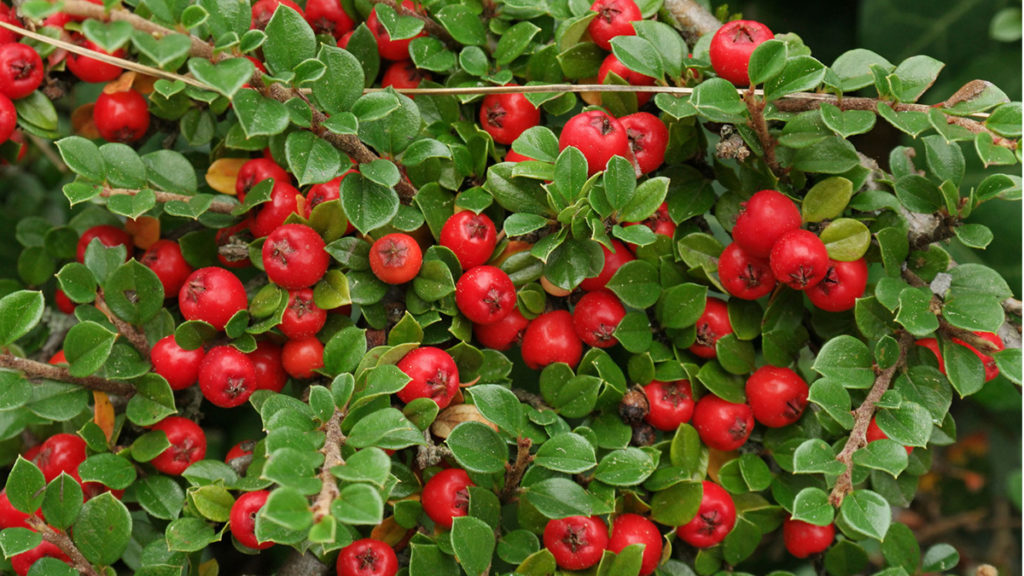
Cotoneaster

COTONEASTER SPECIES

If you’ve been searching for a plant that handles the unpredictable swings of a New England autumn, tolerates poor soil without complaint, and fills your garden with visual interest from spring through winter—sometimes all at once—then Cotoneaster deserves your attention. This underrated shrub family has a way of making small spaces feel abundant and layered, offering something new to discover with each passing month. Whether you choose an upright form to anchor a border or a spreading groundcover version to cascade over a wall, Cotoneaster brings a quiet sophistication that belies how genuinely low-maintenance it truly is.

What it looks like

Cotoneasters are wonderfully architectural plants with fine-textured, often diminutive foliage that creates an elegant, almost delicate appearance. The leaves are small and typically dark green, some with a subtle silvery undersides that catch the light beautifully. Come late spring, tiny flowers—usually white or pale pink—appear in small clusters along the branches, creating an understated prettiness that bees absolutely adore. But the real show arrives in fall and winter, when persistent berries in shades of red, orange, or deep crimson transform the plant into a jeweled sculpture. The berries can last well into winter, sometimes remaining even after the first heavy snows, creating visual warmth in the dormant season when you need it most.

Growing it in your garden

Here’s what makes Cotoneaster such a reliable performer in Connecticut gardens: it asks for so very little. These shrubs thrive in full sun to partial shade, adapting gracefully to less-than-ideal light conditions without becoming leggy or sullen. They prefer well-drained soil and once established, show real drought tolerance—a valuable trait as New England weather becomes increasingly variable. They’re not fussy about pH and can handle the compacted, less-than-perfect soil that comes with new construction or urban gardens. Unlike some ornamentals that demand perfection, Cotoneaster seems to appreciate being planted and left mostly to its own devices.

Through the seasons

Spring arrives quietly with fresh foliage emerging in soft greens, followed shortly by those delicate flower clusters. It’s not a showstopper bloom, but rather an understatement that hints at what’s coming. Summer sees the plant settle into a sculptural form, the fine texture of the leaves creating light and shadow throughout the day. Fall is when Cotoneaster truly distinguishes itself—just as many Connecticut gardens are losing their ornamental interest, this plant catches fire with brilliant berry color while remaining attractive when deciduous neighbors turn gray and bare. Into winter, the persistent fruit hangs on, providing food for winter birds while adding crucial color to the landscape. Evergreen and semi-evergreen varieties maintain their foliage, creating additional winter structure.

Where it shines

Cotoneaster is extraordinary as a specimen plant on berms or raised areas where you can showcase its form from multiple angles. It excels as a mass planting along hedgerows or in naturalized areas where its appeal to wildlife (those berries feed robins and waxwings throughout fall and early winter) supports the local ecosystem. Prostrate varieties make stellar groundcovers for steep banks, terraces, or spaces where erosion control matters. Upright forms work beautifully as informal screens or as the backbone plant in mixed borders, their fine texture a sophisticated contrast to bolder-leaved companions. Even in containers, Cotoneaster performs admirably, its branching structure visible from all sides.

Perfect companions

Cotoneaster’s fine texture and warm berry tones pair beautifully with ornamental grasses like PANICUM VIRGATUM or MISCANTHUS, creating a rhythmic interplay of forms. Combine it with late-blooming asters, which flower right as the berries reach their peak color intensity. Early-flowering bulbs like Hellebores provide spring interest before Cotoneaster takes center stage. For foliage contrast, pair it with plants having larger, bolder leaves—sedums, Heucheras, or Japanese maples all make striking companions. Evergreen Boxwoods create year-round structure alongside Cotoneaster’s seasonal drama.

Care tips

While Cotoneaster is genuinely low-maintenance, a few practices will keep it thriving. Water deeply during establishment (roughly the first year), then trust it to find moisture through its own root system. Prune only if you’re shaping a specific form; these plants develop their most beautiful architecture when allowed to grow naturally. If you do prune, do it immediately after bloom or in late winter to avoid removing next year’s berry-producing branches. In Connecticut’s climate, Cotoneaster rarely faces pest or disease pressure—it’s simply a tough, resilient plant. Avoid heavy fertilization, which can encourage weak, disease-prone growth; let it thrive on whatever nutrition your garden naturally provides.

Quick facts

  • Hardiness Zone: Zones 4-8, depending on species; most varieties excel in Connecticut
  • Mature Height & Spread: Ranges from 1-3 feet for groundcover types to 10-15 feet for upright forms
  • Bloom Season: Late spring; berries persist from late summer through winter
  • Light Requirements: Full sun to partial shade
  • Water Needs: Moderate; drought-tolerant once established
  • Available at: Both our retail and wholesale locations

Cotoneaster

Category:

Excellent ground cover with glossy foliage.

Pot Size (gallons), Height: #3

Description

Cotoneaster

COTONEASTER SPECIES

If you’ve been searching for a plant that handles the unpredictable swings of a New England autumn, tolerates poor soil without complaint, and fills your garden with visual interest from spring through winter—sometimes all at once—then Cotoneaster deserves your attention. This underrated shrub family has a way of making small spaces feel abundant and layered, offering something new to discover with each passing month. Whether you choose an upright form to anchor a border or a spreading groundcover version to cascade over a wall, Cotoneaster brings a quiet sophistication that belies how genuinely low-maintenance it truly is.

What it looks like

Cotoneasters are wonderfully architectural plants with fine-textured, often diminutive foliage that creates an elegant, almost delicate appearance. The leaves are small and typically dark green, some with a subtle silvery undersides that catch the light beautifully. Come late spring, tiny flowers—usually white or pale pink—appear in small clusters along the branches, creating an understated prettiness that bees absolutely adore. But the real show arrives in fall and winter, when persistent berries in shades of red, orange, or deep crimson transform the plant into a jeweled sculpture. The berries can last well into winter, sometimes remaining even after the first heavy snows, creating visual warmth in the dormant season when you need it most.

Growing it in your garden

Here’s what makes Cotoneaster such a reliable performer in Connecticut gardens: it asks for so very little. These shrubs thrive in full sun to partial shade, adapting gracefully to less-than-ideal light conditions without becoming leggy or sullen. They prefer well-drained soil and once established, show real drought tolerance—a valuable trait as New England weather becomes increasingly variable. They’re not fussy about pH and can handle the compacted, less-than-perfect soil that comes with new construction or urban gardens. Unlike some ornamentals that demand perfection, Cotoneaster seems to appreciate being planted and left mostly to its own devices.

Through the seasons

Spring arrives quietly with fresh foliage emerging in soft greens, followed shortly by those delicate flower clusters. It’s not a showstopper bloom, but rather an understatement that hints at what’s coming. Summer sees the plant settle into a sculptural form, the fine texture of the leaves creating light and shadow throughout the day. Fall is when Cotoneaster truly distinguishes itself—just as many Connecticut gardens are losing their ornamental interest, this plant catches fire with brilliant berry color while remaining attractive when deciduous neighbors turn gray and bare. Into winter, the persistent fruit hangs on, providing food for winter birds while adding crucial color to the landscape. Evergreen and semi-evergreen varieties maintain their foliage, creating additional winter structure.

Where it shines

Cotoneaster is extraordinary as a specimen plant on berms or raised areas where you can showcase its form from multiple angles. It excels as a mass planting along hedgerows or in naturalized areas where its appeal to wildlife (those berries feed robins and waxwings throughout fall and early winter) supports the local ecosystem. Prostrate varieties make stellar groundcovers for steep banks, terraces, or spaces where erosion control matters. Upright forms work beautifully as informal screens or as the backbone plant in mixed borders, their fine texture a sophisticated contrast to bolder-leaved companions. Even in containers, Cotoneaster performs admirably, its branching structure visible from all sides.

Perfect companions

Cotoneaster’s fine texture and warm berry tones pair beautifully with ornamental grasses like PANICUM VIRGATUM or MISCANTHUS, creating a rhythmic interplay of forms. Combine it with late-blooming asters, which flower right as the berries reach their peak color intensity. Early-flowering bulbs like Hellebores provide spring interest before Cotoneaster takes center stage. For foliage contrast, pair it with plants having larger, bolder leaves—sedums, Heucheras, or Japanese maples all make striking companions. Evergreen Boxwoods create year-round structure alongside Cotoneaster’s seasonal drama.

Care tips

While Cotoneaster is genuinely low-maintenance, a few practices will keep it thriving. Water deeply during establishment (roughly the first year), then trust it to find moisture through its own root system. Prune only if you’re shaping a specific form; these plants develop their most beautiful architecture when allowed to grow naturally. If you do prune, do it immediately after bloom or in late winter to avoid removing next year’s berry-producing branches. In Connecticut’s climate, Cotoneaster rarely faces pest or disease pressure—it’s simply a tough, resilient plant. Avoid heavy fertilization, which can encourage weak, disease-prone growth; let it thrive on whatever nutrition your garden naturally provides.

Quick facts

  • Hardiness Zone: Zones 4-8, depending on species; most varieties excel in Connecticut
  • Mature Height & Spread: Ranges from 1-3 feet for groundcover types to 10-15 feet for upright forms
  • Bloom Season: Late spring; berries persist from late summer through winter
  • Light Requirements: Full sun to partial shade
  • Water Needs: Moderate; drought-tolerant once established
  • Available at: Both our retail and wholesale locations