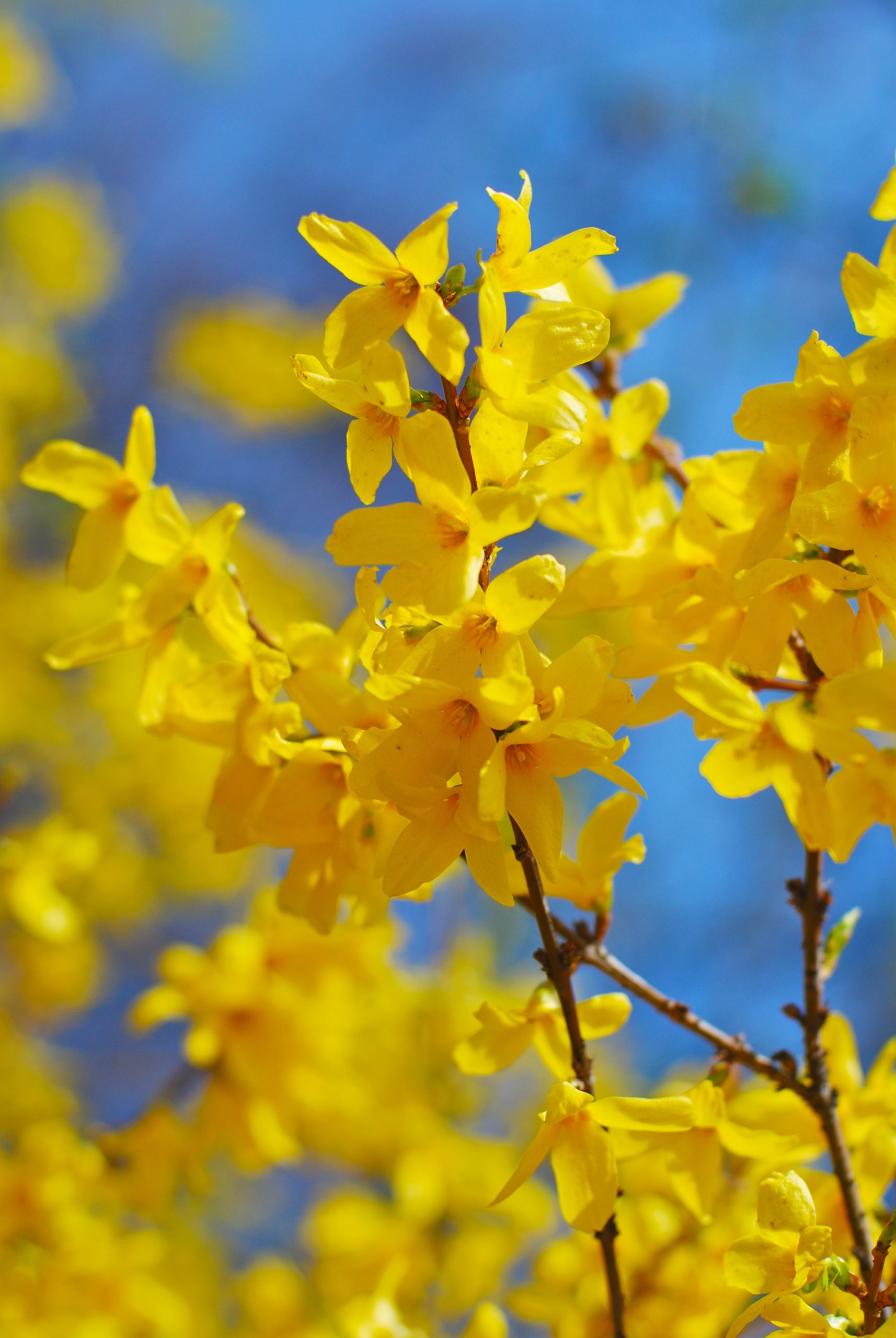
FORSYTHIA X INTERMEDIA

If you’ve been searching for a plant that actually feels like spring has arrived—the one that makes your neighbors stop and ask questions—Forsythia is it. This is the shrub that rewrites the calendar every year, bursting into brilliant yellow bloom sometimes weeks before anything else dares to leaf out. In Connecticut gardens, there’s something almost magical about watching these bright branches emerge from the lingering brown landscape of early March. It’s not subtle. It’s not quiet. It’s pure, unapologetic joy in shrub form.

What it looks like

Forsythia is a deciduous shrub with an upright, fountain-like habit that grows dense and full over time. The real show, though, happens in early spring when every single branch becomes covered—absolutely smothered—in small, four-petaled flowers in the most brilliant shade of golden yellow you’ll see all season. The flowers appear before the leaves, which means you get weeks of pure color impact without any green competition. Once the flowers fade, the plant develops small, narrow, medium-green leaves that create a soft, fine-textured appearance throughout the growing season. The overall form is naturally graceful, with arching branches that create an attractive structure even in winter.

Growing it in your garden

Here’s what makes Forsythia such a reliable choice for New England gardeners: it’s essentially foolproof. This shrub is tough, adaptable, and honestly doesn’t ask for much. It prefers full sun to part shade—give it at least six hours of direct sunlight daily and you’ll get the most flowers—but it’s flexible enough to perform in less ideal light. The beauty of Forsythia is that it thrives in ordinary soil. It’s not fussy about pH, doesn’t need rich, amended beds, and actually performs better in average conditions than in overly coddled ones. Plant it in spring or fall, space multiple shrubs about six feet apart if you’re creating a screen or hedge, and then basically step back and let it do its thing.

Through the seasons

Spring is obviously Forsythia’s moment—those golden flowers are the whole reason you’re growing it. But there’s more to the story. After bloom time, the shrub develops that pleasant, fine-textured foliage that provides a nice, neutral backdrop for other spring bloomers. Summer finds Forsythia quietly doing its job, offering good structure to the garden and serving as a living wall if you’ve positioned it as a screen. Fall is subtle here; the leaves turn yellowish before dropping, but this isn’t a plant you’re growing for autumn color. Winter reveals the shrub’s architectural bones—those arching branches have a certain elegance when bare, and they’re absolutely stunning when frosted or covered in snow.

Where it shines

Plant Forsythia where you want maximum impact in early spring. A row along a property line creates an instant, cheerful boundary. A cluster of three or five plants against a darker background—evergreen trees, a fence, or a shed—makes those yellow flowers positively glow. Forsythia also works beautifully in mixed shrub borders, where it can anchor the spring display before stepping back to support other plants’ moments. It’s excellent for screening and hedging because it grows quickly and densely. And if you want to cut branches for forcing indoors, Forsythia is generous and forgiving about it—cutting actually encourages bushier growth.

Perfect companions

The golden yellow of Forsythia pairs beautifully with spring bulbs, particularly purple crocuses and deep blue scillas. Underplant with white flowering hellebores or variegated hostas for sophisticated contrast. Pair it with other early bloomers like flowering cherries or crabapples for a staggered show of color. In mixed borders, follow it with spireas, viburnums, and other spring bloomers that will take center stage as Forsythia’s flowers fade. The key is thinking about what comes next—because once Forsythia has had its moment, you want other plants ready to continue the seasonal story.

Care tips

Forsythia is refreshingly low-maintenance. It’s drought-tolerant once established, though it appreciates regular water during its first season. It doesn’t need fertilizing in normal garden soil. Pruning is optional—this plant is attractive whether you shape it formally or let it grow naturally—but if you do prune, do it immediately after flowering ends. Never prune in late summer or fall, as you’ll cut off next year’s flower buds. If your shrub has gotten leggy or overgrown, you can be quite aggressive with pruning; Forsythia recovers beautifully. The plant is essentially pest and disease-free in Connecticut gardens.

Quick facts

  • Hardiness Zone: 4–9 (reliably cold-hardy throughout Connecticut)
  • Mature Height & Spread: 8–10 feet tall and wide
  • Bloom Season: Early spring (March–April in Connecticut)
  • Light Requirements: Full sun to part shade
  • Water Needs: Low to moderate; drought-tolerant once established
  • Available at: Both our retail and wholesale locations

Forsythia

Category:

Early Spring, yellow flowers. Multi-stemmed grower used for hedging.

Zoning: 4-5
Mature Height and Spread: 6-8’ & 5-7’
Pot Size (gallons), Height: #5 5-6’

Description

FORSYTHIA X INTERMEDIA

If you’ve been searching for a plant that actually feels like spring has arrived—the one that makes your neighbors stop and ask questions—Forsythia is it. This is the shrub that rewrites the calendar every year, bursting into brilliant yellow bloom sometimes weeks before anything else dares to leaf out. In Connecticut gardens, there’s something almost magical about watching these bright branches emerge from the lingering brown landscape of early March. It’s not subtle. It’s not quiet. It’s pure, unapologetic joy in shrub form.

What it looks like

Forsythia is a deciduous shrub with an upright, fountain-like habit that grows dense and full over time. The real show, though, happens in early spring when every single branch becomes covered—absolutely smothered—in small, four-petaled flowers in the most brilliant shade of golden yellow you’ll see all season. The flowers appear before the leaves, which means you get weeks of pure color impact without any green competition. Once the flowers fade, the plant develops small, narrow, medium-green leaves that create a soft, fine-textured appearance throughout the growing season. The overall form is naturally graceful, with arching branches that create an attractive structure even in winter.

Growing it in your garden

Here’s what makes Forsythia such a reliable choice for New England gardeners: it’s essentially foolproof. This shrub is tough, adaptable, and honestly doesn’t ask for much. It prefers full sun to part shade—give it at least six hours of direct sunlight daily and you’ll get the most flowers—but it’s flexible enough to perform in less ideal light. The beauty of Forsythia is that it thrives in ordinary soil. It’s not fussy about pH, doesn’t need rich, amended beds, and actually performs better in average conditions than in overly coddled ones. Plant it in spring or fall, space multiple shrubs about six feet apart if you’re creating a screen or hedge, and then basically step back and let it do its thing.

Through the seasons

Spring is obviously Forsythia’s moment—those golden flowers are the whole reason you’re growing it. But there’s more to the story. After bloom time, the shrub develops that pleasant, fine-textured foliage that provides a nice, neutral backdrop for other spring bloomers. Summer finds Forsythia quietly doing its job, offering good structure to the garden and serving as a living wall if you’ve positioned it as a screen. Fall is subtle here; the leaves turn yellowish before dropping, but this isn’t a plant you’re growing for autumn color. Winter reveals the shrub’s architectural bones—those arching branches have a certain elegance when bare, and they’re absolutely stunning when frosted or covered in snow.

Where it shines

Plant Forsythia where you want maximum impact in early spring. A row along a property line creates an instant, cheerful boundary. A cluster of three or five plants against a darker background—evergreen trees, a fence, or a shed—makes those yellow flowers positively glow. Forsythia also works beautifully in mixed shrub borders, where it can anchor the spring display before stepping back to support other plants’ moments. It’s excellent for screening and hedging because it grows quickly and densely. And if you want to cut branches for forcing indoors, Forsythia is generous and forgiving about it—cutting actually encourages bushier growth.

Perfect companions

The golden yellow of Forsythia pairs beautifully with spring bulbs, particularly purple crocuses and deep blue scillas. Underplant with white flowering hellebores or variegated hostas for sophisticated contrast. Pair it with other early bloomers like flowering cherries or crabapples for a staggered show of color. In mixed borders, follow it with spireas, viburnums, and other spring bloomers that will take center stage as Forsythia’s flowers fade. The key is thinking about what comes next—because once Forsythia has had its moment, you want other plants ready to continue the seasonal story.

Care tips

Forsythia is refreshingly low-maintenance. It’s drought-tolerant once established, though it appreciates regular water during its first season. It doesn’t need fertilizing in normal garden soil. Pruning is optional—this plant is attractive whether you shape it formally or let it grow naturally—but if you do prune, do it immediately after flowering ends. Never prune in late summer or fall, as you’ll cut off next year’s flower buds. If your shrub has gotten leggy or overgrown, you can be quite aggressive with pruning; Forsythia recovers beautifully. The plant is essentially pest and disease-free in Connecticut gardens.

Quick facts

  • Hardiness Zone: 4–9 (reliably cold-hardy throughout Connecticut)
  • Mature Height & Spread: 8–10 feet tall and wide
  • Bloom Season: Early spring (March–April in Connecticut)
  • Light Requirements: Full sun to part shade
  • Water Needs: Low to moderate; drought-tolerant once established
  • Available at: Both our retail and wholesale locations