
Description
If you’re looking for a Connecticut native shrub that brings year-round interest and doesn’t demand constant fussing, let me introduce you to Witch Alder—one of my favorite underrated gems! This elegant shrub combines fragrant winter blooms, attractive foliage, and a graceful habit that just works in our New England gardens. Whether you’re nestled in the rolling hills of the Litchfield County or gardening closer to the coast, Witch Alder (FOTHERGILLA MAJOR) is a plant that earns its place in your landscape season after season.
What it looks like
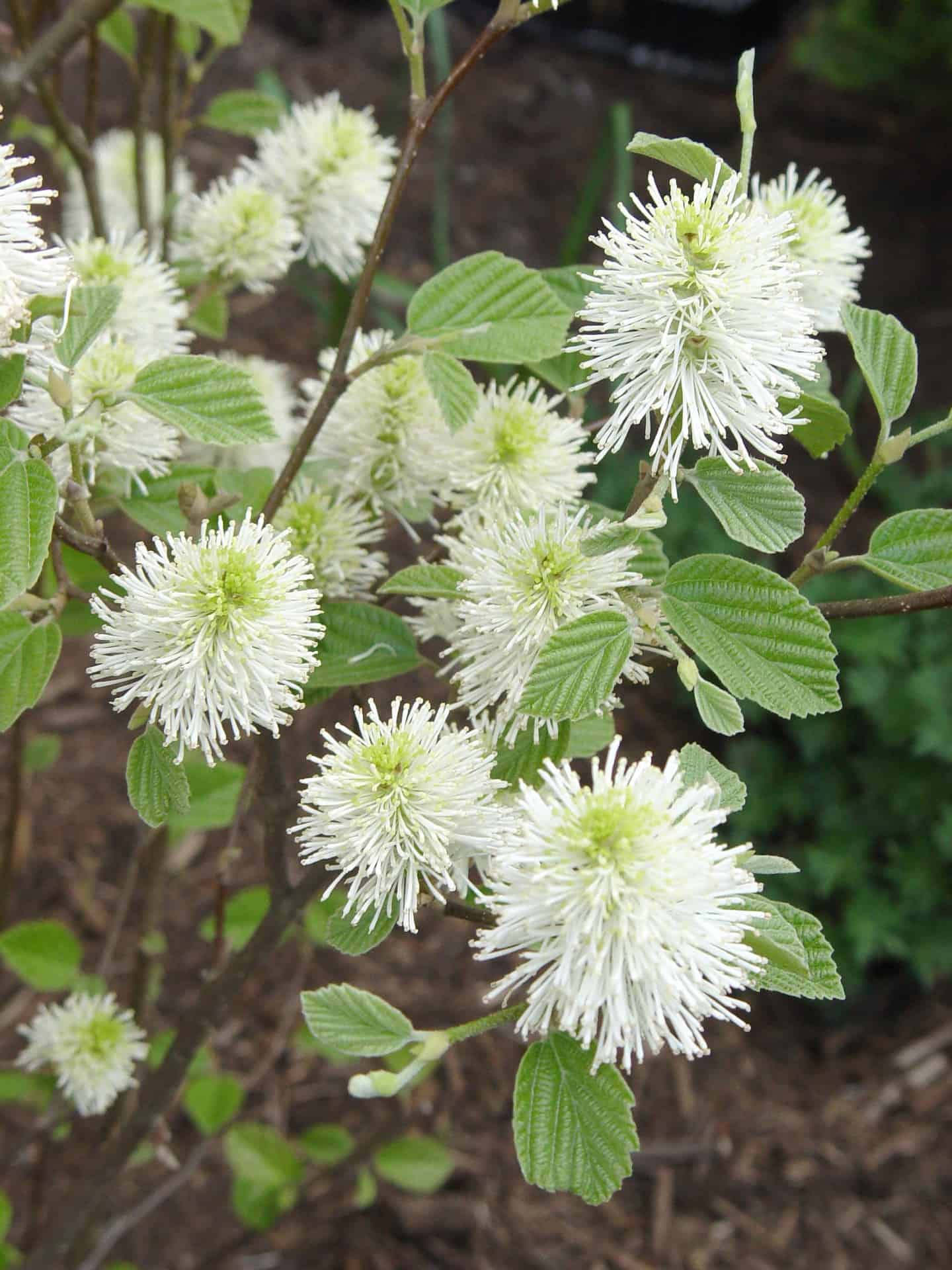
FOTHERGILLA MAJOR is an absolutely charming multi-stemmed shrub with a naturally rounded, somewhat spreading form that gives your garden an authentic, woodland feel. The leaves are oval and textured with a lovely blue-green hue during the growing season, and come fall—oh my!—they transform into the most stunning display of golden yellows, deep oranges, and burnt reds that you’ll be reaching for your camera repeatedly. But here’s the real showstopper: those delicate, fragrant flower spikes that emerge in late winter and early spring. The bottlebrush-like flowers are creamy white to soft yellow, and I’m always amazed by how they seem to glow on cool March mornings. The blooms emit a sweet, spicy fragrance that smells almost like honey and vanilla—seriously, you’ll want to plant it near a seating area so you can enjoy that incredible scent as the season turns.
Growing it in your garden
The wonderful thing about Witch Alder is that it’s incredibly accommodating in Connecticut gardens. This native shrub prefers moist, well-draining acidic soil—think of the conditions you’d find in our New England woodlands—and it absolutely thrives in those conditions. If your soil tends toward alkaline, don’t worry; you can amend it with peat moss or sulfur to create that slightly acidic environment it loves. FOTHERGILLA MAJOR wants to nestle into a spot with partial shade to full sun, though in our Connecticut heat, I’ve found that a little afternoon shade prevents stress during those hot, dry spells we sometimes get in July and August. The good news? This shrub isn’t fussy about exact conditions once it’s established. It’s also refreshingly pest and disease-resistant, so you won’t be battling the typical issues that plague some ornamental shrubs in our region.
Through the seasons
What I adore about Witch Alder is how it keeps your garden interesting throughout the year. Winter is when it truly shines—those fragrant flowers appear from late February through April, bringing both visual interest and that delightful scent when so little else is blooming in Connecticut. Spring transitions to summer, when the blue-green foliage provides a lovely backdrop for brighter perennials and companions. The plant maintains its refined shape throughout summer with minimal maintenance. Then autumn rolls around, and you get that spectacular foliage show that rivals many more famous fall-color plants. Even in winter when the leaves have dropped, the plant’s attractive branching structure provides subtle interest to the landscape. It’s truly a four-season performer.
Where it shines
Witch Alder works beautifully in so many garden settings throughout Connecticut. I love it as an understory plant in woodland gardens, where it feels right at home among native plants and shade-loving companions. It’s equally gorgeous planted as a specimen shrub where you can really showcase those winter blooms and fall colors. Because it has a more open, airy structure than some shrubs, it doesn’t create that heavy, dark feeling that can make smaller yards feel cramped. It’s wonderful for creating a transitional layer between tall shade trees and lower perennials, and it adds authentic native plant character to conservation-minded gardens. The fragrant flowers make it particularly special near entryways or along pathways where visitors can enjoy the scent up close.
Perfect companions
Witch Alder pairs beautifully with other native Connecticut plants that share similar growing preferences. I like combining it with other flowering shrubs like native AZALEAS (RHODODENDRON species) or SERVICEBERRIES (AMELANCHIER), which bloom around the same time and create a lovely progression of flowers through spring. At ground level, try pairing it with shade-tolerant perennials like hellebores, hostas, or native wildflowers such as trillium. Evergreen companions like native hollies or inkberry add year-round structure, and ferns provide wonderful textural contrast to the Witch Alder’s coarser foliage. Don’t forget to underplant with spring bulbs like snowdrops and crocuses—they’ll bloom right alongside those fragrant Witch Alder flowers.
Care tips
Once established, Witch Alder is remarkably low-maintenance, which is music to a busy gardener’s ears! Water regularly during the first growing season to help it establish a deep root system, and continue providing consistent moisture during our Connecticut dry spells. Mulching around the base with 2 to 3 inches of wood chips helps retain moisture and keeps the roots cool. Pruning is minimal—just remove any dead or crossing branches in early spring before flowering. If you want to shape it slightly, do so right after blooming finishes. Unlike some shrubs, Witch Alder responds well to careful renewal pruning if it ever becomes too leggy, so it’s quite forgiving if you need to rejuvenate an older plant.
Quick facts
- Hardiness Zone: Zones 4-8 (perfect for Connecticut!)
- Mature Height & Spread: 8-10 feet tall and wide at maturity
- Bloom Season: Late February through April
- Light Requirements: Partial shade to full sun
- Water Needs: Moderate to moist; prefers consistent moisture
- Available at: Both our retail and wholesale locations.