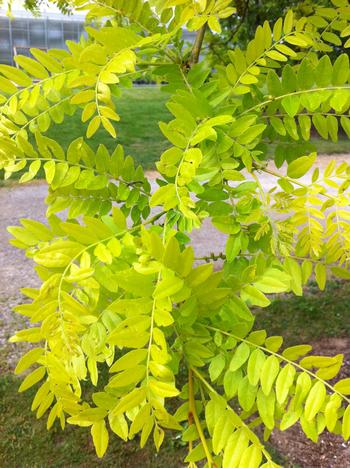
If you’re looking for a deciduous tree that can handle Connecticut’s unpredictable weather while providing dappled shade and delicate beauty, the ShadeMaster Locust might just be your answer. This cultivar of the native black locust has been specifically bred to give you all the best traits of its species without some of the messier habits that can make the straight species a bit challenging in residential gardens. It’s a fantastic choice if you want a tree that grows quickly, handles tough conditions, and adds an elegant, airy quality to your landscape.

What it looks like

The ShadeMaster Locust (GLEDITSIA TRIACANTHOS VAR. INERMIS ‘SHADMASTER’) is an absolutely stunning deciduous tree with a naturally vase-shaped to broadly rounded form that becomes more spreading as it matures. The foliage is what really sets this beauty apart—finely textured, compound leaves that emerge a lovely golden-bronze in spring before maturing to a soft, feathery medium green throughout the growing season. What I absolutely love about this tree is how delicate it looks despite its strength and vigor. The branching pattern is open and graceful, which means you get dappled shade underneath rather than dense, heavy shadow. In early summer, it produces fragrant, creamy-yellow flowers that are utterly charming and attract pollinators. Unlike the thorny native black locust, this cultivar is thornless, making it much safer around children and easier to maintain in a home garden setting.

Growing it in your garden

Here in Connecticut, the ShadeMaster Locust absolutely thrives. This tree is incredibly adaptable and can handle a wide range of soil conditions—from poor, compacted soils to well-draining fertile ones. It’s not fussy about pH and can handle both acidic and alkaline conditions, which is wonderful if you’ve got challenging soil chemistry in your yard. It prefers full sun but will still perform admirably in partial shade, though you’ll get better branching and more compact growth with at least six hours of direct sunlight. Once established, this tree is remarkably drought-tolerant, which is a huge asset during Connecticut’s occasionally dry summers. That said, consistent moisture during the first year of planting will help it establish a strong root system more quickly. The ShadeMaster is tough enough to handle urban conditions, including salt spray and air pollution, making it perfect if you’re near coastal Connecticut or planted in areas with winter road salt exposure.

Through the seasons

Spring arrives with those charming golden-bronze emerging leaves that gradually shift to soft green as temperatures warm—it’s one of those subtle shifts that makes you smile if you’re paying attention. Early summer brings those delightfully fragrant creamy flowers, which give way to long, flat seed pods that develop throughout summer and hang attractively on the branches. The real magic happens in fall when the foliage transforms into a luminous golden-yellow before dropping, giving you a nice show without being so heavy that cleanup is a nightmare. Because the foliage is so fine and airy, fallen leaves don’t create the thick mats that some other trees do. Winter reveals the elegant branching structure, and while some trees put on a tired appearance without their leaves, the ShadeMaster’s graceful framework actually looks quite beautiful in the dormant season. The seed pods often persist into winter, adding visual interest to the bare branches.

Where it shines

This tree is perfect for creating a filtered shade canopy over a sunny patio or deck area—you get the benefit of shade without the oppressive darkness. It’s excellent as a specimen tree in a lawn or garden bed where its attractive form can be appreciated from all angles. The ShadeMaster is also wonderful for street-side plantings and performs beautifully in commercial landscapes. Because it’s so tolerant of difficult conditions, it’s an excellent choice for problem areas in your yard where other trees struggle. If you want to create a woodland edge look or naturalistic grouping, multiple ShadeMasters can be planted together. It also works nicely as a background tree in a mixed border, where its airy foliage provides support and softness without overwhelming herbaceous plantings in front of it.

Perfect companions

The dappled shade cast by a mature ShadeMaster makes it perfect for underplanting with shade-tolerant perennials and shrubs. Consider planting hostas, hellebores, and woodland ferns beneath it for a lush, layered look. Japanese maples with burgundy foliage create a stunning color contrast with the locust’s golden-yellow fall color. Smaller understory trees like serviceberry (AMELANCHIER) or redbud (CERCIS CANADENSIS) look beautiful planted nearby. For shrubs, try pairing it with viburnums or late-season blooming hydrangeas. The filtered light makes it great for growing shade-tolerant perennials like coral bells (HEUCHERA) and Lenten roses, which appreciate the bright, indirect light and protection from intense afternoon sun.

Care tips

Water regularly during the first year after planting to establish a deep, strong root system. After that, the ShadeMaster is quite drought-tolerant and needs supplemental watering mainly during extended dry periods. Pruning is minimal—this tree has a naturally attractive form that doesn’t need much shaping. Remove any crossing or damaged branches during late winter, and you’re essentially done. One thing to note: the seed pods some people consider a bit untidy in fall, but honestly, I think they add to the tree’s charm. If you’re in a situation where they’re problematic, you can remove them, though it’s not necessary. This tree doesn’t require fertilizer unless your soil is particularly poor. Avoid planting too deeply—the root collar should be at soil level, not buried deeper.

Quick facts

  • Hardiness Zone: 4-9
  • Mature Height & Spread: 35-40 feet tall and 25-35 feet wide
  • Bloom Season: Early summer
  • Light Requirements: Full sun to partial shade (6+ hours direct sunlight preferred)
  • Water Needs: Moderate; drought-tolerant once established
  • Available at: Both our retail and wholesale locations.

Locust ‘ShadeMaster’

Upright, foliage is dark green.

Zoning: 4-8
Mature Height and Spread: 30-50’ & 30-40’
Trunk Diameter: 2-2.5”, 3”

Description

If you’re looking for a deciduous tree that can handle Connecticut’s unpredictable weather while providing dappled shade and delicate beauty, the ShadeMaster Locust might just be your answer. This cultivar of the native black locust has been specifically bred to give you all the best traits of its species without some of the messier habits that can make the straight species a bit challenging in residential gardens. It’s a fantastic choice if you want a tree that grows quickly, handles tough conditions, and adds an elegant, airy quality to your landscape.

What it looks like

The ShadeMaster Locust (GLEDITSIA TRIACANTHOS VAR. INERMIS ‘SHADMASTER’) is an absolutely stunning deciduous tree with a naturally vase-shaped to broadly rounded form that becomes more spreading as it matures. The foliage is what really sets this beauty apart—finely textured, compound leaves that emerge a lovely golden-bronze in spring before maturing to a soft, feathery medium green throughout the growing season. What I absolutely love about this tree is how delicate it looks despite its strength and vigor. The branching pattern is open and graceful, which means you get dappled shade underneath rather than dense, heavy shadow. In early summer, it produces fragrant, creamy-yellow flowers that are utterly charming and attract pollinators. Unlike the thorny native black locust, this cultivar is thornless, making it much safer around children and easier to maintain in a home garden setting.

Growing it in your garden

Here in Connecticut, the ShadeMaster Locust absolutely thrives. This tree is incredibly adaptable and can handle a wide range of soil conditions—from poor, compacted soils to well-draining fertile ones. It’s not fussy about pH and can handle both acidic and alkaline conditions, which is wonderful if you’ve got challenging soil chemistry in your yard. It prefers full sun but will still perform admirably in partial shade, though you’ll get better branching and more compact growth with at least six hours of direct sunlight. Once established, this tree is remarkably drought-tolerant, which is a huge asset during Connecticut’s occasionally dry summers. That said, consistent moisture during the first year of planting will help it establish a strong root system more quickly. The ShadeMaster is tough enough to handle urban conditions, including salt spray and air pollution, making it perfect if you’re near coastal Connecticut or planted in areas with winter road salt exposure.

Through the seasons

Spring arrives with those charming golden-bronze emerging leaves that gradually shift to soft green as temperatures warm—it’s one of those subtle shifts that makes you smile if you’re paying attention. Early summer brings those delightfully fragrant creamy flowers, which give way to long, flat seed pods that develop throughout summer and hang attractively on the branches. The real magic happens in fall when the foliage transforms into a luminous golden-yellow before dropping, giving you a nice show without being so heavy that cleanup is a nightmare. Because the foliage is so fine and airy, fallen leaves don’t create the thick mats that some other trees do. Winter reveals the elegant branching structure, and while some trees put on a tired appearance without their leaves, the ShadeMaster’s graceful framework actually looks quite beautiful in the dormant season. The seed pods often persist into winter, adding visual interest to the bare branches.

Where it shines

This tree is perfect for creating a filtered shade canopy over a sunny patio or deck area—you get the benefit of shade without the oppressive darkness. It’s excellent as a specimen tree in a lawn or garden bed where its attractive form can be appreciated from all angles. The ShadeMaster is also wonderful for street-side plantings and performs beautifully in commercial landscapes. Because it’s so tolerant of difficult conditions, it’s an excellent choice for problem areas in your yard where other trees struggle. If you want to create a woodland edge look or naturalistic grouping, multiple ShadeMasters can be planted together. It also works nicely as a background tree in a mixed border, where its airy foliage provides support and softness without overwhelming herbaceous plantings in front of it.

Perfect companions

The dappled shade cast by a mature ShadeMaster makes it perfect for underplanting with shade-tolerant perennials and shrubs. Consider planting hostas, hellebores, and woodland ferns beneath it for a lush, layered look. Japanese maples with burgundy foliage create a stunning color contrast with the locust’s golden-yellow fall color. Smaller understory trees like serviceberry (AMELANCHIER) or redbud (CERCIS CANADENSIS) look beautiful planted nearby. For shrubs, try pairing it with viburnums or late-season blooming hydrangeas. The filtered light makes it great for growing shade-tolerant perennials like coral bells (HEUCHERA) and Lenten roses, which appreciate the bright, indirect light and protection from intense afternoon sun.

Care tips

Water regularly during the first year after planting to establish a deep, strong root system. After that, the ShadeMaster is quite drought-tolerant and needs supplemental watering mainly during extended dry periods. Pruning is minimal—this tree has a naturally attractive form that doesn’t need much shaping. Remove any crossing or damaged branches during late winter, and you’re essentially done. One thing to note: the seed pods some people consider a bit untidy in fall, but honestly, I think they add to the tree’s charm. If you’re in a situation where they’re problematic, you can remove them, though it’s not necessary. This tree doesn’t require fertilizer unless your soil is particularly poor. Avoid planting too deeply—the root collar should be at soil level, not buried deeper.

Quick facts

  • Hardiness Zone: 4-9
  • Mature Height & Spread: 35-40 feet tall and 25-35 feet wide
  • Bloom Season: Early summer
  • Light Requirements: Full sun to partial shade (6+ hours direct sunlight preferred)
  • Water Needs: Moderate; drought-tolerant once established
  • Available at: Both our retail and wholesale locations.