CHAMAECYPARIS PISIFERA ‘GOLD MOP’

If you’ve been searching for a plant that brings year-round brightness to shady corners of your Connecticut garden, Gold Mop False Cypress is about to become your secret weapon. This isn’t just another golden conifer—it’s a feathery, fine-textured marvel that softens hard edges, fills awkward spaces, and somehow manages to look elegant even when everything else is struggling through a New England winter. The transformation from spring through fall is so dramatic that you’ll wonder why every garden doesn’t have one tucked into those tricky spots where nothing else seems to want to grow.

What it looks like

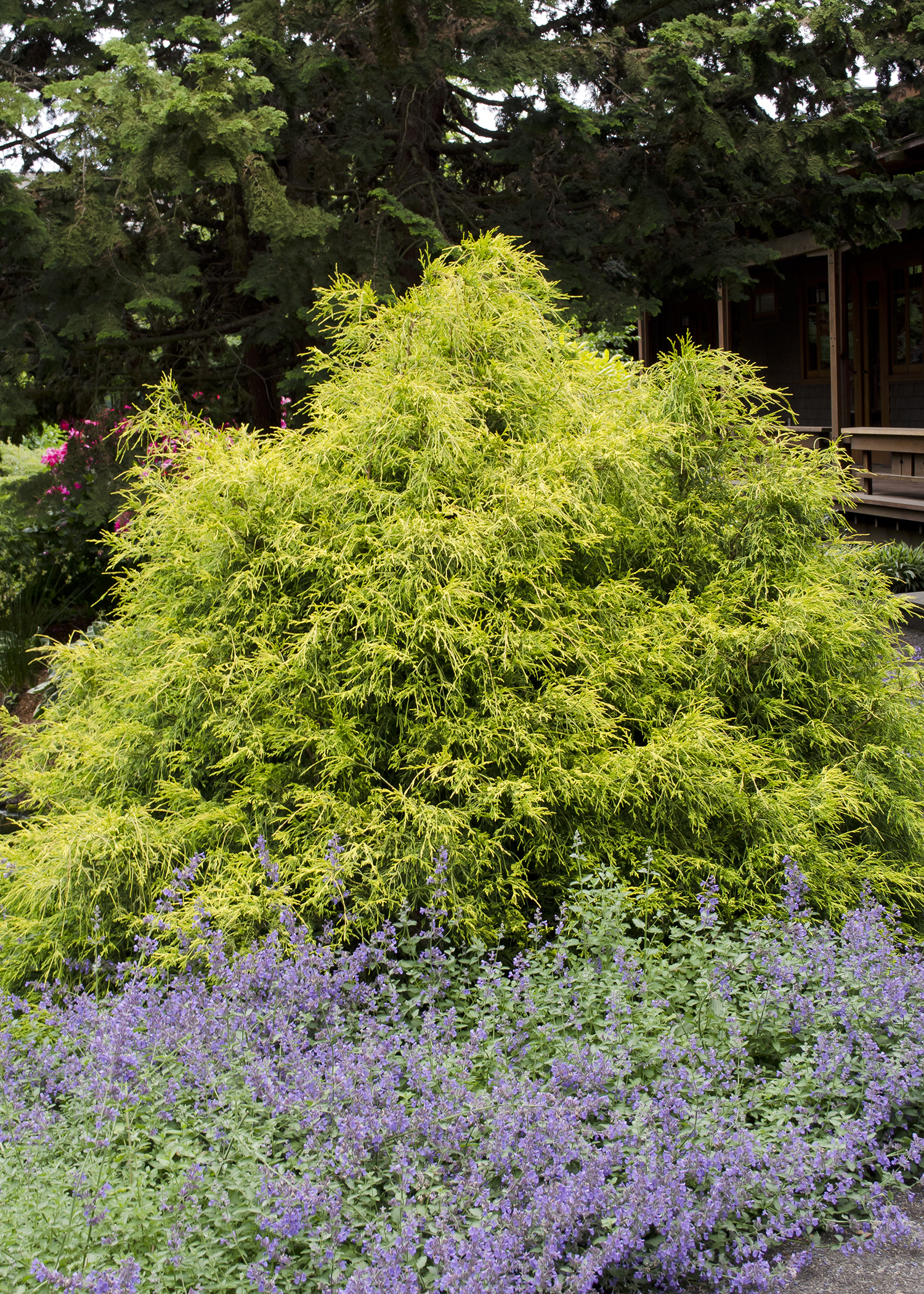
Gold Mop is pure visual poetry. Its delicate, thread-like foliage cascades in soft, feathery plumes that create an almost ethereal quality in the landscape. The color is its signature feature—a warm golden-yellow that intensifies throughout the growing season, then deepens to a richer amber-bronze when fall arrives and temperatures drop. Unlike some golden conifers that can look harsh or artificial, Gold Mop’s coloring feels natural and inviting, like sunlight filtering through the needles.

The overall form is compact and mounding, creating a gentle, fountain-like silhouette that drapes gracefully over walls or softens the sharp lines of hardscape. It’s a plant that makes you want to reach out and touch it—and you should, because that soft, feathery texture is one of its greatest charms.

Growing it in your garden

Here’s what makes Gold Mop such a practical choice for Connecticut gardeners: it’s remarkably adaptable. While it prefers well-draining soil and will give you its best performance in that setting, it tolerates a wider range of conditions than many of its conifer cousins. It loves morning sun and afternoon dappled shade—that filtered light actually helps prevent the intense heat stress that sometimes causes golden conifers to fade or brown out during our hot summers.

Planting is straightforward. Give it space to spread naturally—don’t crowd it against other plants or structures. In spring, you can nestle it among shade-loving perennials, or use it as a anchor plant in a container garden. The key to establishing it well is consistent moisture during its first growing season, especially during any dry spells. Once settled, it becomes quite drought-tolerant, which is a genuine bonus in our variable New England climate.

Through the seasons

Spring brings fresh, bright golden growth that practically glows in filtered light. Summer is when Gold Mop really shines—that intense yellow color makes it a living focal point, drawing the eye even from across the garden. It maintains its color beautifully through the heat, assuming it gets adequate water and the afternoon shade that keeps it from getting stressed.

Fall is when this plant truly reveals its magic. As temperatures cool, those golden tones deepen and warm to rich bronzy-amber, creating a subtle seasonal shift that feels sophisticated rather than showy. Winter is perhaps the most underrated season for Gold Mop—it holds its color beautifully even in the bleakest months, providing warmth and structure when most of the garden has retreated underground.

Where it shines

Gold Mop False Cypress is a multitasking plant that earns its place in several garden scenarios. Plant it as a specimen focal point where you want a pop of year-round color. Use it in containers on a shady deck or patio, where that feathery texture catches light beautifully. It’s excellent as a groundcover or edging plant along shade-dappled borders, and it works wonderfully cascading over walls or in rock gardens where its soft form contrasts with hard surfaces.

In smaller Connecticut gardens, Gold Mop is a godsend—it provides dimensional interest and color without demanding the space that large evergreens require. It’s also an excellent choice if you’re trying to create a Japanese-inspired garden, where its delicate texture fits perfectly with that aesthetic.

Perfect companions

Gold Mop’s fine texture and bright color make it a wonderful companion to broader-leaved shade plants. Pair it with hostas for textural contrast, or plant it among ferns for a softer, woodland feel. Its golden tones harmonize beautifully with purple-leaved plants like HEUCHERA, and it creates striking contrast when paired with deep green shade lovers like JAPANESE HOLLY or RHODODENDRON.

Spring bulbs like hellebores and spring snowflake look delightful emerging from around its base, and shade-tolerant perennials like BRUNNERA and CORAL BELLS complement its soft form without competing for attention.

Care tips

Gold Mop is low-maintenance once established, but a few practices keep it thriving. Water regularly during establishment and during dry spells—these plants prefer consistent moisture without sitting in soggy soil. In spring, a light pruning to shape it gently (if needed) is all that’s necessary. Avoid heavy pruning, which can damage its naturally graceful form. Watch for spider mites during hot, dry periods—adequate moisture and some afternoon shade are your best prevention. If you notice browning or stress, check drainage and increase shade slightly; often these signs indicate the plant is getting too hot and dry.

Quick facts

  • Hardiness Zone: Zones 4–8
  • Mature Height & Spread: 2–3 feet tall and 2–4 feet wide (depending on cultivar and growing conditions)
  • Bloom Season: N/A (coniferous foliage plant; grown for year-round color)
  • Light Requirements: Partial shade to dappled sunlight
  • Water Needs: Moderate; consistent moisture without waterlogging
  • Available at: Both our retail and wholesale locations
Gold Mop False Cypress

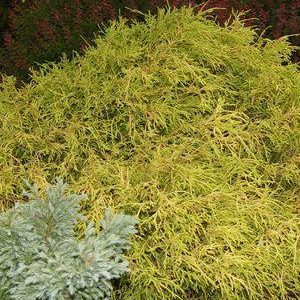
Golden thread- like foliage that persists through the year. Mounding growth.

Zoning: 4
Mature Height and Spread: 6’ & 4’
Pot Size (gallons), Height: #3, #5, #7

Description

CHAMAECYPARIS PISIFERA ‘GOLD MOP’

If you’ve been searching for a plant that brings year-round brightness to shady corners of your Connecticut garden, Gold Mop False Cypress is about to become your secret weapon. This isn’t just another golden conifer—it’s a feathery, fine-textured marvel that softens hard edges, fills awkward spaces, and somehow manages to look elegant even when everything else is struggling through a New England winter. The transformation from spring through fall is so dramatic that you’ll wonder why every garden doesn’t have one tucked into those tricky spots where nothing else seems to want to grow.

What it looks like

Gold Mop is pure visual poetry. Its delicate, thread-like foliage cascades in soft, feathery plumes that create an almost ethereal quality in the landscape. The color is its signature feature—a warm golden-yellow that intensifies throughout the growing season, then deepens to a richer amber-bronze when fall arrives and temperatures drop. Unlike some golden conifers that can look harsh or artificial, Gold Mop’s coloring feels natural and inviting, like sunlight filtering through the needles.

The overall form is compact and mounding, creating a gentle, fountain-like silhouette that drapes gracefully over walls or softens the sharp lines of hardscape. It’s a plant that makes you want to reach out and touch it—and you should, because that soft, feathery texture is one of its greatest charms.

Growing it in your garden

Here’s what makes Gold Mop such a practical choice for Connecticut gardeners: it’s remarkably adaptable. While it prefers well-draining soil and will give you its best performance in that setting, it tolerates a wider range of conditions than many of its conifer cousins. It loves morning sun and afternoon dappled shade—that filtered light actually helps prevent the intense heat stress that sometimes causes golden conifers to fade or brown out during our hot summers.

Planting is straightforward. Give it space to spread naturally—don’t crowd it against other plants or structures. In spring, you can nestle it among shade-loving perennials, or use it as a anchor plant in a container garden. The key to establishing it well is consistent moisture during its first growing season, especially during any dry spells. Once settled, it becomes quite drought-tolerant, which is a genuine bonus in our variable New England climate.

Through the seasons

Spring brings fresh, bright golden growth that practically glows in filtered light. Summer is when Gold Mop really shines—that intense yellow color makes it a living focal point, drawing the eye even from across the garden. It maintains its color beautifully through the heat, assuming it gets adequate water and the afternoon shade that keeps it from getting stressed.

Fall is when this plant truly reveals its magic. As temperatures cool, those golden tones deepen and warm to rich bronzy-amber, creating a subtle seasonal shift that feels sophisticated rather than showy. Winter is perhaps the most underrated season for Gold Mop—it holds its color beautifully even in the bleakest months, providing warmth and structure when most of the garden has retreated underground.

Where it shines

Gold Mop False Cypress is a multitasking plant that earns its place in several garden scenarios. Plant it as a specimen focal point where you want a pop of year-round color. Use it in containers on a shady deck or patio, where that feathery texture catches light beautifully. It’s excellent as a groundcover or edging plant along shade-dappled borders, and it works wonderfully cascading over walls or in rock gardens where its soft form contrasts with hard surfaces.

In smaller Connecticut gardens, Gold Mop is a godsend—it provides dimensional interest and color without demanding the space that large evergreens require. It’s also an excellent choice if you’re trying to create a Japanese-inspired garden, where its delicate texture fits perfectly with that aesthetic.

Perfect companions

Gold Mop’s fine texture and bright color make it a wonderful companion to broader-leaved shade plants. Pair it with hostas for textural contrast, or plant it among ferns for a softer, woodland feel. Its golden tones harmonize beautifully with purple-leaved plants like HEUCHERA, and it creates striking contrast when paired with deep green shade lovers like JAPANESE HOLLY or RHODODENDRON.

Spring bulbs like hellebores and spring snowflake look delightful emerging from around its base, and shade-tolerant perennials like BRUNNERA and CORAL BELLS complement its soft form without competing for attention.

Care tips

Gold Mop is low-maintenance once established, but a few practices keep it thriving. Water regularly during establishment and during dry spells—these plants prefer consistent moisture without sitting in soggy soil. In spring, a light pruning to shape it gently (if needed) is all that’s necessary. Avoid heavy pruning, which can damage its naturally graceful form. Watch for spider mites during hot, dry periods—adequate moisture and some afternoon shade are your best prevention. If you notice browning or stress, check drainage and increase shade slightly; often these signs indicate the plant is getting too hot and dry.

Quick facts

  • Hardiness Zone: Zones 4–8
  • Mature Height & Spread: 2–3 feet tall and 2–4 feet wide (depending on cultivar and growing conditions)
  • Bloom Season: N/A (coniferous foliage plant; grown for year-round color)
  • Light Requirements: Partial shade to dappled sunlight
  • Water Needs: Moderate; consistent moisture without waterlogging
  • Available at: Both our retail and wholesale locations