Dragon Lady

ILEX X AQUIPERNYI ‘DRAGON LADY’

If you’ve been searching for an evergreen that combines architectural drama with practical toughness, Dragon Lady Holly is about to become your new favorite. This isn’t your grandmother’s holly—though it honors the best traditions. With its distinctly narrow, upright habit and those gloriously spiky, deep green leaves, Dragon Lady delivers year-round structure that makes landscape designers swoon. And unlike some hollies that demand constant fussing, this hybrid native actually thrives in Connecticut’s temperamental climate, showing off bright red berries come fall that persist well into winter.

What it looks like

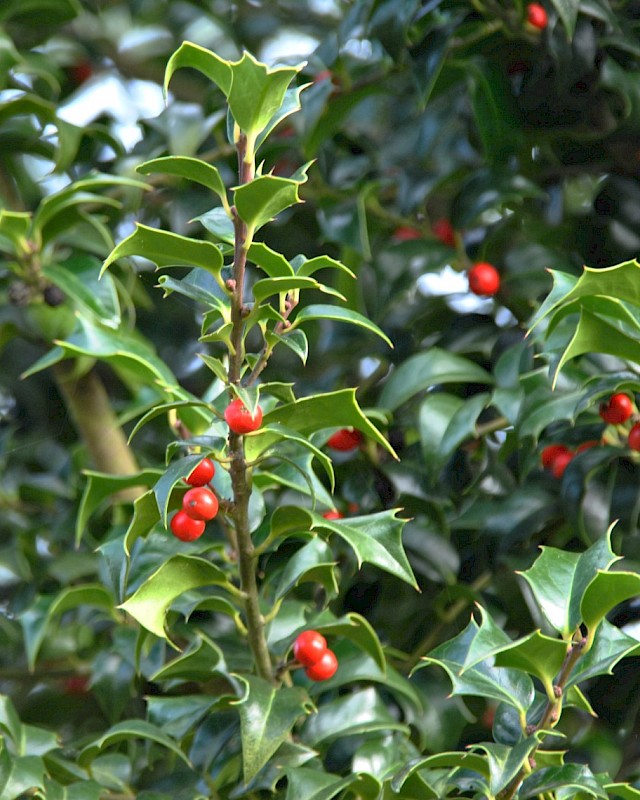
Dragon Lady is a columnar powerhouse with a personality. Its dense, narrowly pyramidal silhouette is naturally elegant without looking stiff or formal. The foliage is lustrous deep green and impressively thorny—those spines aren’t just for show; they give the plant real architectural presence in the winter landscape when deciduous plants have checked out. Come autumn, the female plants (which this is) produce abundant glossy red berries that cling to branches through the coldest months, providing brilliant color and food for hungry winter birds. The berries create a striking contrast against the dark evergreen foliage that feels both sophisticated and cheerful.

Growing it in your garden

This is where Dragon Lady really earns its reputation. It’s a Connecticut gardener’s dream because it handles our region’s particular challenges without complaint. It’s winter hardy throughout New England, unfazed by our freeze-thaw cycles and heavy snow loads. The upright habit means it doesn’t sprawl or require heavy pruning to maintain its natural shape—it just does what it’s meant to do. Plant it in full sun to partial shade; it’s not fussy about light, though berries tend to be more prolific in sunnier spots. It appreciates well-draining soil and doesn’t tolerate wet feet the way some plants do, so amend heavy clay with compost at planting time. Once established, it’s remarkably drought-tolerant, which is increasingly valuable as our growing season becomes less predictable.

Through the seasons

Spring arrives quietly with Dragon Lady. The plant awakens with fresh, vibrant green foliage and eventually produces small cream-colored flowers that are admittedly understated but essential for berry production. Summer is when this holly shows consistent, reliable presence—that deep green is constant and grounding, never looking stressed or chlorotic even when summer heat arrives. Fall and winter are Dragon Lady’s moment to shine. The berries develop throughout autumn, deepening to brilliant red, and then they persist through winter when most of the garden has gone monochrome. This extended color is genuinely valuable in the Connecticut landscape where we spend more months looking at evergreens than blooming perennials.

Where it shines

Dragon Lady excels as a specimen plant where its architectural form becomes a focal point. Plant it near a patio or seating area where the winter berries become part of your view from inside. It’s stunning as part of an evergreen screen—its narrow profile means you can tuck it into tight spaces where broader plants won’t fit. It’s perfect for flanking an entryway, creating vertical emphasis in foundation plantings, or anchoring a corner. Because it remains relatively narrow, it works beautifully in smaller Connecticut yards where you need impact without sprawl. It’s also excellent for winter interest gardens, where the combination of dark foliage, red berries, and architectural form creates visual drama when snow and ice coat the landscape.

Perfect companions

Dragon Lady pairs beautifully with other evergreens that provide contrasting textures. Pair it with softer-textured conifers like CHAMAECYPARIS or feathery CRYPTOMERIA for a dynamic evergreen border. Underplant with winter-blooming hellebores (HELLEBORUS) or deep burgundy coral bells (HEUCHERA) for foliage interest at ground level. Silver-foliaged plants like ARTEMISIA create stunning contrast against those dark green spiky leaves. In spring, early bulbs like Siberian squill (SCILLA) push through at its base, and late-season bloomers like asters complement it into fall.

Care tips

Plant in spring or early fall to give Dragon Lady time to establish before winter. Mulch around the base to retain moisture and regulate soil temperature, but keep mulch away from the trunk itself. Water regularly during the first growing season, then reduce frequency as the plant establishes. Prune only as needed to maintain shape or remove damaged growth; Dragon Lady’s natural habit is so appealing that heavy pruning is rarely necessary. In severe winters, heavy snow load can occasionally bend branches; gently brush snow off rather than trying to reshape bent growth. No significant pest or disease issues in Connecticut. Feed with a light application of slow-release fertilizer in early spring if desired, though this plant isn’t demanding about fertility.

Quick facts

  • Hardiness Zone: 5-9
  • Mature Height & Spread: 15-20 feet tall, 3-4 feet wide
  • Bloom Season: Spring (inconspicuous cream flowers); berries develop fall through winter
  • Light Requirements: Full sun to partial shade; best berry production in full sun
  • Water Needs: Moderate; prefers well-draining soil, drought-tolerant once established
  • Available at: Both our retail and wholesale locations.

Dragon Lady

A strong pyramidal growth habit makes this plant very versatile.

Zoning: 5-8
Mature Height and Spread: 15-20’ & 4-6’
Pot Size (gallons), Height: 5’, 6’, 7’, 8’

Description

Dragon Lady

ILEX X AQUIPERNYI ‘DRAGON LADY’

If you’ve been searching for an evergreen that combines architectural drama with practical toughness, Dragon Lady Holly is about to become your new favorite. This isn’t your grandmother’s holly—though it honors the best traditions. With its distinctly narrow, upright habit and those gloriously spiky, deep green leaves, Dragon Lady delivers year-round structure that makes landscape designers swoon. And unlike some hollies that demand constant fussing, this hybrid native actually thrives in Connecticut’s temperamental climate, showing off bright red berries come fall that persist well into winter.

What it looks like

Dragon Lady is a columnar powerhouse with a personality. Its dense, narrowly pyramidal silhouette is naturally elegant without looking stiff or formal. The foliage is lustrous deep green and impressively thorny—those spines aren’t just for show; they give the plant real architectural presence in the winter landscape when deciduous plants have checked out. Come autumn, the female plants (which this is) produce abundant glossy red berries that cling to branches through the coldest months, providing brilliant color and food for hungry winter birds. The berries create a striking contrast against the dark evergreen foliage that feels both sophisticated and cheerful.

Growing it in your garden

This is where Dragon Lady really earns its reputation. It’s a Connecticut gardener’s dream because it handles our region’s particular challenges without complaint. It’s winter hardy throughout New England, unfazed by our freeze-thaw cycles and heavy snow loads. The upright habit means it doesn’t sprawl or require heavy pruning to maintain its natural shape—it just does what it’s meant to do. Plant it in full sun to partial shade; it’s not fussy about light, though berries tend to be more prolific in sunnier spots. It appreciates well-draining soil and doesn’t tolerate wet feet the way some plants do, so amend heavy clay with compost at planting time. Once established, it’s remarkably drought-tolerant, which is increasingly valuable as our growing season becomes less predictable.

Through the seasons

Spring arrives quietly with Dragon Lady. The plant awakens with fresh, vibrant green foliage and eventually produces small cream-colored flowers that are admittedly understated but essential for berry production. Summer is when this holly shows consistent, reliable presence—that deep green is constant and grounding, never looking stressed or chlorotic even when summer heat arrives. Fall and winter are Dragon Lady’s moment to shine. The berries develop throughout autumn, deepening to brilliant red, and then they persist through winter when most of the garden has gone monochrome. This extended color is genuinely valuable in the Connecticut landscape where we spend more months looking at evergreens than blooming perennials.

Where it shines

Dragon Lady excels as a specimen plant where its architectural form becomes a focal point. Plant it near a patio or seating area where the winter berries become part of your view from inside. It’s stunning as part of an evergreen screen—its narrow profile means you can tuck it into tight spaces where broader plants won’t fit. It’s perfect for flanking an entryway, creating vertical emphasis in foundation plantings, or anchoring a corner. Because it remains relatively narrow, it works beautifully in smaller Connecticut yards where you need impact without sprawl. It’s also excellent for winter interest gardens, where the combination of dark foliage, red berries, and architectural form creates visual drama when snow and ice coat the landscape.

Perfect companions

Dragon Lady pairs beautifully with other evergreens that provide contrasting textures. Pair it with softer-textured conifers like CHAMAECYPARIS or feathery CRYPTOMERIA for a dynamic evergreen border. Underplant with winter-blooming hellebores (HELLEBORUS) or deep burgundy coral bells (HEUCHERA) for foliage interest at ground level. Silver-foliaged plants like ARTEMISIA create stunning contrast against those dark green spiky leaves. In spring, early bulbs like Siberian squill (SCILLA) push through at its base, and late-season bloomers like asters complement it into fall.

Care tips

Plant in spring or early fall to give Dragon Lady time to establish before winter. Mulch around the base to retain moisture and regulate soil temperature, but keep mulch away from the trunk itself. Water regularly during the first growing season, then reduce frequency as the plant establishes. Prune only as needed to maintain shape or remove damaged growth; Dragon Lady’s natural habit is so appealing that heavy pruning is rarely necessary. In severe winters, heavy snow load can occasionally bend branches; gently brush snow off rather than trying to reshape bent growth. No significant pest or disease issues in Connecticut. Feed with a light application of slow-release fertilizer in early spring if desired, though this plant isn’t demanding about fertility.

Quick facts

  • Hardiness Zone: 5-9
  • Mature Height & Spread: 15-20 feet tall, 3-4 feet wide
  • Bloom Season: Spring (inconspicuous cream flowers); berries develop fall through winter
  • Light Requirements: Full sun to partial shade; best berry production in full sun
  • Water Needs: Moderate; prefers well-draining soil, drought-tolerant once established
  • Available at: Both our retail and wholesale locations.