
Description

MALUS SARGENTII
The Sargent Crabapple is Connecticut’s answer to the gardener who refuses to compromise. You want spring flowers? Check—masses of them. Summer foliage? Dense and elegant. Fall color? The tiny fruits persist well into winter, feeding the birds and catching the frost. This is the plant that earns its place in your landscape year after year, not through one showy moment, but through reliable, understated beauty that becomes part of your garden’s backbone.
What it looks like
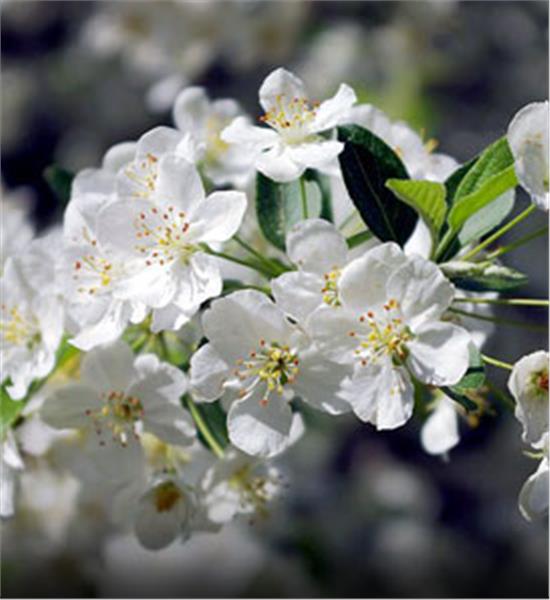
MALUS SARGENTII is one of the most refined of the crabapples, staying compact and naturally graceful without the ungainly forms some of its cousins develop. In spring, delicate deep pink buds open to small white flowers, creating clouds of bloom across a spreading, slightly weeping habit. The flowers give way to tiny, glossy red fruits no larger than a pea—ornamental in their own right and far more delicate-looking than the coarser varieties.
The foliage is fine-textured and dense, deep green through the growing season. Come fall, the leaves shift to shades of burgundy and purple before dropping, but the real show is just beginning. Those little red fruits persist on bare branches well into December and January, creating striking winter silhouettes and providing essential nutrition for migrating cedar waxwings and other birds.
Growing it in your garden
MALUS SARGENTII is one of the most adaptable crabapples for New England gardens. It’s not fussy about soil—it actually performs better in average to slightly poor soil than in overly rich conditions, and it doesn’t mind alkaline conditions that trouble many plants. Plant it in full sun for maximum flowering and fruit production, though it tolerates partial shade reasonably well.
This is a naturally disease-resistant variety, which matters more than you might think if you’ve struggled with scab or cedar apple rust on other crabapples. The compact, spreading form also means it won’t become an overgrown eyesore in a decade. It stays manageable, fitting naturally into modern landscapes without constant pruning to keep it in bounds.
Through the seasons
Spring arrives with those exquisite deep pink buds opening to white flowers—a subtle but sophisticated display that lasts several weeks. Early summer brings fresh green growth and developing fruits. By midsummer, the tree becomes a reliable structural element of the garden, its spreading form providing filtered shade and textural interest.
Fall is understated but lovely, with warm leaf tones and fruits deepening to a rich crimson. Then comes winter—the season when many crabapples look tired and bare. Not MALUS SARGENTII. The persistent fruits and refined branching structure create architectural interest, and you’ll gain an appreciation for its winter silhouette while watching birds feast on those tiny apples throughout the cold months.
Where it shines
Plant this as a specimen tree where its form can be appreciated from all angles. Its spreading habit and moderate size make it perfect for suburban Connecticut lots where larger shade trees would be overwhelming. Use it at the corner of a garden bed, in a foundation planting, or as part of a woodland edge transition.
Because it’s beloved by birds, position it where you can watch the cedar waxwing and robin flocks that descend when the fruit ripens. It’s also stunning near a seating area where you can enjoy the flowers up close in spring. The compact form makes it work beautifully in smaller spaces where full-sized crabapples would be unwieldy.
Perfect companions
Pair MALUS SARGENTII with shade-tolerant perennials like brunnera, liriope, or hellebores that can grow beneath its canopy without competing. Ornamental grasses like miscanthus and panicum echo its fine-textured elegance. Spring bulbs—snowdrops, crocus, and grape hyacinths—bloom at its feet before the canopy fully leafs out. For year-round interest, combine it with evergreens like boxwood or yew that provide structure when the crabapple is bare.
Care tips
Water regularly the first season while the tree establishes itself, then MALUS SARGENTII is quite drought-tolerant. Mulch around the base to keep competing roots at bay and to help retain moisture during hot Connecticut summers. Prune only to remove crossing branches or to maintain shape—this tree’s naturally graceful form needs little intervention. Avoid heavy fertilizer, which encourages excessive growth and reduces flowering. If you notice any diseased branches, remove them promptly, but overall this variety is remarkably trouble-free.
Quick facts
- Hardiness Zone: 4–8
- Mature Height & Spread: 20–25 feet tall and wide
- Bloom Season: May
- Light Requirements: Full sun to partial shade
- Water Needs: Moderate; drought-tolerant once established
- Available at: Both our retail and wholesale locations