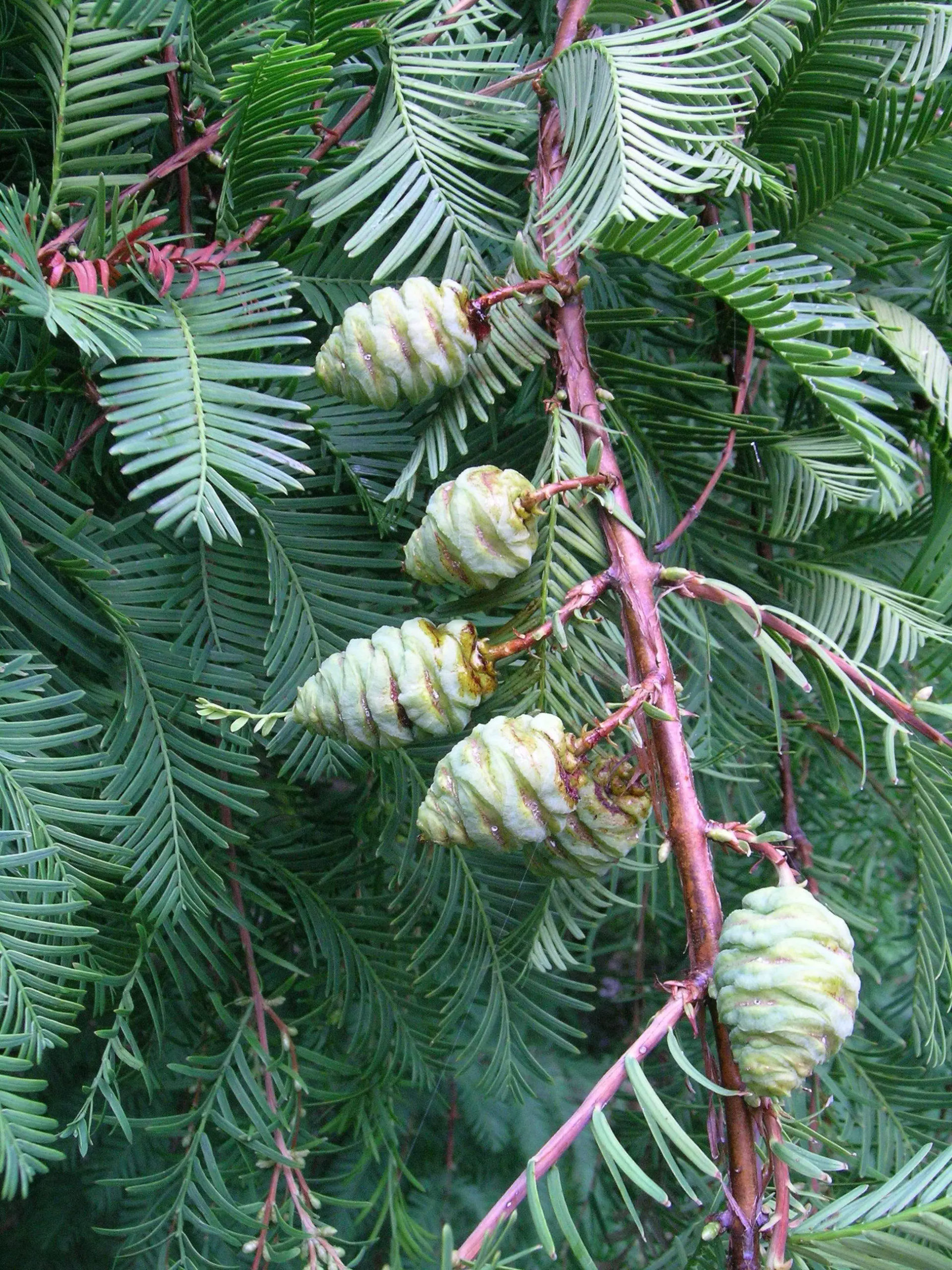
METASEQUOIA GLYPTOSTROBOIDES

The Dawn Redwood was thought extinct for 65 million years—until Chinese foresters discovered living specimens in a remote valley in the 1940s. Today, this botanical time-traveler grows right here in Connecticut gardens, bringing prehistoric elegance and a touch of living history to New England landscapes. If you’re looking for a specimen tree that stops people mid-conversation, that changes dramatically with every season, and that thrives in our Connecticut climate, this is it.

What it looks like

The METASEQUOIA GLYPTOSTROBOIDES is a deciduous conifer—yes, that’s a thing, and yes, it’s as striking as it sounds. Its feathery, fern-like foliage is the softest green in spring, deepens to rich forest tones in summer, then puts on a show-stopping performance in fall. Those needles turn a warm cinnamon-bronze before dropping, leaving behind a sculptural branching structure that’s genuinely beautiful through winter. The tree develops a graceful pyramidal form with delicate, almost lacy branching that gives it an airy, elegant presence. Even in dormancy, the shaggy, peeling reddish-brown bark adds texture and interest to the winter landscape.

Growing it in your garden

Here’s what makes the Dawn Redwood such a smart choice for Connecticut gardeners: it’s tougher than its delicate appearance suggests. This tree genuinely loves moisture, which means it’s perfect if you have a low spot in your yard that stays damp—or near a pond, stream, or rain garden where other trees struggle. It’s also surprisingly cold-hardy, thriving through our New England winters without fuss. Plant it in a spot where it gets good light—full sun to part shade—and give it room to grow. This tree appreciates airflow and doesn’t appreciate being crowded by neighboring plants. Once established, it’s relatively low-maintenance and disease-resistant, which is always welcome news in a tree this beautiful.

Through the seasons

Spring arrives softly with pale green needles that seem to glow in early morning light. By summer, those needles have deepened into a lush, feathery canopy that creates dappled shade below—perfect for sitting under on a hot afternoon. Late summer brings that remarkable color shift: the foliage begins its transition to warm apricot and russet tones. Autumn is where the Dawn Redwood truly shines—a brief, brilliant performance of bronze and copper before the needles drop by early November. Winter reveals the tree’s architectural bones: a silhouette that’s surprisingly sculptural and interesting, with that distinctive peeling bark catching the slanted winter light. Even after leaf drop, this tree earns its place in the garden.

Where it shines

The METASEQUOIA GLYPTOSTROBOIDES excels as a specimen tree in a prominent location where you can appreciate its changing form through all four seasons. It’s magnificent as a focal point near a water feature—whether that’s a pond, stream, or even a rain garden. It works beautifully in a woodland edge setting, where its lighter, airier structure complements the darker tones of evergreens. If you have clay soil that stays moist, or a low-lying area that other trees find challenging, this is your tree. It’s also perfect for anyone who loves seasonal transformation and wants a tree that earns its space through changing beauty rather than year-round constancy.

Perfect companions

Plant the Dawn Redwood with complementary understory plants that appreciate similar conditions. Japanese ferns create a soft, feathery echo of the tree’s own delicate foliage. Hostas work beautifully at its base, taking advantage of the dappled shade it creates. Virginia sweetspire, with its airy branching and early fall color, echoes the tree’s aesthetic. For spring interest underfoot, try trilliums or bloodroot. Avoid planting directly against the trunk—let the beautiful form and that distinctive bark take center stage.

Care tips

Water regularly during the first year or two to help the tree establish a deep root system, especially during Connecticut’s dry summers. Once established, the Dawn Redwood is quite drought-tolerant compared to its initial needs, though it always prefers consistent moisture. Pruning is rarely necessary—this tree naturally develops a beautiful form. If you do need to remove branches, do so in late winter when the tree is fully dormant. Watch for spider mites in hot, dry conditions, though healthy trees are quite resistant. The trees rarely suffer from serious pest or disease issues in Connecticut’s climate.

Quick facts

  • Hardiness Zone: Zones 4–8 (thrives in Connecticut)
  • Mature Height & Spread: 50–70 feet tall, 20–30 feet wide
  • Bloom Season: Flowers are insignificant; foliage is the main event (spring through autumn)
  • Light Requirements: Full sun to part shade
  • Water Needs: Prefers consistently moist soil; excellent for wet sites
  • Available at: Both our retail and wholesale locations

Dawn Redwood

Fast growing pyramidal deciduous conifer effective as a specimen, in groups, or screen plantings.

Zoning: 4-7
Mature Height and Spread: 70-98’ & 25-40’
Pot Size (gallons), Height: 10-12’

Description

METASEQUOIA GLYPTOSTROBOIDES

The Dawn Redwood was thought extinct for 65 million years—until Chinese foresters discovered living specimens in a remote valley in the 1940s. Today, this botanical time-traveler grows right here in Connecticut gardens, bringing prehistoric elegance and a touch of living history to New England landscapes. If you’re looking for a specimen tree that stops people mid-conversation, that changes dramatically with every season, and that thrives in our Connecticut climate, this is it.

What it looks like

The METASEQUOIA GLYPTOSTROBOIDES is a deciduous conifer—yes, that’s a thing, and yes, it’s as striking as it sounds. Its feathery, fern-like foliage is the softest green in spring, deepens to rich forest tones in summer, then puts on a show-stopping performance in fall. Those needles turn a warm cinnamon-bronze before dropping, leaving behind a sculptural branching structure that’s genuinely beautiful through winter. The tree develops a graceful pyramidal form with delicate, almost lacy branching that gives it an airy, elegant presence. Even in dormancy, the shaggy, peeling reddish-brown bark adds texture and interest to the winter landscape.

Growing it in your garden

Here’s what makes the Dawn Redwood such a smart choice for Connecticut gardeners: it’s tougher than its delicate appearance suggests. This tree genuinely loves moisture, which means it’s perfect if you have a low spot in your yard that stays damp—or near a pond, stream, or rain garden where other trees struggle. It’s also surprisingly cold-hardy, thriving through our New England winters without fuss. Plant it in a spot where it gets good light—full sun to part shade—and give it room to grow. This tree appreciates airflow and doesn’t appreciate being crowded by neighboring plants. Once established, it’s relatively low-maintenance and disease-resistant, which is always welcome news in a tree this beautiful.

Through the seasons

Spring arrives softly with pale green needles that seem to glow in early morning light. By summer, those needles have deepened into a lush, feathery canopy that creates dappled shade below—perfect for sitting under on a hot afternoon. Late summer brings that remarkable color shift: the foliage begins its transition to warm apricot and russet tones. Autumn is where the Dawn Redwood truly shines—a brief, brilliant performance of bronze and copper before the needles drop by early November. Winter reveals the tree’s architectural bones: a silhouette that’s surprisingly sculptural and interesting, with that distinctive peeling bark catching the slanted winter light. Even after leaf drop, this tree earns its place in the garden.

Where it shines

The METASEQUOIA GLYPTOSTROBOIDES excels as a specimen tree in a prominent location where you can appreciate its changing form through all four seasons. It’s magnificent as a focal point near a water feature—whether that’s a pond, stream, or even a rain garden. It works beautifully in a woodland edge setting, where its lighter, airier structure complements the darker tones of evergreens. If you have clay soil that stays moist, or a low-lying area that other trees find challenging, this is your tree. It’s also perfect for anyone who loves seasonal transformation and wants a tree that earns its space through changing beauty rather than year-round constancy.

Perfect companions

Plant the Dawn Redwood with complementary understory plants that appreciate similar conditions. Japanese ferns create a soft, feathery echo of the tree’s own delicate foliage. Hostas work beautifully at its base, taking advantage of the dappled shade it creates. Virginia sweetspire, with its airy branching and early fall color, echoes the tree’s aesthetic. For spring interest underfoot, try trilliums or bloodroot. Avoid planting directly against the trunk—let the beautiful form and that distinctive bark take center stage.

Care tips

Water regularly during the first year or two to help the tree establish a deep root system, especially during Connecticut’s dry summers. Once established, the Dawn Redwood is quite drought-tolerant compared to its initial needs, though it always prefers consistent moisture. Pruning is rarely necessary—this tree naturally develops a beautiful form. If you do need to remove branches, do so in late winter when the tree is fully dormant. Watch for spider mites in hot, dry conditions, though healthy trees are quite resistant. The trees rarely suffer from serious pest or disease issues in Connecticut’s climate.

Quick facts

  • Hardiness Zone: Zones 4–8 (thrives in Connecticut)
  • Mature Height & Spread: 50–70 feet tall, 20–30 feet wide
  • Bloom Season: Flowers are insignificant; foliage is the main event (spring through autumn)
  • Light Requirements: Full sun to part shade
  • Water Needs: Prefers consistently moist soil; excellent for wet sites
  • Available at: Both our retail and wholesale locations