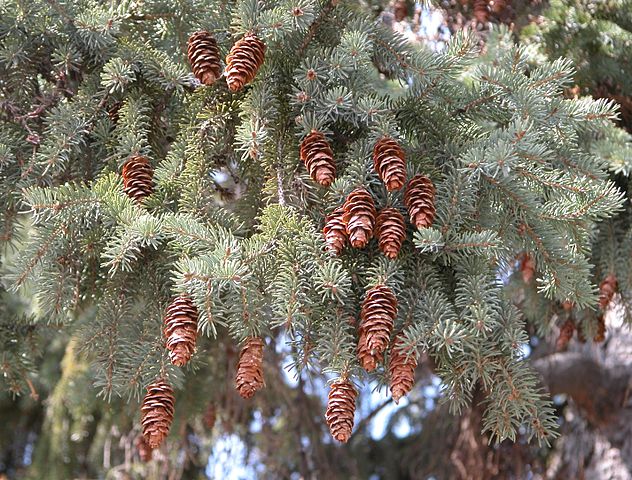
White Spruce

PICEA GLAUCA

The White Spruce is Connecticut’s quiet overachiever. While flashier trees grab all the attention, this native North American conifer stands firm with its elegant, narrow silhouette and soft silvery-blue needles that seem to glow in winter’s weak sunlight. It’s the tree that doesn’t demand fussing over, yet somehow manages to be beautiful in every season, from the delicate spring growth to the architectural presence it commands in January when most gardens look dormant.

What it looks like

Picture a perfectly proportioned Christmas tree that never quite stops growing. The White Spruce develops a dense, pyramidal form with graceful, slightly drooping branches that create wonderful layering and texture. The needles are shorter and finer than many spruce varieties, arranged in four rows around each twig, giving the whole tree a softer appearance than you might expect. The foliage ranges from deep green to silvery blue-green depending on the cultivar and light conditions. Cones are small and papery, pale brown, and add delicate detail to the branch tips. The overall effect is refined and almost ethereal—a tree that looks like it belongs in a fine landscape painting.

Growing it in your garden

Here’s what gardeners love about White Spruce: it’s exceptionally tough and reliable throughout Connecticut’s unpredictable climate. This tree thrives in our cold winters (it’s native to Canada and northern regions) and handles the transition into our warmer springs with ease. It prefers full sun—at least six hours daily—and actually performs better in slightly cooler microclimates, so if you have a spot that gets morning sun and afternoon shade, that’s ideal. The White Spruce isn’t fussy about soil pH and tolerates both slightly acidic and neutral conditions. It actually prefers consistently moist soil over soggy conditions, so ensure good drainage. This tree won’t thrive in compacted soil, so amend with compost if you’re planting in a poor site. Once established, it’s quite drought-tolerant, making it a sensible choice for water-wise New England gardens.

Through the seasons

Spring arrives with the most delicate flush of new growth—soft, lime-tinged needles at the tips of each branch that look almost feathery. Late spring brings small, reddish male cones that add unexpected color to the canopy. Summer is when the tree reaches its quiet peak: the dense foliage creates wonderful cooling shade, and the silvery undertones of the needles catch light in beautiful ways throughout the day. Fall sees no dramatic color change (this is an evergreen, after all), but the tree becomes an increasingly rich, deep blue-green as temperatures cool. Winter is when the White Spruce truly shines. The compact form sheds snow beautifully, and the silvery-blue foliage stands out dramatically against bare deciduous trees and gray Connecticut skies. The cones, now mature and brown, provide subtle detail and winter interest.

Where it shines

Plant the White Spruce where you need a strong vertical accent—at the corner of a house, as a backdrop for a perennial border, or as a specimen that anchors a landscape. It’s exceptional in woodland settings or as part of a coniferous grouping where the texture contrasts beautifully with broader-needled evergreens like firs or pines. Because it doesn’t require heavy pruning, it’s perfect if you prefer low-maintenance landscaping. White Spruce also works beautifully in New England cottage gardens where a bit of structure is needed without formality. It’s wind-tolerant, so it won’t struggle in exposed hillside locations or coastal Connecticut gardens. Consider it too for screening purposes—it’s denser than many people expect and creates excellent visual privacy.

Perfect companions

The White Spruce plays beautifully with other conifers: combine it with blue-needled PICEA PUNGENS (Colorado Spruce) for interesting needle color contrast, or with the golden foliage of THUJA OCCIDENTALIS ‘DEGROOT’S SPIRE’ for warm-and-cool interplay. It makes an excellent backdrop for shade-loving hostas, hellebores, and ferns at its base. Underplant with low-growing groundcovers like ARCTOSTAPHYLOS or creeping junipers to soften the transition from trunk to garden. It pairs beautifully with spring bulbs like daffodils and large alliums, and serves as a stunning foil for late-season bloomers like asters and ornamental grasses that add movement in front.

Care tips

Water deeply and regularly during the first two growing seasons to establish a strong root system. Mulch around the base with two to three inches of wood chips, keeping it a few inches away from the trunk. Prune only to shape when young if needed—this tree naturally develops an excellent form without interference. Watch for bagworms in summer and spider mites during dry periods; a strong spray of water usually handles minor spider mite issues. The White Spruce rarely needs fertilizing in Connecticut gardens. If branches become snow-laden, gently brush heavy snow off to prevent breakage, but the tree’s strong structure typically handles winter weather with grace.

Quick facts

  • Hardiness Zone: 2-8 (thrives in Connecticut zones 6b and 7a)
  • Mature Height & Spread: 40-60 feet tall, 10-20 feet wide
  • Bloom Season: Spring (male cones); cones mature by fall
  • Light Requirements: Full sun (6+ hours daily); tolerates light afternoon shade
  • Water Needs: Consistently moist, well-drained soil; drought-tolerant once established
  • Available at: Both our retail and wholesale locations

White Spruce

Category:

A straight, tall tree , cones always hang down. Tolerates most soil conditions.

Zoning: 2-6
Mature Height and Spread: 40-60’ & 10-20’
Pot Size (gallons), Height: 30 -36”, 5’, 6’, 7’, 8’, 9’, 10’, 12’, 14’

Description

White Spruce

PICEA GLAUCA

The White Spruce is Connecticut’s quiet overachiever. While flashier trees grab all the attention, this native North American conifer stands firm with its elegant, narrow silhouette and soft silvery-blue needles that seem to glow in winter’s weak sunlight. It’s the tree that doesn’t demand fussing over, yet somehow manages to be beautiful in every season, from the delicate spring growth to the architectural presence it commands in January when most gardens look dormant.

What it looks like

Picture a perfectly proportioned Christmas tree that never quite stops growing. The White Spruce develops a dense, pyramidal form with graceful, slightly drooping branches that create wonderful layering and texture. The needles are shorter and finer than many spruce varieties, arranged in four rows around each twig, giving the whole tree a softer appearance than you might expect. The foliage ranges from deep green to silvery blue-green depending on the cultivar and light conditions. Cones are small and papery, pale brown, and add delicate detail to the branch tips. The overall effect is refined and almost ethereal—a tree that looks like it belongs in a fine landscape painting.

Growing it in your garden

Here’s what gardeners love about White Spruce: it’s exceptionally tough and reliable throughout Connecticut’s unpredictable climate. This tree thrives in our cold winters (it’s native to Canada and northern regions) and handles the transition into our warmer springs with ease. It prefers full sun—at least six hours daily—and actually performs better in slightly cooler microclimates, so if you have a spot that gets morning sun and afternoon shade, that’s ideal. The White Spruce isn’t fussy about soil pH and tolerates both slightly acidic and neutral conditions. It actually prefers consistently moist soil over soggy conditions, so ensure good drainage. This tree won’t thrive in compacted soil, so amend with compost if you’re planting in a poor site. Once established, it’s quite drought-tolerant, making it a sensible choice for water-wise New England gardens.

Through the seasons

Spring arrives with the most delicate flush of new growth—soft, lime-tinged needles at the tips of each branch that look almost feathery. Late spring brings small, reddish male cones that add unexpected color to the canopy. Summer is when the tree reaches its quiet peak: the dense foliage creates wonderful cooling shade, and the silvery undertones of the needles catch light in beautiful ways throughout the day. Fall sees no dramatic color change (this is an evergreen, after all), but the tree becomes an increasingly rich, deep blue-green as temperatures cool. Winter is when the White Spruce truly shines. The compact form sheds snow beautifully, and the silvery-blue foliage stands out dramatically against bare deciduous trees and gray Connecticut skies. The cones, now mature and brown, provide subtle detail and winter interest.

Where it shines

Plant the White Spruce where you need a strong vertical accent—at the corner of a house, as a backdrop for a perennial border, or as a specimen that anchors a landscape. It’s exceptional in woodland settings or as part of a coniferous grouping where the texture contrasts beautifully with broader-needled evergreens like firs or pines. Because it doesn’t require heavy pruning, it’s perfect if you prefer low-maintenance landscaping. White Spruce also works beautifully in New England cottage gardens where a bit of structure is needed without formality. It’s wind-tolerant, so it won’t struggle in exposed hillside locations or coastal Connecticut gardens. Consider it too for screening purposes—it’s denser than many people expect and creates excellent visual privacy.

Perfect companions

The White Spruce plays beautifully with other conifers: combine it with blue-needled PICEA PUNGENS (Colorado Spruce) for interesting needle color contrast, or with the golden foliage of THUJA OCCIDENTALIS ‘DEGROOT’S SPIRE’ for warm-and-cool interplay. It makes an excellent backdrop for shade-loving hostas, hellebores, and ferns at its base. Underplant with low-growing groundcovers like ARCTOSTAPHYLOS or creeping junipers to soften the transition from trunk to garden. It pairs beautifully with spring bulbs like daffodils and large alliums, and serves as a stunning foil for late-season bloomers like asters and ornamental grasses that add movement in front.

Care tips

Water deeply and regularly during the first two growing seasons to establish a strong root system. Mulch around the base with two to three inches of wood chips, keeping it a few inches away from the trunk. Prune only to shape when young if needed—this tree naturally develops an excellent form without interference. Watch for bagworms in summer and spider mites during dry periods; a strong spray of water usually handles minor spider mite issues. The White Spruce rarely needs fertilizing in Connecticut gardens. If branches become snow-laden, gently brush heavy snow off to prevent breakage, but the tree’s strong structure typically handles winter weather with grace.

Quick facts

  • Hardiness Zone: 2-8 (thrives in Connecticut zones 6b and 7a)
  • Mature Height & Spread: 40-60 feet tall, 10-20 feet wide
  • Bloom Season: Spring (male cones); cones mature by fall
  • Light Requirements: Full sun (6+ hours daily); tolerates light afternoon shade
  • Water Needs: Consistently moist, well-drained soil; drought-tolerant once established
  • Available at: Both our retail and wholesale locations