ACER PALMATUM ‘MT. FIRE’

If you’ve been searching for a Japanese maple that delivers non-stop drama from spring through winter, MT. FIRE is exactly what you’ve been waiting for. This cultivar earns its fiery name honestly—it’s one of the most vibrant and consistently colorful maples in the entire ACER PALMATUM family, transforming your garden into a living work of art through every season.

What it looks like

MT. FIRE is a vision of delicate architecture wrapped in intense color. The deeply lobed, palmate leaves emerge in spring with a brilliant scarlet-red hue, creating an almost shocking contrast against the darker understory. As the season progresses into summer, the foliage deepens into a rich burgundy-red that holds remarkably well even through our hottest Connecticut afternoons. The leaves maintain an incredibly fine, feathery texture—each one seems hand-sculpted—and they catch every breeze with graceful movement. Come fall, when you might think the color show is over, MT. FIRE goes absolutely spectacular, shifting through shades of crimson, orange, and deep wine-red before dropping to reveal an elegant branching structure.

Growing it in your garden

Japanese maples have a reputation for being finicky, but MT. FIRE is one of the more cooperative cultivars, especially if you give it what it wants: morning sun with afternoon shade. In Connecticut’s climate, this is actually a gift—it means you can position this beauty where harsh afternoon rays won’t scorch the delicate foliage, which is especially important during those intense July and August heat waves we’ve been experiencing. Plant it in well-draining soil rich with organic matter. If your garden tends toward clay (and honestly, many Connecticut gardens do), work in some compost or peat moss before planting. MT. FIRE prefers slightly acidic to neutral soil, and it appreciates consistent moisture without being waterlogged.

This isn’t a tree that wants to be a specimen standing alone in blazing full sun all day. Instead, think of it as a bridge plant—something that goes between your larger shade trees and your sun-loving perennials. It thrives in dappled light, where it can showcase its color without stress.

Through the seasons

Spring arrives with those incredible scarlet-red leaves that stop people mid-step. Summer deepens the color palette, and the tree’s upright, graceful form becomes a focal point. The fine texture means you’ll notice movement in ways you never expected—even a gentle breeze creates a shimmer of color. By late summer, the burgundy tones are so rich they almost glow in the afternoon light. Autumn is the crescendo, with the color intensifying before the spectacular leaf drop reveals the elegant branching structure that’s beautiful all winter long.

Where it shines

MT. FIRE is the star of a woodland garden edge or a shaded perennial border where it can provide vertical interest and color that’s impossible to achieve with shade-tolerant perennials alone. It’s stunning when planted where morning light backlights the foliage—you’ll see why the name MT. FIRE makes perfect sense. In a Japanese-inspired garden, it’s an obvious choice, but it’s equally at home in contemporary landscapes where its architectural form and consistent color become a design statement. Many Connecticut gardeners use it as a specimen in a shade garden, where it becomes the anchor that makes the entire space come together.

Perfect companions

Underplant MT. FIRE with fine-textured hostas in shades of blue-green or chartreuse to echo the delicate leaf structure of the maple while providing contrast. Shade-loving hellebores bloom in winter when the maple is bare, extending the garden’s interest. Carex oshimensis ‘Evergold’ sedge provides groundcover color and movement that complements the maple’s delicate branching. In spring, bleeding heart (DICENTRA spectabilis) with its pale pink flowers is the perfect gentle companion. Japanese forest grass (HAKONECHLOA MACRA) at the base reinforces the woodland aesthetic.

Care tips

Water regularly during the first two years to establish a deep root system, then during dry spells. A 2- to 3-inch mulch layer (kept away from the trunk) keeps roots cool and reduces watering needs. Prune only in late summer or fall to avoid sap bleeding. MT. FIRE doesn’t need aggressive pruning—let its natural form develop. Watch for Japanese beetle activity in early summer; hand-picking is more effective than sprays for these beautiful but destructive pests. Avoid using high-nitrogen fertilizers, which can produce soft, weak growth. If you see any dead or crossing branches, remove them to maintain the elegant form.

Quick facts

  • Hardiness Zone: 5–8 (thrives in Connecticut)
  • Mature Height & Spread: 15–20 feet tall and 10–12 feet wide
  • Bloom Season: Insignificant flowers; grown for foliage
  • Light Requirements: Partial shade to dappled sun (morning sun with afternoon shade is ideal)
  • Water Needs: Moderate; consistent moisture, well-draining soil
  • Available at: Both our retail and wholesale locations

Mt.Fire

Category:

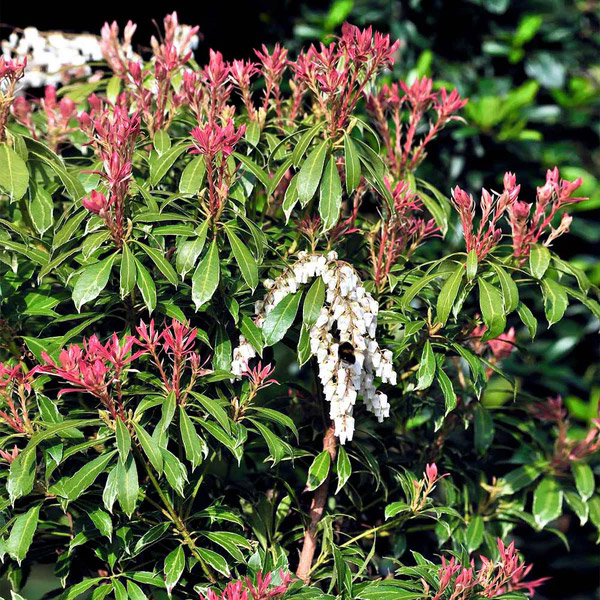
A broadleaf evergreen shrub with early season pendulous flower clusters similar to Lily of the Valley

Pot Size (gallons), Height: #3 #7

Description

ACER PALMATUM ‘MT. FIRE’

If you’ve been searching for a Japanese maple that delivers non-stop drama from spring through winter, MT. FIRE is exactly what you’ve been waiting for. This cultivar earns its fiery name honestly—it’s one of the most vibrant and consistently colorful maples in the entire ACER PALMATUM family, transforming your garden into a living work of art through every season.

What it looks like

MT. FIRE is a vision of delicate architecture wrapped in intense color. The deeply lobed, palmate leaves emerge in spring with a brilliant scarlet-red hue, creating an almost shocking contrast against the darker understory. As the season progresses into summer, the foliage deepens into a rich burgundy-red that holds remarkably well even through our hottest Connecticut afternoons. The leaves maintain an incredibly fine, feathery texture—each one seems hand-sculpted—and they catch every breeze with graceful movement. Come fall, when you might think the color show is over, MT. FIRE goes absolutely spectacular, shifting through shades of crimson, orange, and deep wine-red before dropping to reveal an elegant branching structure.

Growing it in your garden

Japanese maples have a reputation for being finicky, but MT. FIRE is one of the more cooperative cultivars, especially if you give it what it wants: morning sun with afternoon shade. In Connecticut’s climate, this is actually a gift—it means you can position this beauty where harsh afternoon rays won’t scorch the delicate foliage, which is especially important during those intense July and August heat waves we’ve been experiencing. Plant it in well-draining soil rich with organic matter. If your garden tends toward clay (and honestly, many Connecticut gardens do), work in some compost or peat moss before planting. MT. FIRE prefers slightly acidic to neutral soil, and it appreciates consistent moisture without being waterlogged.

This isn’t a tree that wants to be a specimen standing alone in blazing full sun all day. Instead, think of it as a bridge plant—something that goes between your larger shade trees and your sun-loving perennials. It thrives in dappled light, where it can showcase its color without stress.

Through the seasons

Spring arrives with those incredible scarlet-red leaves that stop people mid-step. Summer deepens the color palette, and the tree’s upright, graceful form becomes a focal point. The fine texture means you’ll notice movement in ways you never expected—even a gentle breeze creates a shimmer of color. By late summer, the burgundy tones are so rich they almost glow in the afternoon light. Autumn is the crescendo, with the color intensifying before the spectacular leaf drop reveals the elegant branching structure that’s beautiful all winter long.

Where it shines

MT. FIRE is the star of a woodland garden edge or a shaded perennial border where it can provide vertical interest and color that’s impossible to achieve with shade-tolerant perennials alone. It’s stunning when planted where morning light backlights the foliage—you’ll see why the name MT. FIRE makes perfect sense. In a Japanese-inspired garden, it’s an obvious choice, but it’s equally at home in contemporary landscapes where its architectural form and consistent color become a design statement. Many Connecticut gardeners use it as a specimen in a shade garden, where it becomes the anchor that makes the entire space come together.

Perfect companions

Underplant MT. FIRE with fine-textured hostas in shades of blue-green or chartreuse to echo the delicate leaf structure of the maple while providing contrast. Shade-loving hellebores bloom in winter when the maple is bare, extending the garden’s interest. Carex oshimensis ‘Evergold’ sedge provides groundcover color and movement that complements the maple’s delicate branching. In spring, bleeding heart (DICENTRA spectabilis) with its pale pink flowers is the perfect gentle companion. Japanese forest grass (HAKONECHLOA MACRA) at the base reinforces the woodland aesthetic.

Care tips

Water regularly during the first two years to establish a deep root system, then during dry spells. A 2- to 3-inch mulch layer (kept away from the trunk) keeps roots cool and reduces watering needs. Prune only in late summer or fall to avoid sap bleeding. MT. FIRE doesn’t need aggressive pruning—let its natural form develop. Watch for Japanese beetle activity in early summer; hand-picking is more effective than sprays for these beautiful but destructive pests. Avoid using high-nitrogen fertilizers, which can produce soft, weak growth. If you see any dead or crossing branches, remove them to maintain the elegant form.

Quick facts

  • Hardiness Zone: 5–8 (thrives in Connecticut)
  • Mature Height & Spread: 15–20 feet tall and 10–12 feet wide
  • Bloom Season: Insignificant flowers; grown for foliage
  • Light Requirements: Partial shade to dappled sun (morning sun with afternoon shade is ideal)
  • Water Needs: Moderate; consistent moisture, well-draining soil
  • Available at: Both our retail and wholesale locations