
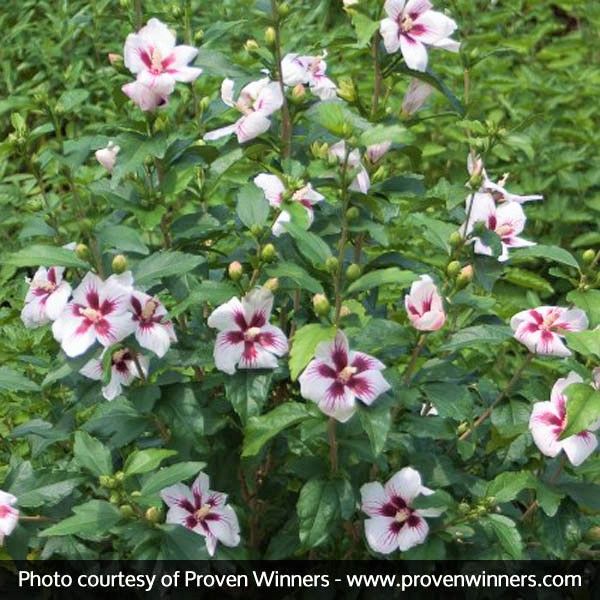
Description
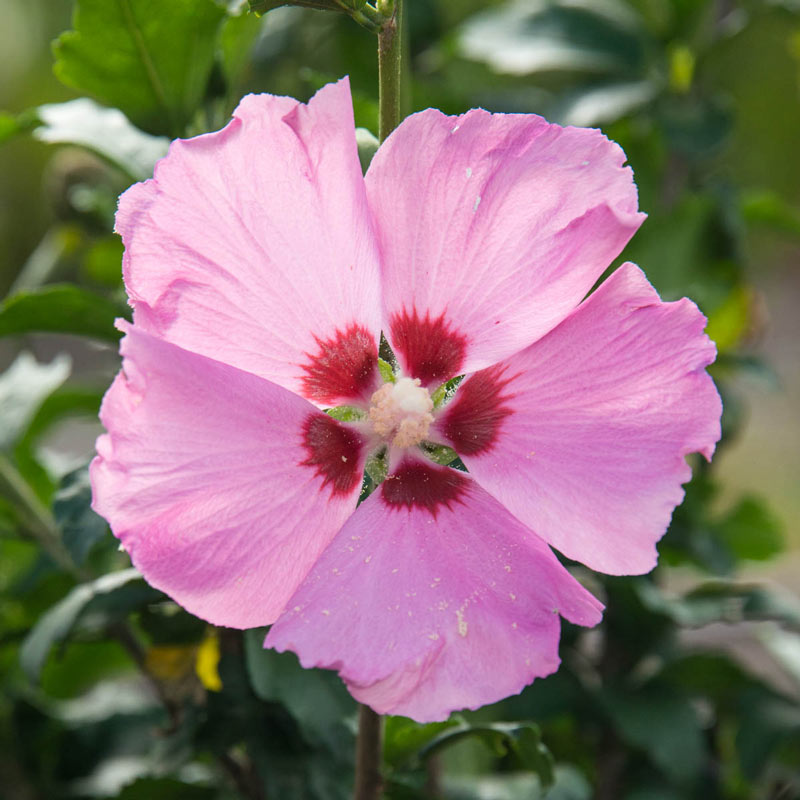
HIBISCUS SYRIACUS
Here’s the honest truth about Rose of Sharon: it’s one of those plants that seems almost too good to be true. It blooms when everything else in your Connecticut garden is starting to fade, delivers tropical-looking flowers on a cold-hardy shrub, and asks very little in return. If you’ve ever stood in your August garden wondering why nothing is blooming, or wished for a plant that could reach 8 feet tall without demanding constant attention, this is your answer. Rose of Sharon is the workhorse of late-summer gardens, and once you have one, you’ll wonder how you ever gardened without it.
What it looks like
Picture a tropical hibiscus, but hardy enough for New England winters. Rose of Sharon produces stunning, single or double flowers in shades of pink, purple, lavender, red, white, and even bicolors—depending on the variety you choose. The blooms are large and showy, with prominent stamens that practically glow in afternoon light. The foliage is fine-textured and medium green, creating an airy, almost delicate appearance even though the plant itself is sturdy and substantial. Growth habit tends to be upright and vase-shaped, making it perfect as a focal point or screening plant.
Growing it in your garden
Rose of Sharon thrives in full sun to part sun, which means it needs at least six hours of direct sunlight to bloom prolifically. The good news? It’s not fussy about soil. Whether your Connecticut garden has clay, loam, or sandy soil, this plant adapts beautifully. It prefers well-draining soil and moderate moisture during the growing season, but once established, it shows impressive drought tolerance—valuable when summer heat turns intense. Plant it in spring or fall, giving it room to reach its mature size without crowding nearby plants. The plant leafs out late in spring, so don’t panic when your neighbors’ shrubs are greening up and yours still looks dormant. That’s completely normal.
Through the seasons
Spring arrives quietly with Rose of Sharon; you’ll be waiting patiently for leaves to emerge as late as May in our Connecticut climate. Don’t mistake this for a problem—it’s simply the plant’s nature. Once growth begins, it’s vigorous and unstoppable. Summer is when the magic happens. Buds form continuously from July through September, with waves of blooms opening daily. In autumn, as most gardens fade to brown, your Rose of Sharon is often still flowering, creating a striking display against turning foliage. Winter reveals the architectural skeleton of the plant, which can be quite attractive in a dormant garden.
Where it shines
Use Rose of Sharon as a summer-blooming focal point in mixed borders, or plant three or more together as an informal hedge or screen. It’s excellent for hot, sunny spots where other plants struggle, and it performs beautifully in containers if you want late-season color on a patio or deck. The flowers attract butterflies and hummingbirds, making it a natural choice for pollinator gardens. In smaller Connecticut landscapes, select more compact varieties that reach 4-6 feet rather than the full 8-foot spread. It’s also wonderful near sitting areas where you can enjoy the flowers up close and watch the wildlife it attracts.
Perfect companions
Because Rose of Sharon blooms when many perennials are finished, plant it with late-season bloomers like ornamental grasses, sedums, and Joe-Pye weed. The upright form pairs well with mounding plants at its base—try salvias, catmint, or Russian sage for color coordination. Underplant with shade-tolerant groundcovers since Rose of Sharon’s late leafing means bare soil around the base in early spring. The fine texture of the foliage looks wonderful against coarser-leaved plants like hydrangeas or viburnums.
Care tips
Pruning is optional but worthwhile. In early spring (April in Connecticut), cut the plant back by one-third to one-half of its size to encourage a fuller, bushier form. This also helps control height if you’re working with limited space. You can prune it into a small tree form if you prefer that aesthetic. Water regularly during the first growing season to establish a deep root system, then rely on rainfall for established plants. No serious pests or diseases trouble Rose of Sharon in New England, making it one of the lowest-maintenance shrubs you can plant. Fertilize lightly in spring with a balanced formula—too much nitrogen produces excess foliage at the expense of flowers.
Quick facts
- Hardiness Zone: Zones 5-9 (reliably hardy throughout Connecticut)
- Mature Height & Spread: 8-10 feet tall and 4-6 feet wide (varies by variety)
- Bloom Season: July through September, sometimes into October
- Light Requirements: Full sun to part sun (6+ hours of direct sunlight for best blooming)
- Water Needs: Moderate; drought-tolerant once established
- Available at: Both our retail and wholesale locations