Description

MAGIC CARPET SPIREA (SPIRAEA X BUMALDA ‘MAGIC CARPET’)
What if one plant could give you brilliant foliage, delicate flowers, and a naturally compact habit—all without demanding constant pruning or fussing? Magic Carpet Spirea is that rare find that actually improves your garden without adding stress to your to-do list. This dwarf wonder trades the sprawling habit of its cousins for a tidy mounding form that looks intentional in every season, transforming borders, containers, and foundation plantings with color that shifts and surprises throughout the year.
What it looks like
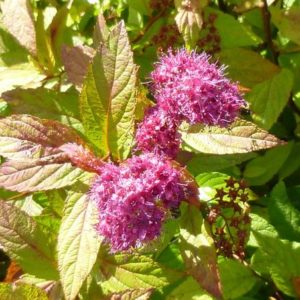
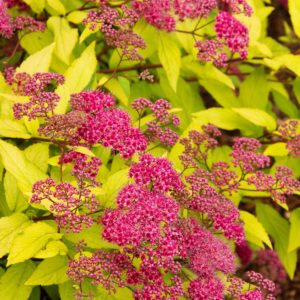
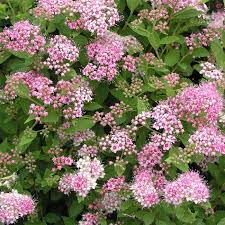
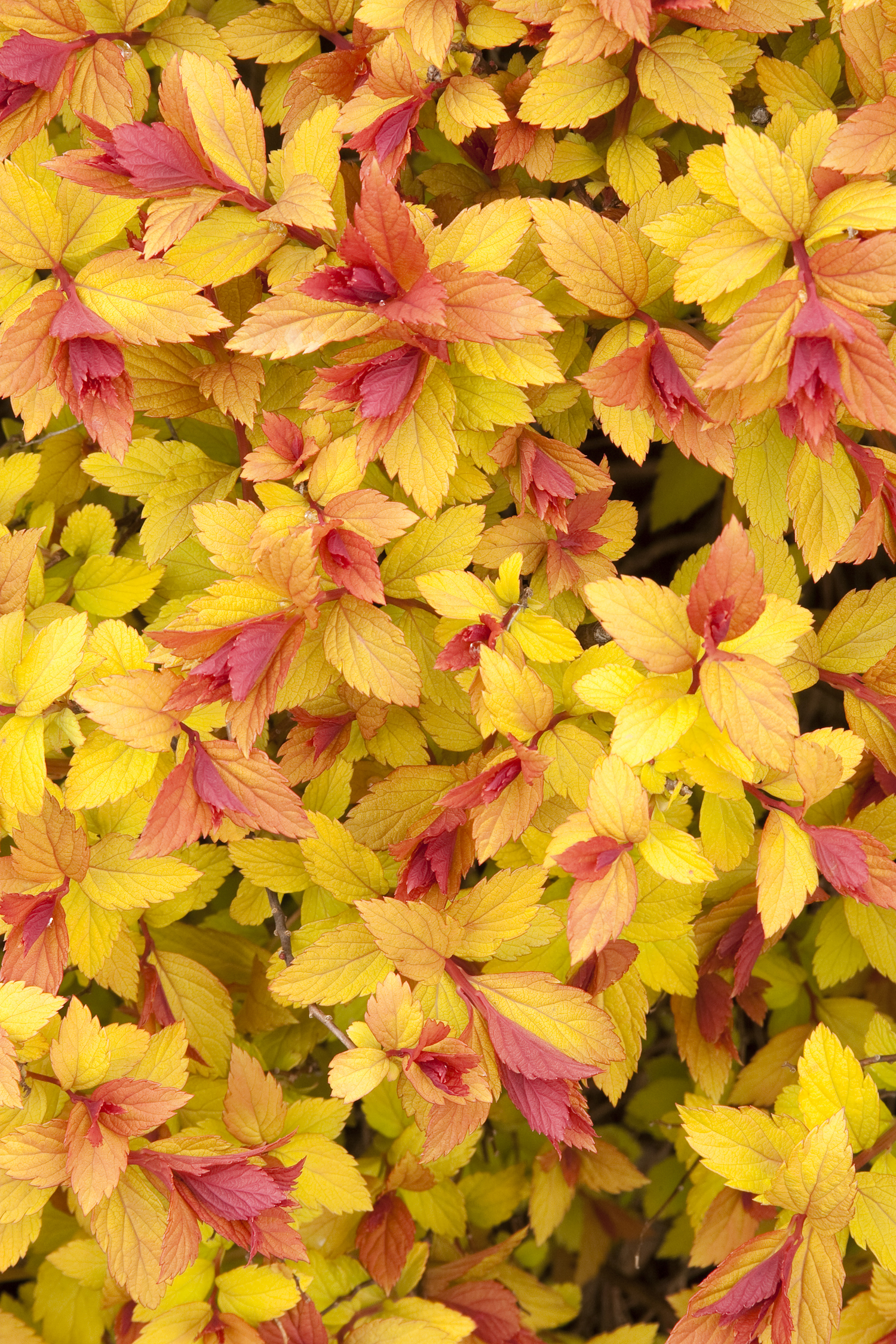
Magic Carpet is a study in chromatic transformation. New growth emerges in shades of orange-red and copper—so vibrant it almost glows in spring sunlight—then gradually transitions to rich burgundy and deep green as summer settles in. Just when you think the show is over, cool fall temperatures trigger another shift, painting the foliage in fiery reds and oranges that rival many dedicated fall color plants. Above this ever-changing canvas sit clusters of rosy-red flowers that bloom prolifically from early summer through fall, creating a soft haze of color that’s more delicate than the bold foliage suggests. The overall effect is wonderfully balanced: striking enough to anchor a planting scheme, yet refined enough to weave through a perennial border without overwhelming neighbors.
Growing it in your garden
Magic Carpet is built for Connecticut. This cultivar thrives in full sun—at least six hours daily—which intensifies both the foliage colors and flowering. It’s extraordinarily adaptable to soil conditions, handling everything from sandy to clay-based earth without complaint, though it prefers soil that doesn’t stay waterlogged. Unlike some spireas that resent our humid New England summers, this one powers through with excellent disease resistance and rarely suffers from the fungal issues that plague moisture-prone areas. Plant it in spring or early fall to give the root system time to establish before temperature extremes arrive.
Through the seasons
Spring arrives with a burst of copper-red emerging growth and the first delicate blooms. Summer deepens the foliage to burgundy-green while flowering continues enthusiastically—the pink-red flower clusters seem almost continuous if you deadhead spent blooms (though you don’t have to; the plant flowers reliably either way). Fall is when Magic Carpet truly earns its name, the foliage igniting in warm reds and oranges that hold remarkably well into November in Connecticut’s variable climate. Even winter has appeal; the bare stems create fine-textured structure, and the plant’s naturally compact form means it looks neat rather than rangy when deciduous.
Where it shines
Magic Carpet excels in mixed borders where its compact mounding habit (typically 2-3 feet tall) provides reliable mid-layer structure without needing constant editing. It’s stunning in cottage garden settings paired with purple coneflowers, salvias, and ornamental grasses. The foliage colors work beautifully as a bridge between cooler blues and silvers and warmer yellows and oranges. It’s also one of the few spireas that looks intentional in containers—combine it with purple-foliaged sweet potato vine or pair it with silver-leaved artemisia for contrast. Along foundations or in small-space gardens, it offers four-season interest that outperforms many shrubs twice its size.
Perfect companions
The warm foliage tones pair magnificently with cool-colored perennials: Russian sage (PEROVSKIA ATRIPLICIFOLIA), catmint (NEPETA), and blue fescue grasses create stunning contrast. For a warmer palette, combine with daylilies in golden tones, sedums, or ornamental millet. Silvery companions like lamb’s ears (STACHYS BYZANTINA) or artemisia make the spirea’s colors pop even more dramatically. In mixed borders, underplant with creeping sedum or silver-foliaged groundcovers to soften the base.
Care tips
Magic Carpet is refreshingly low-maintenance. It tolerates pruning well if you need to reshape it—ideally in early spring before growth starts—but many gardeners find it needs little more than a light cleanup of deadwood. Deadheading spent flowers encourages continuous blooming throughout summer, though this is optional. Water regularly during the first season to establish a deep root system; after that, it handles moderate dry periods reasonably well, though it flowers more prolifically with consistent moisture. No serious pests or diseases typically trouble this cultivar in New England gardens, making it an excellent choice for organic gardening approaches.
Quick facts
- Hardiness Zone: 3-8 (thoroughly winter-hardy throughout Connecticut)
- Mature Height & Spread: 2-3 feet tall and wide
- Bloom Season: June through October
- Light Requirements: Full sun (6+ hours daily for best color)
- Water Needs: Moderate; drought-tolerant once established
- Available at: Both our retail and wholesale locations.