STEWARTIA PSEUDOCAMELLIA

The Japanese Stewartia is Connecticut’s answer to the gardener who wants something truly special—a tree that doesn’t just survive our New England winters, it absolutely thrives in them. If you’ve walked past a mature specimen in summer and noticed the perfectly delicate white flowers dancing against dark green leaves, or spotted one in fall blazing with crimson and orange, you understand why this tree has earned such devoted fans among serious gardeners. This is the kind of plant that makes you want to pause, really look, and appreciate the details.

What it looks like

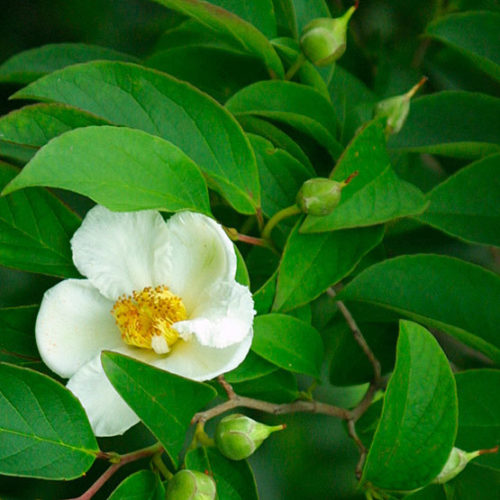
STEWARTIA PSEUDOCAMELLIA is a deciduous tree with an elegant, naturally pyramidal form that matures into something approaching an upright vase shape. The real magic happens in the understated details. Summer brings forth pristine white flowers with golden stamens—each bloom resembles a perfect camellia (a close botanical relative), typically 2 to 3 inches across and appearing over an extended period. But the flowers are just the opening act.

The exfoliating bark is where this tree truly steals the show. As the tree matures, the bark flakes away in patches of cinnamon, tan, cream, and gray, creating a mottled patchwork that’s especially striking in winter when the tree is bare. It’s the kind of architectural interest that keeps your garden looking sophisticated even in February. The summer foliage is a rich, lustrous dark green, and come autumn, it transforms into shades of burgundy, orange, and deep crimson—a display that rivals many flashier fall performers but with far more refinement.

Growing it in your garden

Japanese Stewartia isn’t difficult to grow, but it does have preferences, and respecting those preferences will reward you handsomely. This tree prefers afternoon shade, especially in Connecticut’s hotter summers. Morning sun is fine, but that intense western afternoon heat can stress it. It needs well-draining soil that’s consistently moist but never waterlogged—think of the dappled forest floor where it evolved in its native Japan. Acidic to neutral soil is ideal. If your garden runs alkaline, you’ll want to amend your planting area.

Plant in spring or early fall when soil moisture is naturally more reliable. Water deeply and regularly the first two growing seasons, especially during dry spells. A 2-3 inch layer of organic mulch around the base (keeping it away from the trunk) will help regulate soil temperature and moisture—important during Connecticut’s unpredictable springs and dry summers.

Through the seasons

Spring awakens this tree gradually. New foliage emerges a soft bronze-red before maturing to that glossy dark green. There’s no showy spring flower display here; STEWARTIA PSEUDOCAMELLIA is a plant that believes in perfect timing.

Summer is the showstopper season. From June through August, flowers open in succession over weeks, creating an ever-changing display rather than one brief flush. It’s the difference between a fireworks show and a perfectly executed ballet.

Fall color begins in September and extends through October, with those rich burgundy and orange tones deepening as nights cool. By November, the leaves drop to reveal that spectacular exfoliating bark structure.

Winter brings the quiet drama of the exposed branching pattern and that beautiful mottled bark. Rather than looking bare, the tree maintains substantial visual interest.

Where it shines

Japanese Stewartia is perfect as a specimen tree where you can appreciate its structure and seasonal interest from multiple angles. It’s ideal for woodland gardens or anywhere you can provide dappled shade. Use it at the edge of a tree line, in a sheltered corner, or as a focal point in a landscape bed. It works beautifully as part of a shade garden with hostas, ferns, and shade-loving perennials beneath its canopy.

This is also an excellent choice for a patio or seating area where you can observe the flowers up close and enjoy that exfoliating bark detail. It’s compact enough for most residential landscapes but substantial enough to anchor a planting bed.

Perfect companions

Plant Japanese Stewartia with other shade-loving plants that appreciate similar conditions. Hostas, particularly those with variegated foliage, create beautiful textural contrast. Ferns—especially Japanese painted ferns with their silvery blue-green fronds—echo the tree’s elegant aesthetic. Woodland phlox, hellebores, and brunnera all thrive in the dappled shade beneath the canopy. Avoid planting directly under the tree, but circle it with these companions and you’ll create a sophisticated shade garden that looks intentional and cohesive.

Care tips

Prune only to remove dead wood or awkward crossing branches—this tree has such a naturally lovely form that less is more. Avoid heavy pruning, which can disrupt that elegant structure. The tree is relatively pest and disease-resistant, though you’ll want to monitor for spider mites during hot, dry spells. Consistent moisture is your best insurance against stress.

Quick facts

  • Hardiness Zone: Zones 5-8 (perfectly hardy throughout Connecticut)
  • Mature Height & Spread: 20-30 feet tall, 15-20 feet wide
  • Bloom Season: June through August
  • Light Requirements: Dappled shade to part sun (afternoon shade preferred)
  • Water Needs: Consistent moisture; prefers well-draining soil
  • Available at: Both our retail and wholesale locations

Japanese Stewartia

Single white flowers bloom in mid Summer.

Zoning: 5
Mature Height and Spread: 15-20’
Trunk Diameter: 2-2.5”, 3-3.5”

Description

STEWARTIA PSEUDOCAMELLIA

The Japanese Stewartia is Connecticut’s answer to the gardener who wants something truly special—a tree that doesn’t just survive our New England winters, it absolutely thrives in them. If you’ve walked past a mature specimen in summer and noticed the perfectly delicate white flowers dancing against dark green leaves, or spotted one in fall blazing with crimson and orange, you understand why this tree has earned such devoted fans among serious gardeners. This is the kind of plant that makes you want to pause, really look, and appreciate the details.

What it looks like

STEWARTIA PSEUDOCAMELLIA is a deciduous tree with an elegant, naturally pyramidal form that matures into something approaching an upright vase shape. The real magic happens in the understated details. Summer brings forth pristine white flowers with golden stamens—each bloom resembles a perfect camellia (a close botanical relative), typically 2 to 3 inches across and appearing over an extended period. But the flowers are just the opening act.

The exfoliating bark is where this tree truly steals the show. As the tree matures, the bark flakes away in patches of cinnamon, tan, cream, and gray, creating a mottled patchwork that’s especially striking in winter when the tree is bare. It’s the kind of architectural interest that keeps your garden looking sophisticated even in February. The summer foliage is a rich, lustrous dark green, and come autumn, it transforms into shades of burgundy, orange, and deep crimson—a display that rivals many flashier fall performers but with far more refinement.

Growing it in your garden

Japanese Stewartia isn’t difficult to grow, but it does have preferences, and respecting those preferences will reward you handsomely. This tree prefers afternoon shade, especially in Connecticut’s hotter summers. Morning sun is fine, but that intense western afternoon heat can stress it. It needs well-draining soil that’s consistently moist but never waterlogged—think of the dappled forest floor where it evolved in its native Japan. Acidic to neutral soil is ideal. If your garden runs alkaline, you’ll want to amend your planting area.

Plant in spring or early fall when soil moisture is naturally more reliable. Water deeply and regularly the first two growing seasons, especially during dry spells. A 2-3 inch layer of organic mulch around the base (keeping it away from the trunk) will help regulate soil temperature and moisture—important during Connecticut’s unpredictable springs and dry summers.

Through the seasons

Spring awakens this tree gradually. New foliage emerges a soft bronze-red before maturing to that glossy dark green. There’s no showy spring flower display here; STEWARTIA PSEUDOCAMELLIA is a plant that believes in perfect timing.

Summer is the showstopper season. From June through August, flowers open in succession over weeks, creating an ever-changing display rather than one brief flush. It’s the difference between a fireworks show and a perfectly executed ballet.

Fall color begins in September and extends through October, with those rich burgundy and orange tones deepening as nights cool. By November, the leaves drop to reveal that spectacular exfoliating bark structure.

Winter brings the quiet drama of the exposed branching pattern and that beautiful mottled bark. Rather than looking bare, the tree maintains substantial visual interest.

Where it shines

Japanese Stewartia is perfect as a specimen tree where you can appreciate its structure and seasonal interest from multiple angles. It’s ideal for woodland gardens or anywhere you can provide dappled shade. Use it at the edge of a tree line, in a sheltered corner, or as a focal point in a landscape bed. It works beautifully as part of a shade garden with hostas, ferns, and shade-loving perennials beneath its canopy.

This is also an excellent choice for a patio or seating area where you can observe the flowers up close and enjoy that exfoliating bark detail. It’s compact enough for most residential landscapes but substantial enough to anchor a planting bed.

Perfect companions

Plant Japanese Stewartia with other shade-loving plants that appreciate similar conditions. Hostas, particularly those with variegated foliage, create beautiful textural contrast. Ferns—especially Japanese painted ferns with their silvery blue-green fronds—echo the tree’s elegant aesthetic. Woodland phlox, hellebores, and brunnera all thrive in the dappled shade beneath the canopy. Avoid planting directly under the tree, but circle it with these companions and you’ll create a sophisticated shade garden that looks intentional and cohesive.

Care tips

Prune only to remove dead wood or awkward crossing branches—this tree has such a naturally lovely form that less is more. Avoid heavy pruning, which can disrupt that elegant structure. The tree is relatively pest and disease-resistant, though you’ll want to monitor for spider mites during hot, dry spells. Consistent moisture is your best insurance against stress.

Quick facts

  • Hardiness Zone: Zones 5-8 (perfectly hardy throughout Connecticut)
  • Mature Height & Spread: 20-30 feet tall, 15-20 feet wide
  • Bloom Season: June through August
  • Light Requirements: Dappled shade to part sun (afternoon shade preferred)
  • Water Needs: Consistent moisture; prefers well-draining soil
  • Available at: Both our retail and wholesale locations