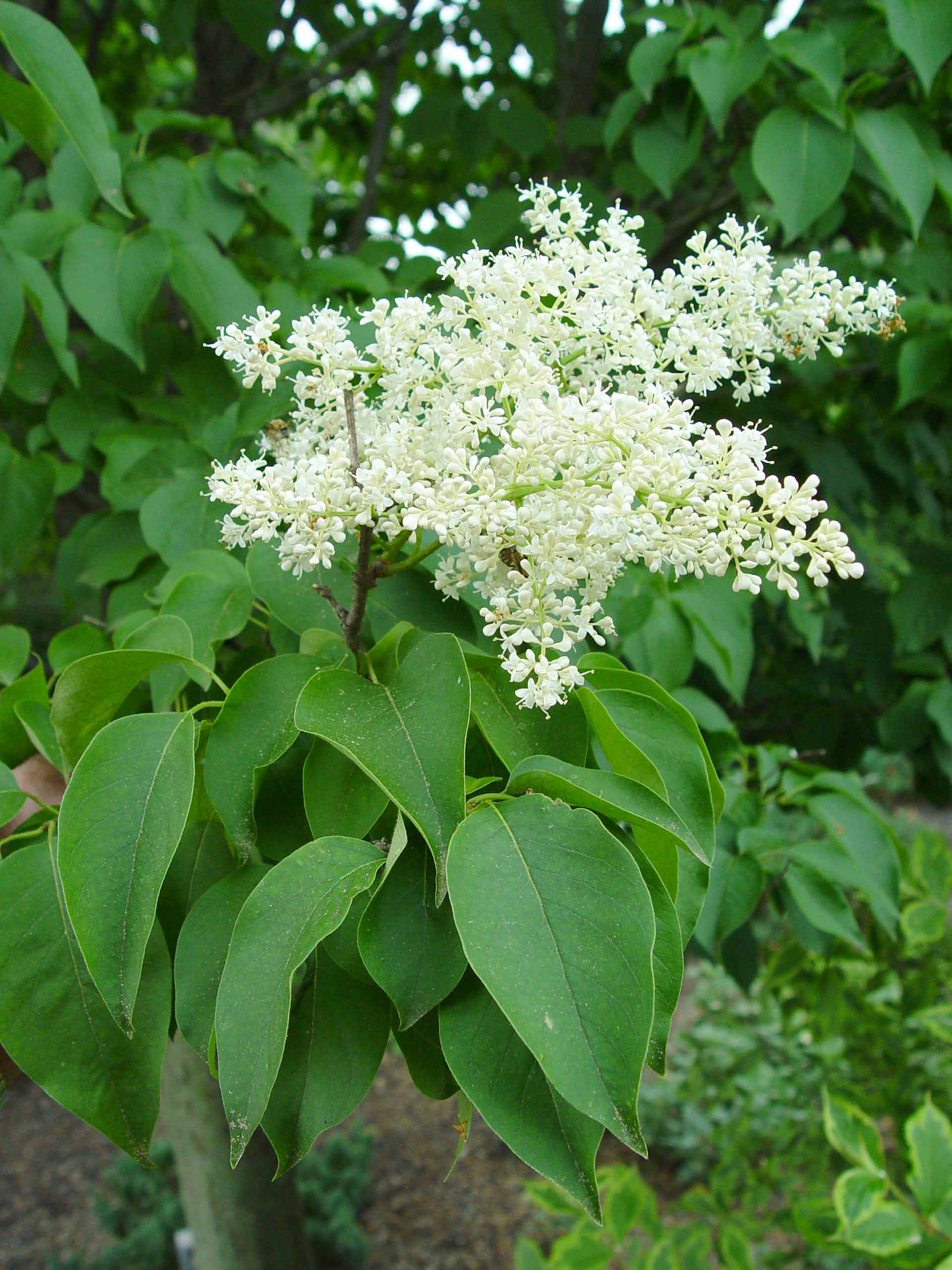
SYRINGA RETICULATA

If you’re tired of lilacs that fade into green obscurity the moment their blooms drop, meet the Japanese Tree Lilac—the sophisticated cousin who stays beautiful from spring straight through winter. This isn’t your grandmother’s shrubby lilac that disappears into the garden by July. This is an actual tree, with dark, glossy bark that gleams like mahogany when the sun hits it just right, and it keeps that ornamental quality year-round. In late spring, it transforms into a cloud of fragrant, creamy-white flowers that smell like honeyed lilac crossed with something slightly spicy. And that’s just the beginning of why Connecticut gardeners are falling in love with this plant.

What it looks like

The Japanese Tree Lilac grows as a multi-stemmed small tree, reaching 20 to 30 feet tall (though you can prune it to a single trunk if you prefer a more formal appearance). The branching structure is naturally graceful and architectural—those dark, finely textured branches create real visual interest even in winter. The leaves are a glossy dark green, somewhat larger than traditional lilacs, and they turn a lovely bronze or reddish-purple in fall before dropping. Come late May through early June, the tree literally glows with pyramidal panicles of tiny, fragrant white flowers. They’re small individually, but massed together on a mature tree, they’re absolutely show-stopping. And here’s the bonus: the flowering lasts longer than typical lilacs, giving you weeks of enjoyment rather than days.

Growing it in your garden

The Japanese Tree Lilac is remarkably adaptable, which makes it perfect for New England gardens. It tolerates a range of soils—clay, loam, even slightly alkaline—though it prefers well-draining conditions. In Connecticut’s humid summers and unpredictable springs, this tree handles itself with grace. Plant it where it gets at least six hours of direct sun; it’ll bloom more reliably and develop that stunning dark bark color. The tree is also fairly pest-resistant compared to its shrubby relatives, making it a low-fuss choice. Give it room to develop its natural form—it really is more attractive when allowed to grow somewhat naturally rather than being heavily pruned into submission.

Through the seasons

Spring brings anticipation as the emerging leaves unfold, followed by those magnificent flower panicles in late May and early June—timing that usually avoids late Connecticut frosts. Summer sees the glossy foliage create a lovely textured canopy, and if you deadhead spent flowers, the plant directs its energy into next year’s blooms (though the seed pods are somewhat attractive, so deadheading is optional). Fall delivers subtle beauty with the bronze-red color shift, and then winter reveals what many gardeners consider the tree’s secret superpower: that dark, exfoliating bark with its distinctive striations. It’s genuinely ornamental when everything else is dormant. The branching pattern is clean and striking against a snowy New England landscape.

Where it shines

Plant the Japanese Tree Lilac as a specimen where you can really appreciate it from multiple angles—a focal point in a bed, along a patio, or positioned so you see it from a main window. It works beautifully in small to medium gardens because even at full height, it has a relatively narrow spread. It’s also excellent for replacing that disappointing flowering cherry that gets disease every other year. Use it where you want spring flowers and year-round structure without the fussiness of many ornamental trees. In Connecticut’s Zone 4 to 5 gardens, it’s reliable in a way that many other flowering trees simply aren’t.

Perfect companions

Underplant your Japanese Tree Lilac with shade-tolerant plants that appreciate the dappled light it provides. Hostas, hellebores, or a groundcover of VINCA MINOR create a sophisticated underplanting. Nearby, place other architectural plants like HYDRANGEA ARBORESCENS or small conifers—things that add structure without competing. Spring bulbs like alliums will echo the lilac’s vertical flower form. The tree’s elegant framework means it pairs beautifully with plants that won’t crowd it; this is a specimen that deserves breathing room.

Care tips

Water regularly during the first two growing seasons to establish a deep root system. Once established, the Japanese Tree Lilac is quite drought-tolerant, a real advantage during Connecticut’s dry summers. Prune in late winter while dormant, removing any crossing branches or deadwood—and that’s honestly all you need to do. If you want to develop a single-trunk form, simply remove all but one main stem in the first year or two. Fertilizing isn’t necessary; this tree performs beautifully on its own. If you see signs of lilac leaf miner damage (which is rare on this species), simply remove affected leaves. It’s one of those plants that rewards you for leaving it alone.

Quick facts

  • Hardiness Zone: 3-7
  • Mature Height & Spread: 20-30 feet tall, 15-25 feet wide
  • Bloom Season: Late May through early June
  • Light Requirements: Full sun (6+ hours)
  • Water Needs: Moderate; drought-tolerant once established
  • Available at: Both our retail and wholesale locations

Japanese Tree Lilac

Category:

Effective specimen plant with cherry like bark and large, white fragrant flowers in mid-Summer.

Zoning: 3-7
Mature Height and Spread: 20-30’ & 15-20’
Pot Size (gallons), Height: 2”-2.5”

Description

SYRINGA RETICULATA

If you’re tired of lilacs that fade into green obscurity the moment their blooms drop, meet the Japanese Tree Lilac—the sophisticated cousin who stays beautiful from spring straight through winter. This isn’t your grandmother’s shrubby lilac that disappears into the garden by July. This is an actual tree, with dark, glossy bark that gleams like mahogany when the sun hits it just right, and it keeps that ornamental quality year-round. In late spring, it transforms into a cloud of fragrant, creamy-white flowers that smell like honeyed lilac crossed with something slightly spicy. And that’s just the beginning of why Connecticut gardeners are falling in love with this plant.

What it looks like

The Japanese Tree Lilac grows as a multi-stemmed small tree, reaching 20 to 30 feet tall (though you can prune it to a single trunk if you prefer a more formal appearance). The branching structure is naturally graceful and architectural—those dark, finely textured branches create real visual interest even in winter. The leaves are a glossy dark green, somewhat larger than traditional lilacs, and they turn a lovely bronze or reddish-purple in fall before dropping. Come late May through early June, the tree literally glows with pyramidal panicles of tiny, fragrant white flowers. They’re small individually, but massed together on a mature tree, they’re absolutely show-stopping. And here’s the bonus: the flowering lasts longer than typical lilacs, giving you weeks of enjoyment rather than days.

Growing it in your garden

The Japanese Tree Lilac is remarkably adaptable, which makes it perfect for New England gardens. It tolerates a range of soils—clay, loam, even slightly alkaline—though it prefers well-draining conditions. In Connecticut’s humid summers and unpredictable springs, this tree handles itself with grace. Plant it where it gets at least six hours of direct sun; it’ll bloom more reliably and develop that stunning dark bark color. The tree is also fairly pest-resistant compared to its shrubby relatives, making it a low-fuss choice. Give it room to develop its natural form—it really is more attractive when allowed to grow somewhat naturally rather than being heavily pruned into submission.

Through the seasons

Spring brings anticipation as the emerging leaves unfold, followed by those magnificent flower panicles in late May and early June—timing that usually avoids late Connecticut frosts. Summer sees the glossy foliage create a lovely textured canopy, and if you deadhead spent flowers, the plant directs its energy into next year’s blooms (though the seed pods are somewhat attractive, so deadheading is optional). Fall delivers subtle beauty with the bronze-red color shift, and then winter reveals what many gardeners consider the tree’s secret superpower: that dark, exfoliating bark with its distinctive striations. It’s genuinely ornamental when everything else is dormant. The branching pattern is clean and striking against a snowy New England landscape.

Where it shines

Plant the Japanese Tree Lilac as a specimen where you can really appreciate it from multiple angles—a focal point in a bed, along a patio, or positioned so you see it from a main window. It works beautifully in small to medium gardens because even at full height, it has a relatively narrow spread. It’s also excellent for replacing that disappointing flowering cherry that gets disease every other year. Use it where you want spring flowers and year-round structure without the fussiness of many ornamental trees. In Connecticut’s Zone 4 to 5 gardens, it’s reliable in a way that many other flowering trees simply aren’t.

Perfect companions

Underplant your Japanese Tree Lilac with shade-tolerant plants that appreciate the dappled light it provides. Hostas, hellebores, or a groundcover of VINCA MINOR create a sophisticated underplanting. Nearby, place other architectural plants like HYDRANGEA ARBORESCENS or small conifers—things that add structure without competing. Spring bulbs like alliums will echo the lilac’s vertical flower form. The tree’s elegant framework means it pairs beautifully with plants that won’t crowd it; this is a specimen that deserves breathing room.

Care tips

Water regularly during the first two growing seasons to establish a deep root system. Once established, the Japanese Tree Lilac is quite drought-tolerant, a real advantage during Connecticut’s dry summers. Prune in late winter while dormant, removing any crossing branches or deadwood—and that’s honestly all you need to do. If you want to develop a single-trunk form, simply remove all but one main stem in the first year or two. Fertilizing isn’t necessary; this tree performs beautifully on its own. If you see signs of lilac leaf miner damage (which is rare on this species), simply remove affected leaves. It’s one of those plants that rewards you for leaving it alone.

Quick facts

  • Hardiness Zone: 3-7
  • Mature Height & Spread: 20-30 feet tall, 15-25 feet wide
  • Bloom Season: Late May through early June
  • Light Requirements: Full sun (6+ hours)
  • Water Needs: Moderate; drought-tolerant once established
  • Available at: Both our retail and wholesale locations