THUJA PLICATA ‘GREEN GIANT’

If you’ve been searching for a fast-growing evergreen that actually delivers on its promises—one that tolerates Connecticut’s humid summers, wet springs, and unpredictable winters without throwing a tantrum—Green Giant Arborvitae might be the answer you’ve been waiting for. This isn’t just another tall, narrow evergreen. This is a plant with real personality, genuine resilience, and the kind of growth rate that makes you feel like you’re getting somewhere in your landscape design.

What it looks like

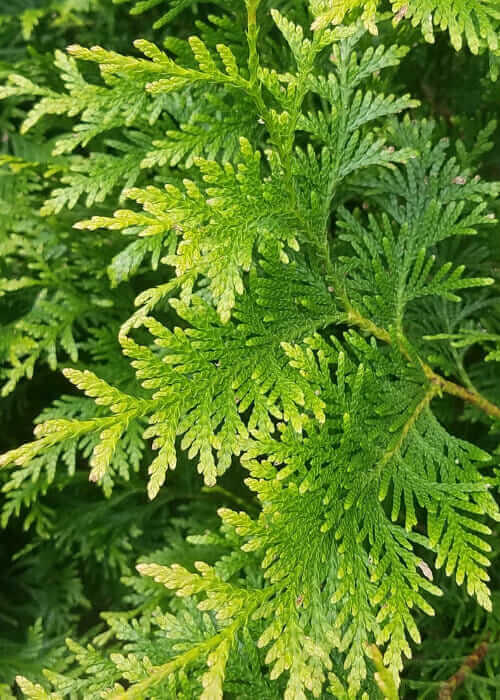
Green Giant is a columnar evergreen with feathery, fern-like foliage in a rich, forest green that holds its color beautifully through winter. Unlike some arborvitaes that turn bronze or dull in cold weather, Green Giant maintains that vibrant green year-round in New England gardens. The foliage has a soft texture that’s almost tactile—you’ll find yourself wanting to brush your hand along it as you pass by. It grows upright and pyramidal, naturally staying relatively narrow (around 12-15 feet wide at maturity), which means it takes up far less space than you’d think for something this tall.

Growing it in your garden

Here’s where Green Giant really shines compared to other tall evergreens: it’s flexible about conditions. While it prefers well-drained soil and full sun, it won’t sulk if you plant it in afternoon shade or slightly moist soil. Connecticut’s unpredictable moisture levels don’t faze it the way they do traditional American Arborvitae. It handles wind better too, which matters if you’re in an exposed Connecticut location. And unlike some evergreens that take forever to establish, Green Giant actually grows—we’re talking 3 feet per year in good conditions, which means you get that screening or privacy effect relatively quickly.

Plant it in fall or early spring for best establishment. Space multiple plants about 12-15 feet apart if you’re creating a hedge or privacy screen. The root system is shallow, so mulch around newly planted specimens to help with moisture and temperature regulation through their first year.

Through the seasons

Spring brings fresh new growth in a slightly lighter green that gradually deepens. Summer is when you’ll really see the vigor—this plant doesn’t slow down in the humidity. Fall brings no color change (which is actually perfect if you want consistent color in your garden), and winter is where you discover the real magic. While surrounding plants look tired and dormant, Green Giant stays bright and alive, proving it has the constitution for whatever Connecticut throws at it. The foliage won’t brown off like some sensitive arborvitaes, and it won’t accumulate heavy snow damage the way dense, brittle evergreens sometimes do.

Where it shines

Plant Green Giant where you need a living privacy screen, a windbreak, or a tall vertical accent. It’s perfect along property lines, beside driveways, or as a backdrop for lower plantings. Because it stays relatively narrow, it works in tighter spaces than you’d think. It’s also excellent in groups of three or five for landscape impact without overwhelming a residential yard. Its height makes it invaluable for screening views or creating definition in larger properties.

Perfect companions

Green Giant looks magnificent paired with lower-growing shrubs at its base—try pairing it with dwarf conifers, broadleaf evergreens like boxwood, or shade-tolerant deciduous shrubs. Plant it with Japanese Maples (ACER PALMATUM) for a sophisticated contrast between fine-textured foliage and upright form. In spring, underplant with hellebores or bleeding heart (DICENTRA) for season-long interest at ground level.

Care tips

Once established, Green Giant is remarkably low-maintenance. Water deeply during the first year, especially through Connecticut’s dry summers. After that, it only needs supplemental water during prolonged drought. Minimal pruning is needed if you plant it with adequate spacing, though you can shear it lightly to maintain a specific shape. Avoid heavy pruning into old wood—this plant looks best when you work with its natural form rather than fighting it.

Watch for spider mites in hot, dry conditions, which can occasionally affect arborvitaes. A strong spray from the hose usually handles minor infestations. Avoid planting where moisture sits continuously, as that’s where root problems can develop.

Quick facts

  • Hardiness Zone: 3-8
  • Mature Height & Spread: 40-50 feet tall (can exceed this in ideal conditions), 12-15 feet wide
  • Bloom Season: Non-flowering evergreen
  • Light Requirements: Full sun to part shade
  • Water Needs: Moderate; prefers consistently moist but well-drained soil
  • Available at: Both our retail and wholesale locations

Green Giant Arborvitae

Category:

An excellent grower with broad pyramidal habit. A great choice for privacy screens.

Zoning: 5-7
Mature Height and Spread: 30-40’ & 15-20’
Pot Size (gallons), Height: 5-6’ , 6-7’ ,7-8’ ,8-10’

Description

THUJA PLICATA ‘GREEN GIANT’

If you’ve been searching for a fast-growing evergreen that actually delivers on its promises—one that tolerates Connecticut’s humid summers, wet springs, and unpredictable winters without throwing a tantrum—Green Giant Arborvitae might be the answer you’ve been waiting for. This isn’t just another tall, narrow evergreen. This is a plant with real personality, genuine resilience, and the kind of growth rate that makes you feel like you’re getting somewhere in your landscape design.

What it looks like

Green Giant is a columnar evergreen with feathery, fern-like foliage in a rich, forest green that holds its color beautifully through winter. Unlike some arborvitaes that turn bronze or dull in cold weather, Green Giant maintains that vibrant green year-round in New England gardens. The foliage has a soft texture that’s almost tactile—you’ll find yourself wanting to brush your hand along it as you pass by. It grows upright and pyramidal, naturally staying relatively narrow (around 12-15 feet wide at maturity), which means it takes up far less space than you’d think for something this tall.

Growing it in your garden

Here’s where Green Giant really shines compared to other tall evergreens: it’s flexible about conditions. While it prefers well-drained soil and full sun, it won’t sulk if you plant it in afternoon shade or slightly moist soil. Connecticut’s unpredictable moisture levels don’t faze it the way they do traditional American Arborvitae. It handles wind better too, which matters if you’re in an exposed Connecticut location. And unlike some evergreens that take forever to establish, Green Giant actually grows—we’re talking 3 feet per year in good conditions, which means you get that screening or privacy effect relatively quickly.

Plant it in fall or early spring for best establishment. Space multiple plants about 12-15 feet apart if you’re creating a hedge or privacy screen. The root system is shallow, so mulch around newly planted specimens to help with moisture and temperature regulation through their first year.

Through the seasons

Spring brings fresh new growth in a slightly lighter green that gradually deepens. Summer is when you’ll really see the vigor—this plant doesn’t slow down in the humidity. Fall brings no color change (which is actually perfect if you want consistent color in your garden), and winter is where you discover the real magic. While surrounding plants look tired and dormant, Green Giant stays bright and alive, proving it has the constitution for whatever Connecticut throws at it. The foliage won’t brown off like some sensitive arborvitaes, and it won’t accumulate heavy snow damage the way dense, brittle evergreens sometimes do.

Where it shines

Plant Green Giant where you need a living privacy screen, a windbreak, or a tall vertical accent. It’s perfect along property lines, beside driveways, or as a backdrop for lower plantings. Because it stays relatively narrow, it works in tighter spaces than you’d think. It’s also excellent in groups of three or five for landscape impact without overwhelming a residential yard. Its height makes it invaluable for screening views or creating definition in larger properties.

Perfect companions

Green Giant looks magnificent paired with lower-growing shrubs at its base—try pairing it with dwarf conifers, broadleaf evergreens like boxwood, or shade-tolerant deciduous shrubs. Plant it with Japanese Maples (ACER PALMATUM) for a sophisticated contrast between fine-textured foliage and upright form. In spring, underplant with hellebores or bleeding heart (DICENTRA) for season-long interest at ground level.

Care tips

Once established, Green Giant is remarkably low-maintenance. Water deeply during the first year, especially through Connecticut’s dry summers. After that, it only needs supplemental water during prolonged drought. Minimal pruning is needed if you plant it with adequate spacing, though you can shear it lightly to maintain a specific shape. Avoid heavy pruning into old wood—this plant looks best when you work with its natural form rather than fighting it.

Watch for spider mites in hot, dry conditions, which can occasionally affect arborvitaes. A strong spray from the hose usually handles minor infestations. Avoid planting where moisture sits continuously, as that’s where root problems can develop.

Quick facts

  • Hardiness Zone: 3-8
  • Mature Height & Spread: 40-50 feet tall (can exceed this in ideal conditions), 12-15 feet wide
  • Bloom Season: Non-flowering evergreen
  • Light Requirements: Full sun to part shade
  • Water Needs: Moderate; prefers consistently moist but well-drained soil
  • Available at: Both our retail and wholesale locations