
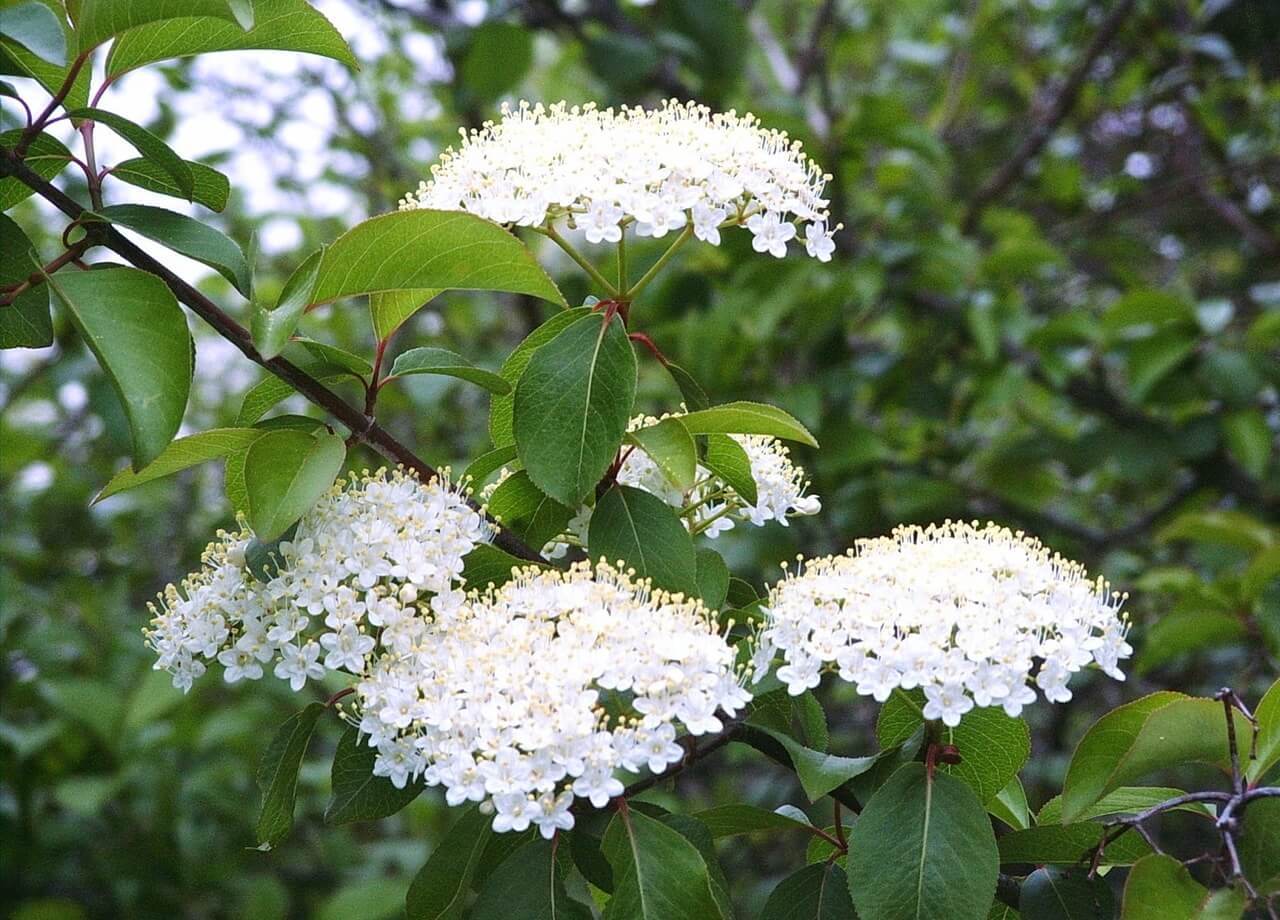
Description
VIBURNUM PRUNIFOLIUM
If you’ve been searching for something that handles wet soil, deep shade, and Connecticut winters without complaint while still delivering genuine ornamental value, Blackhaw Viburnum might be exactly what you’ve been looking for. This native understory shrub is one of those plants that quietly outperforms expectations, asking for very little while giving back generously across all four seasons. It’s the kind of plant that experienced gardeners plant and then smile about every time they walk past it.
What it looks like
Blackhaw Viburnum is a deciduous shrub with an elegant, naturally upright habit that matures into a handsome vase shape without requiring aggressive pruning. The foliage is the real standout here—small, finely textured dark green leaves with a subtle sheen that catches the light beautifully. Come autumn, this plant transforms itself: the leaves shift through burgundy to deep wine-purple, creating a color show that rivals any Japanese maple but with a fraction of the fussiness. The branching structure is fine and graceful, creating an almost architectural quality, especially in winter when the bare branches reveal an intricate twig pattern in shades of gray and burgundy.
In late spring, flat-topped clusters of small white flowers emerge, delicate and fragrant without being overwhelming. By late summer and into fall, these flowers give way to dark blue fruits that eventually ripen to an almost black color—the inspiration for the common name. These berries feed wildlife through the season and add a subtle visual interest that many gardeners overlook.
Growing it in your garden
Here’s what makes Blackhaw Viburnum such a joy to grow in New England: it’s genuinely native to Connecticut and the surrounding region, which means it’s adapted to our specific climate and soil conditions. This shrub prefers partial shade to full sun and is actually one of the few viburnums that will thrive in the dappled light beneath taller trees. It’s tolerant of wet soils—not swampy conditions, but it won’t struggle in areas that stay consistently moist, which is huge if you have that challenging low spot in your garden.
Plant it with the same care you’d give any new shrub: in spring or fall, in well-draining soil enriched with compost. Water regularly during the first season to establish a deep root system, then sit back and let it do its thing. The plant is remarkably self-sufficient once established, requiring minimal fussing or special treatment.
Through the seasons
Spring arrives with fragrant white flower clusters that attract pollinators and set the stage for the season ahead. Summer brings the most dramatic visual period—the deep green foliage is fresh and vibrant, creating a reliable backdrop for colorful perennials in front. Early fall is when Blackhaw truly shines: as temperatures drop, the foliage begins its burgundy transformation while the berries deepen from red to nearly black. Winter reveals the shrub’s elegant skeletal structure and burgundy-tinted twigs, providing subtle interest in the dormant landscape. The persistent fruits feed robins, cedar waxwings, and other winter birds.
Where it shines
This is a plant for gardeners who appreciate native species and want to support local wildlife while creating a beautiful landscape. Plant it as a specimen shrub in a transitional zone between shade and sun, along the woodland edge, or in a mixed shrub border where its fine texture provides a nice contrast to bolder foliage plants. It’s excellent for naturalizing in less formal gardens and makes a lovely screening plant along property lines when multiples are planted together. Because it adapts to wet sites, it’s ideal for rain gardens or areas where runoff collects. It’s also perfect for gardeners with limited space who want multi-season interest without needing anything large and cumbersome.
Perfect companions
Pair Blackhaw Viburnum with other native Connecticut plants like Clethra (Sweet Pepperbush), Elderberry, and native ferns. Its fine texture plays beautifully against the broader leaves of Oakleaf Hydrangea or the deep burgundy foliage of Physocarpus. Plant spring bulbs at its base—snowdrops, winter aconite, and native trilliums will bloom just as the viburnum’s leaves are expanding. Early-season perennials like hellebores and bleeding heart appreciate the same light and moisture conditions.
Care tips
Blackhaw Viburnum asks for very little once established. Prune only if needed, immediately after flowering if you want to shape the plant, though many gardeners prefer to let it develop its natural form. The plant is pest and disease-resistant—we rarely see problems even in humid New England summers. It doesn’t require feeding or special soil amendments. Water during drought, mulch lightly to retain moisture, and enjoy.
Quick facts
- Hardiness Zone: 3-9
- Mature Height & Spread: 12-15 feet tall, 8-12 feet wide (can be pruned smaller)
- Bloom Season: Late May through early June
- Light Requirements: Partial shade to full sun
- Water Needs: Moderate; tolerates wet soil
- Available at: Both our retail and wholesale locations.