ACER X FREEMANII ‘AUTUMN BLAZE’

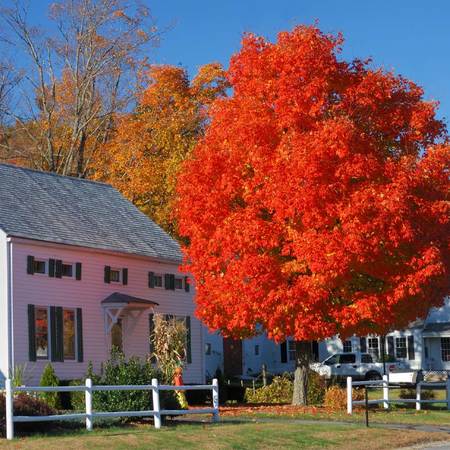
The Autumn Blaze Red Maple is Connecticut’s autumn champion—a tree that doesn’t just change color, it absolutely erupts in flame. If you’ve driven past a particularly brilliant red maple in October and thought, “I need that in my yard,” this cultivar is exactly what you’ve been picturing. It combines the reliable hardiness of the native Red Maple with earlier, more intense fall color and a faster growth rate that means you won’t be waiting decades to enjoy its full impact.

What it looks like

This is a medium to large deciduous tree with a naturally elegant branching structure and a broad, rounded crown. In spring, you’ll notice the distinctive reddish twigs and small red flowers that appear before the leaves fully emerge—a subtle hint of the fireworks to come. Summer foliage is a fresh, medium green, dense enough to create genuine shade but not so heavy-handed that it dominates the landscape.

But autumn? That’s when Autumn Blaze truly earns its name. The color show typically begins in late September in Connecticut, shifting from green to brilliant scarlet and orange-red before dropping. Unlike some maples that merely turn brown, this cultivar delivers consistent, reliable crimson color year after year. The bare winter silhouette is graceful and architectural, with an appealing branch structure that adds winter interest.

Growing it in your garden

Autumn Blaze is surprisingly adaptable, which is part of why it’s become such a popular choice across New England. It prefers full sun to part shade—at least six hours of direct sunlight daily will give you the most vigorous growth and the deepest fall color. It tolerates a wide range of soil types, though it performs best in well-draining conditions and actually handles moisture better than the straight Red Maple species, which is valuable if you have areas that stay damp through spring.

This is a relatively fast-growing tree for its size, which means you’ll see noticeable development year to year. It doesn’t require babying or coddling. Plant it in a location where you can let it grow to its full mature size—crowding it won’t make you happy, and it won’t make the tree happy either. Space it where it has room to develop its natural form.

Through the seasons

Spring arrives early with those distinctive red flowers appearing on bare branches in March or April. The emerging foliage has reddish tones before transitioning to summer green. Summer is your season of shade and full canopy presence—a reliable backdrop for the rest of your garden.

Fall is the main event. Beginning in late September and often holding into early November, the foliage shifts to those famous shades of red and orange. This isn’t a subtle transition; neighbors will notice. Winter shows off the gray bark and architectural branching, and by late winter, the red twigs become more conspicuous again as the season prepares to turn.

Where it shines

Autumn Blaze is perfect as a specimen tree in a lawn where it can be viewed from all angles and where you can really appreciate that color show. It’s equally stunning as part of a mixed border, where you can plant complementary understory plantings beneath it. The branching structure is clean enough that it works as a street tree in many Connecticut towns and neighborhoods. It’s also an excellent choice for screening or creating a natural privacy barrier, especially when you plant multiple specimens.

Because it handles moisture better than some maples, it’s a good choice for slightly wet areas where you might not want to plant a Sugar Maple. It also recovers well from Connecticut’s occasional droughts once established.

Perfect companions

Plant shade-tolerant shrubs and perennials beneath Autumn Blaze’s canopy—try native Spicebush, Serviceberry, or shade-loving perennials like Hosta, Hellebore, or Astilbe. The dark foliage of Ninebark makes a wonderful companion planting that plays beautifully against the red fall color. Spring bulbs like Daffodil and Allium will bloom before the canopy fully leafs out.

Care tips

Prune only to establish a strong central leader when young and to remove crossing branches or deadwood. Autumn Blaze is naturally disease-resistant compared to some red maple selections, but it’s worth monitoring for aphids in spring—they occasionally occur but rarely cause serious damage. Water regularly during the first growing season to establish a deep root system, then water during drought periods. No fertilizer necessary if you’ve planted it in average soil. Light mulch around the base helps retain moisture and regulates soil temperature.

Quick facts

  • Hardiness Zone: 3 to 9
  • Mature Height & Spread: 45 to 55 feet tall, 30 to 40 feet wide
  • Bloom Season: Early spring flowers; peak fall color late September through October
  • Light Requirements: Full sun to part shade (6+ hours of direct sunlight for best color)
  • Water Needs: Moderate; tolerates both wet and dry conditions once established
  • Available at: Both our retail and wholesale locations.

Autumn Blaze Red Maple

Category:

Imagine eye-catching, reliable red fall color that’s second to none, giving you the best yard on the block. With our Autumn Blaze Red Maple, you’ll get amazing color without lifting a finger.

Trunk Diameter: 2-2.5″

Description

ACER X FREEMANII ‘AUTUMN BLAZE’

The Autumn Blaze Red Maple is Connecticut’s autumn champion—a tree that doesn’t just change color, it absolutely erupts in flame. If you’ve driven past a particularly brilliant red maple in October and thought, “I need that in my yard,” this cultivar is exactly what you’ve been picturing. It combines the reliable hardiness of the native Red Maple with earlier, more intense fall color and a faster growth rate that means you won’t be waiting decades to enjoy its full impact.

What it looks like

This is a medium to large deciduous tree with a naturally elegant branching structure and a broad, rounded crown. In spring, you’ll notice the distinctive reddish twigs and small red flowers that appear before the leaves fully emerge—a subtle hint of the fireworks to come. Summer foliage is a fresh, medium green, dense enough to create genuine shade but not so heavy-handed that it dominates the landscape.

But autumn? That’s when Autumn Blaze truly earns its name. The color show typically begins in late September in Connecticut, shifting from green to brilliant scarlet and orange-red before dropping. Unlike some maples that merely turn brown, this cultivar delivers consistent, reliable crimson color year after year. The bare winter silhouette is graceful and architectural, with an appealing branch structure that adds winter interest.

Growing it in your garden

Autumn Blaze is surprisingly adaptable, which is part of why it’s become such a popular choice across New England. It prefers full sun to part shade—at least six hours of direct sunlight daily will give you the most vigorous growth and the deepest fall color. It tolerates a wide range of soil types, though it performs best in well-draining conditions and actually handles moisture better than the straight Red Maple species, which is valuable if you have areas that stay damp through spring.

This is a relatively fast-growing tree for its size, which means you’ll see noticeable development year to year. It doesn’t require babying or coddling. Plant it in a location where you can let it grow to its full mature size—crowding it won’t make you happy, and it won’t make the tree happy either. Space it where it has room to develop its natural form.

Through the seasons

Spring arrives early with those distinctive red flowers appearing on bare branches in March or April. The emerging foliage has reddish tones before transitioning to summer green. Summer is your season of shade and full canopy presence—a reliable backdrop for the rest of your garden.

Fall is the main event. Beginning in late September and often holding into early November, the foliage shifts to those famous shades of red and orange. This isn’t a subtle transition; neighbors will notice. Winter shows off the gray bark and architectural branching, and by late winter, the red twigs become more conspicuous again as the season prepares to turn.

Where it shines

Autumn Blaze is perfect as a specimen tree in a lawn where it can be viewed from all angles and where you can really appreciate that color show. It’s equally stunning as part of a mixed border, where you can plant complementary understory plantings beneath it. The branching structure is clean enough that it works as a street tree in many Connecticut towns and neighborhoods. It’s also an excellent choice for screening or creating a natural privacy barrier, especially when you plant multiple specimens.

Because it handles moisture better than some maples, it’s a good choice for slightly wet areas where you might not want to plant a Sugar Maple. It also recovers well from Connecticut’s occasional droughts once established.

Perfect companions

Plant shade-tolerant shrubs and perennials beneath Autumn Blaze’s canopy—try native Spicebush, Serviceberry, or shade-loving perennials like Hosta, Hellebore, or Astilbe. The dark foliage of Ninebark makes a wonderful companion planting that plays beautifully against the red fall color. Spring bulbs like Daffodil and Allium will bloom before the canopy fully leafs out.

Care tips

Prune only to establish a strong central leader when young and to remove crossing branches or deadwood. Autumn Blaze is naturally disease-resistant compared to some red maple selections, but it’s worth monitoring for aphids in spring—they occasionally occur but rarely cause serious damage. Water regularly during the first growing season to establish a deep root system, then water during drought periods. No fertilizer necessary if you’ve planted it in average soil. Light mulch around the base helps retain moisture and regulates soil temperature.

Quick facts

  • Hardiness Zone: 3 to 9
  • Mature Height & Spread: 45 to 55 feet tall, 30 to 40 feet wide
  • Bloom Season: Early spring flowers; peak fall color late September through October
  • Light Requirements: Full sun to part shade (6+ hours of direct sunlight for best color)
  • Water Needs: Moderate; tolerates both wet and dry conditions once established
  • Available at: Both our retail and wholesale locations.