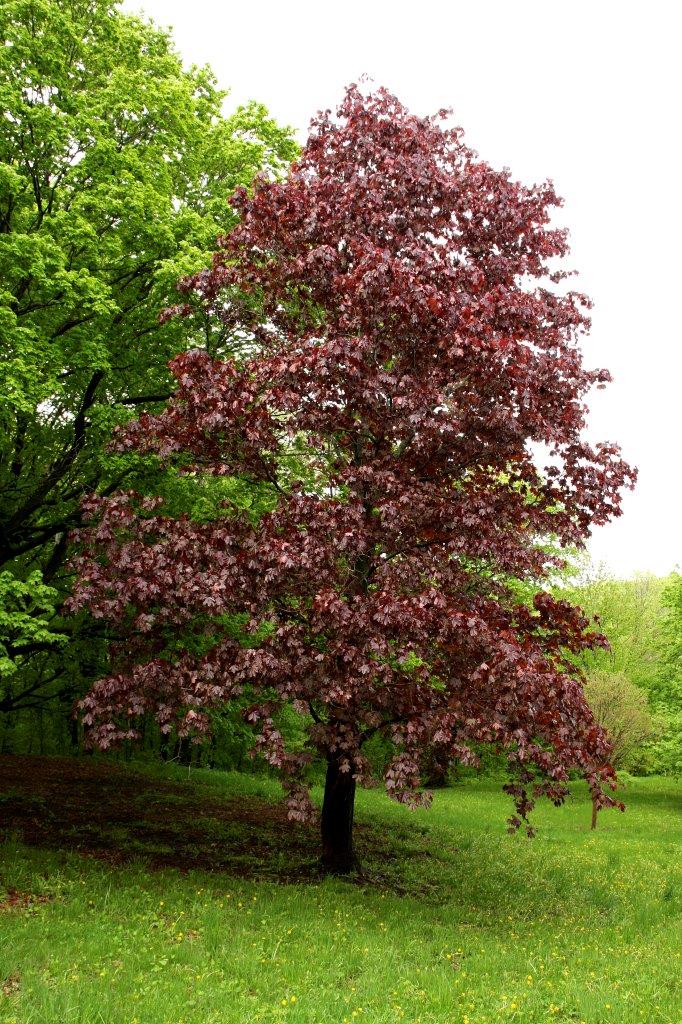
ACER PLATANOIDES ‘CRIMSON KING’

The Crimson King Norway Maple is Connecticut’s answer to the gardener who wants drama without the fuss. This tree doesn’t whisper—it announces itself. From the moment its deep burgundy leaves unfurl in spring through the first frost of autumn, the Crimson King commands attention with a presence that transforms entire landscapes. Unlike so many ornamental trees that fade into the background by mid-summer, this maple maintains its stunning color intensity from March through October, never apologizing for being the most striking tree on your property.

What it looks like

Imagine a Norway Maple that decided to wear deep wine-red velvet year-round. The Crimson King’s leaves emerge a rich burgundy-red in spring and deepen to an almost black-red by midsummer—a color that makes nearby plants seem to glow by comparison. The foliage maintains this dramatic hue through summer’s heat and into fall, when it transitions to dark scarlet before dropping. The tree itself develops a strong, dense, rounded canopy with a sturdy branching structure that looks equally handsome in winter. Mature specimens develop attractive gray bark that adds another layer of visual interest during the dormant season.

Growing it in your garden

Here’s what makes the Crimson King so valuable in Connecticut gardens: it’s genuinely tough. This tree handles our unpredictable New England springs, hot summers, and cold winters without complaint. It’s more cold-hardy than many ornamental maples and far more adaptable than some of its fussier cousins. Plant it in full sun to partial shade—it will color best in full sun, but it’s forgiving enough to thrive in dappled shade near larger trees. The Crimson King prefers well-draining soil and moderate moisture but adapts reasonably well once established. It’s not the most drought-tolerant tree, so consistent watering during dry spells will keep it looking its best, especially during our hot summer months.

Through the seasons

Spring brings the first magic: those deep red leaves unfurl in a breathtaking display that lasts for weeks. Early summer sees the tree settle into its dark burgundy costume while you’re busy gardening elsewhere—low maintenance, high impact. By July and August, when many trees have faded to predictable green, your Crimson King is still delivering that rich color contrast that makes perennials and shrubs look better. Fall comes late for this tree; unlike some maples that change color dramatically in September, the Crimson King holds its burgundy-to-scarlet transition into November. Winter reveals an elegant branching structure and handsome bark—not as showy as the growing season, but still attractive.

Where it shines

The Crimson King is a landscape anchor. Use it as a specimen tree where you want to draw the eye—at the corner of a property, framing a driveway, or as a focal point in a mixed border. It’s stunning when underplanted with silver-foliaged plants like artemisia or dusty miller, which seem to shimmer against the dark leaves. The burgundy foliage makes an excellent backdrop for golden or chartreuse plants. It works beautifully in groupings of three or more for a stronger visual impact in larger landscapes. Don’t relegate it to a hidden corner; this tree deserves a starring role where its color can be appreciated from the house and street.

Perfect companions

The Crimson King’s dark foliage is a gift to the gardener who loves color combinations. Pair it with silver-leafed plants like Artemisia ‘Powis Castle’ or Russian Sage (PEROVSKIA ATRIPLICIFOLIA) for stunning contrast. Golden foliage plants like Japanese Barberry ‘Aurea’ or Spiraea ‘Goldmound’ glow against the burgundy. White or pale pink flowering shrubs like Oakleaf Hydrangea or Panicle Hydrangea become luminous when planted nearby. Chartreuse hostas and Coleus add brightness to shaded areas beneath the canopy without competing for attention.

Care tips

Water regularly during establishment and through dry Connecticut summers. Once established, the tree is fairly self-sufficient, but it appreciates consistent moisture during droughts. Prune in late winter to remove any crossing branches or limbs that detract from the tree’s natural form—the Crimson King has beautiful natural structure, so you won’t need to do much. Watch for the typical Norway Maple pests: aphids in early spring (they’re rarely serious) and the occasional scale insect. The tree’s dense canopy can shade out grass beneath it, so consider planting shade-tolerant groundcovers or simply mulching underneath. Fertilizing isn’t necessary if the tree is planted in decent soil.

Quick facts

  • Hardiness Zone: 3-7 (thrives throughout Connecticut)
  • Mature Height & Spread: 40-50 feet tall and wide
  • Bloom Season: Non-flowering; valued for foliage
  • Light Requirements: Full sun to partial shade (best color in full sun)
  • Water Needs: Moderate; consistent moisture preferred
  • Available at: Both our retail and wholesale locations
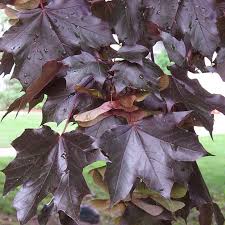
Crimson King , Norway Maple

Category:

‘Crimson King’ Norway maple grows to a height of 35 to 45 feet spreading about 25 to 30 feet and is quite popular for its purple-green foliage throughout the summer

Trunk Diameter: 2.5-3″

Description

ACER PLATANOIDES ‘CRIMSON KING’

The Crimson King Norway Maple is Connecticut’s answer to the gardener who wants drama without the fuss. This tree doesn’t whisper—it announces itself. From the moment its deep burgundy leaves unfurl in spring through the first frost of autumn, the Crimson King commands attention with a presence that transforms entire landscapes. Unlike so many ornamental trees that fade into the background by mid-summer, this maple maintains its stunning color intensity from March through October, never apologizing for being the most striking tree on your property.

What it looks like

Imagine a Norway Maple that decided to wear deep wine-red velvet year-round. The Crimson King’s leaves emerge a rich burgundy-red in spring and deepen to an almost black-red by midsummer—a color that makes nearby plants seem to glow by comparison. The foliage maintains this dramatic hue through summer’s heat and into fall, when it transitions to dark scarlet before dropping. The tree itself develops a strong, dense, rounded canopy with a sturdy branching structure that looks equally handsome in winter. Mature specimens develop attractive gray bark that adds another layer of visual interest during the dormant season.

Growing it in your garden

Here’s what makes the Crimson King so valuable in Connecticut gardens: it’s genuinely tough. This tree handles our unpredictable New England springs, hot summers, and cold winters without complaint. It’s more cold-hardy than many ornamental maples and far more adaptable than some of its fussier cousins. Plant it in full sun to partial shade—it will color best in full sun, but it’s forgiving enough to thrive in dappled shade near larger trees. The Crimson King prefers well-draining soil and moderate moisture but adapts reasonably well once established. It’s not the most drought-tolerant tree, so consistent watering during dry spells will keep it looking its best, especially during our hot summer months.

Through the seasons

Spring brings the first magic: those deep red leaves unfurl in a breathtaking display that lasts for weeks. Early summer sees the tree settle into its dark burgundy costume while you’re busy gardening elsewhere—low maintenance, high impact. By July and August, when many trees have faded to predictable green, your Crimson King is still delivering that rich color contrast that makes perennials and shrubs look better. Fall comes late for this tree; unlike some maples that change color dramatically in September, the Crimson King holds its burgundy-to-scarlet transition into November. Winter reveals an elegant branching structure and handsome bark—not as showy as the growing season, but still attractive.

Where it shines

The Crimson King is a landscape anchor. Use it as a specimen tree where you want to draw the eye—at the corner of a property, framing a driveway, or as a focal point in a mixed border. It’s stunning when underplanted with silver-foliaged plants like artemisia or dusty miller, which seem to shimmer against the dark leaves. The burgundy foliage makes an excellent backdrop for golden or chartreuse plants. It works beautifully in groupings of three or more for a stronger visual impact in larger landscapes. Don’t relegate it to a hidden corner; this tree deserves a starring role where its color can be appreciated from the house and street.

Perfect companions

The Crimson King’s dark foliage is a gift to the gardener who loves color combinations. Pair it with silver-leafed plants like Artemisia ‘Powis Castle’ or Russian Sage (PEROVSKIA ATRIPLICIFOLIA) for stunning contrast. Golden foliage plants like Japanese Barberry ‘Aurea’ or Spiraea ‘Goldmound’ glow against the burgundy. White or pale pink flowering shrubs like Oakleaf Hydrangea or Panicle Hydrangea become luminous when planted nearby. Chartreuse hostas and Coleus add brightness to shaded areas beneath the canopy without competing for attention.

Care tips

Water regularly during establishment and through dry Connecticut summers. Once established, the tree is fairly self-sufficient, but it appreciates consistent moisture during droughts. Prune in late winter to remove any crossing branches or limbs that detract from the tree’s natural form—the Crimson King has beautiful natural structure, so you won’t need to do much. Watch for the typical Norway Maple pests: aphids in early spring (they’re rarely serious) and the occasional scale insect. The tree’s dense canopy can shade out grass beneath it, so consider planting shade-tolerant groundcovers or simply mulching underneath. Fertilizing isn’t necessary if the tree is planted in decent soil.

Quick facts

  • Hardiness Zone: 3-7 (thrives throughout Connecticut)
  • Mature Height & Spread: 40-50 feet tall and wide
  • Bloom Season: Non-flowering; valued for foliage
  • Light Requirements: Full sun to partial shade (best color in full sun)
  • Water Needs: Moderate; consistent moisture preferred
  • Available at: Both our retail and wholesale locations