
Description

RHODODENDRON ‘CUNNINGHAM’S WHITE’ (RHODODENDRON CATAWBIENSE HYBRID)
If you’ve ever driven through Connecticut in June and caught sight of a rhododendron in full bloom, you know that moment—when suddenly your whole garden feels like it has an elegant, sophisticated presence it didn’t have five minutes before. CUNNINGHAM’S WHITE is that plant. This is the rhododendron that garden designers secretly wish every gardener would plant, because it does something almost magical: it combines classic beauty with the kind of tough, no-nonsense hardiness that Connecticut winters actually respect.
What it looks like
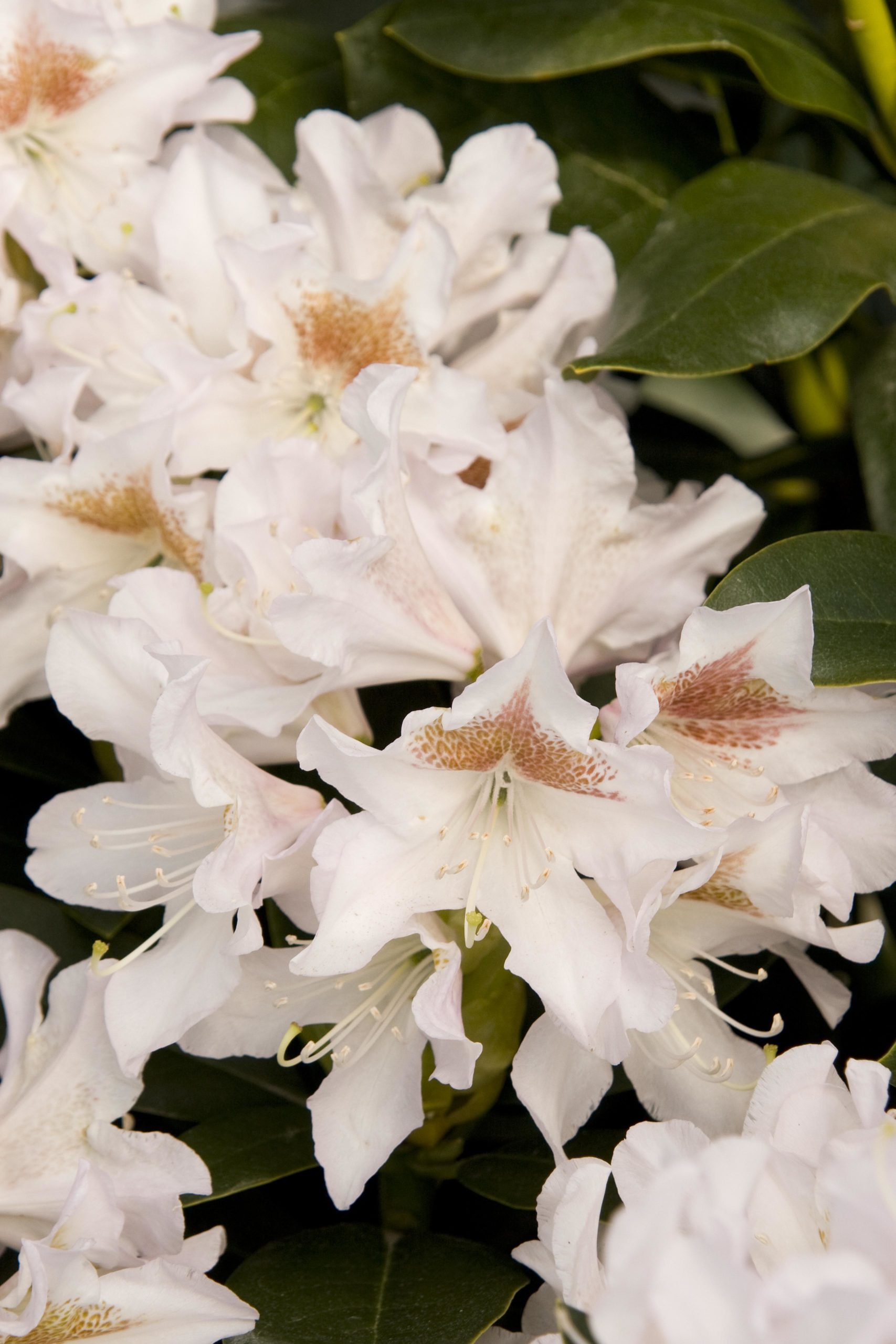
CUNNINGHAM’S WHITE is a broad, rounded evergreen shrub that earns its place in the garden twelve months a year. Its dark green, lance-shaped leaves have that rich, leathery texture that rhododendrons are famous for—the kind of foliage that looks substantial and architectural even in January. But it’s the flowers that will stop visitors in their tracks: clusters of pure white blooms with pale yellow-green throats, held in tight trusses that practically glow against the dark foliage. Each flower has that ruffled, delicate appearance that makes you wonder how something so refined could be so tough.
Growing it in your garden
Here’s what makes CUNNINGHAM’S WHITE special for New England gardeners: it’s one of the most reliably hardy hybrid rhododendrons you can plant. While some fancy varieties sulk through our winters, this one actually thrives. It wants acidic soil—that’s non-negotiable—and rich, well-draining conditions. If your soil leans alkaline, amend it heavily with peat moss, sulfur, or compost made from oak leaves. Think of it as setting the stage for success rather than fighting an uphill battle.
Unlike some rhododendrons that need coddling, CUNNINGHAM’S WHITE has a sturdy constitution. It handles our spring frost snaps without drama, laughs at our humidity, and actually performs better when it’s not babied with constant fussing. That said, it does appreciate some afternoon shade in hot summers, and it absolutely benefits from a thick mulch layer of pine bark or oak leaves to keep those shallow roots cool and happy.
Through the seasons
Spring arrives, and CUNNINGHAM’S WHITE emerges from dormancy with fresh new growth that’s almost coppery before it matures to that gorgeous deep green. By late May or early June—depending on your microclimate—the flowers open, and the display is spectacular. The blooms last for several weeks, gradually fading from pristine white to a soft cream. Summer finds the plant settling into its role as a handsome evergreen backdrop for other plantings. Fall brings no dramatic color change, but the foliage maintains its richness, and the plant becomes even more valuable in the late-season garden. Winter? This is where CUNNINGHAM’S WHITE proves its mettle. The leaves may curl slightly in hard freezes (a perfectly normal survival mechanism), but the plant emerges intact and unbothered when spring returns.
Where it shines
CUNNINGHAM’S WHITE is at its best in woodland gardens and partially shaded borders where it can be part of a layered planting scheme. It’s absolutely stunning used in groups of odd numbers—three or five plants clustered together create a more natural, impactful landscape. It also excels as a specimen shrub where you want year-round structure and seasonal interest without the fuss. Foundation plantings benefit from its formal shape and evergreen presence. And if you have a site with dappled shade and acidic soil, this rhododendron practically begs to live there.
Perfect companions
Plant CUNNINGHAM’S WHITE with other acid-loving companions like KALMIA (mountain laurel), native azaleas, and ferns that appreciate the same soil conditions. Hostas create a lovely textural contrast at ground level, while Japanese maples echo the plant’s refined elegance. Hellebores bloom in spring just before the rhododendron flowers open, extending your season of interest. Underplant with shade-tolerant perennials like HEUCHERA or TIARELLA to soften the base.
Care tips
Deadhead spent flower trusses by gently snapping them off just below the flower cluster—don’t pull harshly, or you’ll damage next year’s buds. This encourages better branching and more abundant blooms the following year. Water deeply during Connecticut’s dry spells; rhododendrons are shallow-rooted and appreciate consistent moisture during the growing season. Prune only to remove dead wood or shape the plant after flowering—these plants rarely need heavy pruning if given proper space. Refresh mulch annually to maintain that acidic environment the roots crave.
Quick facts
- Hardiness Zone: 4-8
- Mature Height & Spread: 5-6 feet tall and wide
- Bloom Season: Late May to early June
- Light Requirements: Partial shade; morning sun with afternoon shade is ideal
- Water Needs: Consistent moisture, well-draining; drought-sensitive until established
- Available at: Both our retail and wholesale locations