Description

CHAMAECYPARIS PISIFERA ‘FILIFERA AUREA’
If you’ve been searching for a conifer that brings architectural drama to shady corners while maintaining an almost ethereal, delicate appearance, Gold Thread delivers on both promises. This Japanese falsecypress cultivar is the kind of plant that makes experienced gardeners pause mid-stride to admire it—and for good reason. Its impossibly fine, thread-like foliage catches light in a way that seems to defy the shadier spots where it thrives, creating an effect that’s equal parts elegant and whimsical. In a New England garden where we’re always hunting for plants that handle our challenging light conditions without sacrificing beauty, Gold Thread is a quiet overachiever.
What it looks like
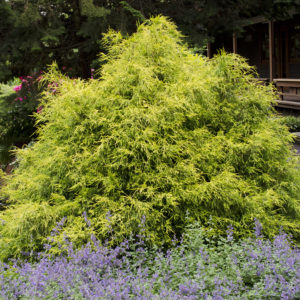
Imagine if someone took the structure of a conifer and softened every hard edge into something feathery and almost cotton-like. That’s Gold Thread. The foliage is distinctly thread-like—narrow, flat sprays that weep gracefully downward, creating a fountain-like silhouette that looks completely different from the rigid columnar forms most of us associate with conifers. The color is the real showstopper: a warm golden yellow that’s particularly vibrant in spring and maintains its luminosity well into fall and winter. This isn’t the harsh, almost neon gold of some specimen plants—it’s a sophisticated, warm tone that complements rather than competes with its surroundings. The overall form is typically broad and pyramidal, though it can develop a somewhat weeping character as it matures, giving it genuine personality.
Growing it in your garden
Here’s where Gold Thread becomes genuinely practical for Connecticut gardeners: it’s remarkably adaptable. While it performs beautifully in partial shade—truly thriving where many other golden conifers would lose their luster and turn greenish—it can handle full sun, especially with afternoon shade during our most intense summer months. The key is consistent moisture without waterlogging. Gold Thread prefers well-draining soil that never fully dries out, so amend heavy clay with compost to improve drainage. Once established, it’s fairly self-sufficient, though occasional deep watering during dry spells keeps it looking its absolute best. The plant is also quite cold-hardy, handling Connecticut winters without flinching, so you can plant with confidence.
Through the seasons
Spring brings renewed vigor to Gold Thread, with new growth emerging in particularly bright yellow tones that freshen the entire plant. Summer is when its shade tolerance really shines—literally—as its foliage glows warmly in dappled light. The delicate structure is highlighted beautifully by morning dew or after rain. Fall doesn’t bring dramatic color changes like a maple, but Gold Thread maintains its golden warmth while the rest of the garden turns amber and rust, creating subtle but striking contrast. Winter is perhaps Gold Thread’s most underrated season: the fine foliage design becomes even more sculptural when frost-touched, and that golden tone provides genuine visual warmth during gray Connecticut winters when we need it most.
Where it shines
Gold Thread is perfect for specimen plantings where you want a plant to earn its space year-round. Position it where morning or afternoon light can illuminate that gorgeous golden foliage—against a darker backdrop or near an entry where you’ll see it daily. It’s absolutely stunning in shade gardens, where its luminous color helps brighten darker areas without requiring the intense sun that bleaches many specimen plants. Use it as an anchor in mixed beds, underplanted with darker evergreens or shade-tolerant perennials. It’s also wonderful for container cultivation, where its graceful weeping form can truly be appreciated. In woodland settings or shade gardens where structure and form matter as much as flower, Gold Thread provides year-round architectural interest that few plants can match.
Perfect companions
Gold Thread loves company that doesn’t compete with its delicate form. Pair it with dark, glossy-leaved plants like boxwood or holly that create contrast without visual clutter. Shade-loving perennials with bold foliage—hostas, hellebores, or astilbe—ground the plant while letting its weeping form take center stage. In spring, underplant with early ephemerals like trillium or bloodroot. Evergreen ground covers like VINCA MINOR or sedges provide base interest without stealing the spotlight. Taller shade-tolerant plants like oakleaf hydrangea or ILEX VERTICILLATA can be positioned nearby to create layered depth.
Care tips
Gold Thread is refreshingly low-maintenance once established. Prune only to remove any dead wood or to maintain shape—it rarely needs aggressive cutting. Watch for spider mites during extremely dry periods, particularly in full sun locations, and increase watering if you notice bronzing foliage. Avoid planting in wind tunnels where strong winds can damage the delicate foliage. If browning appears in winter, it’s usually from drying winds rather than cold damage—ensure adequate moisture before winter dormancy. Fertilizing is rarely necessary; if growth seems slow, a light application of balanced fertilizer in spring helps.
Quick facts
- Hardiness Zone: 4–8
- Mature Height & Spread: 8–10 feet tall, 6–8 feet wide
- Bloom Season: Non-flowering; ornamental foliage plant
- Light Requirements: Partial to full sun (shade tolerance is exceptional)
- Water Needs: Moderate; consistent moisture preferred
- Available at: Both our retail and wholesale locations