
Description

ACER RUBRUM ‘RED SUNSET’
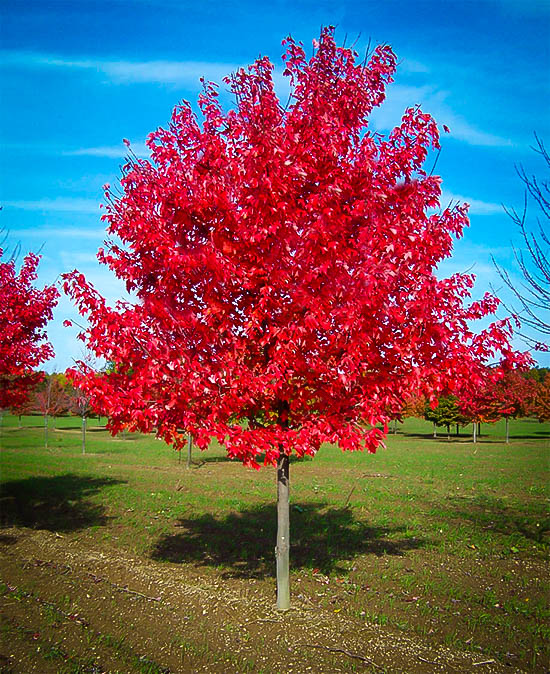
The Red Sunset Maple is Connecticut’s autumn champion, a tree that doesn’t just turn colors—it absolutely glows. If you’ve ever driven through New England in October and found yourself mesmerized by a particularly brilliant red maple standing against the blue sky, there’s a good chance you were looking at a Red Sunset. This cultivar was specifically selected and named for its exceptionally reliable, breathtaking crimson fall display, making it one of the most dependable choices for gardeners who refuse to settle for dull autumn color.
What it looks like
Red Sunset is a medium to large deciduous tree with an oval to rounded crown that fills in nicely as it matures. The leaves are deeply lobed with that classic maple shape we all recognize and love, and they emerge in spring with a reddish tint before turning a rich, glossy green throughout the summer. But here’s where this tree really earns its name: come fall, those leaves transform into shades of orange-red and scarlet that seem to intensify rather than fade as the season progresses. Many other red maples peter out in color after a few weeks, but Red Sunset maintains its spectacular display well into late autumn.
The tree’s winter silhouette is attractive too—an elegant branching structure that adds architectural interest to the dormant landscape. In spring, small red flowers appear before the leaves fully emerge, adding another subtle layer of seasonal interest.
Growing it in your garden
Red Sunset Maple is exceptionally adaptable, which is one reason it’s become such a cornerstone tree in Connecticut landscapes. It handles both wet and dry soil conditions better than many maples, though it does prefer soil that doesn’t stay waterlogged. This adaptability makes it an excellent choice for sites where you might worry about drainage issues—it won’t develop root rot problems like some less resilient cultivars.
Plant Red Sunset in a spot that receives full sun to partial shade. While it tolerates some shade, you’ll get the most dramatic fall color in a location with at least six hours of direct sunlight. Space it with room to grow—this tree appreciates good air circulation, which helps keep foliage healthy and contributes to more reliable color development year after year.
Through the seasons
Spring arrives with those subtle red flowers that many gardeners overlook but that add an unexpected delicate beauty before leafing out. Summer is when Red Sunset settles into its green, providing reliable shade and a lush canopy backdrop for the rest of your garden. The tree’s form is naturally pleasing, so it doesn’t require heavy pruning to look good.
Then comes autumn—the whole reason this cultivar exists. Beginning in early October, the transformation starts, deepening week by week. Unlike some maples that flash brilliant for a few days then drop their leaves, Red Sunset holds its color for an extended period, giving you weeks of visual impact. Winter reveals that handsome branching structure and provides evergreen contrast for other plantings.
Where it shines
Red Sunset Maple excels as a specimen tree in a prominent location where you want that fall show to be the garden’s focal point. It’s equally at home as a shade tree in a medium-sized yard, or as part of a mixed planting where its summer greenery and architectural winter form support other seasonal performers. The tree is sturdy enough to handle New England’s variable weather, including the ice storms that occasionally challenge us.
Consider placing it where you can see it from your house—perhaps near a window where you’ll watch the seasonal transformation, or in a front yard where it elevates your home’s landscape appeal. It works beautifully as a lone statement tree or as part of a small grouping with understory plantings beneath.
Perfect companions
Underplant Red Sunset with shade-tolerant perennials like HELLEBORES, ASTILBE, and HEUCHERA to create a layered garden that’s interesting before the maple’s autumn show steals the spotlight. Pair it with evergreen shrubs like BOXWOOD or HOLLY for winter structure and contrast. In spring, plant spring bulbs—DAFFODILS and TULIPS—under the canopy where they’ll naturalize beautifully. Native shrubs like SERVICEBERRY or VIBURNUM complement its form and share similar growing preferences.
Care tips
Water deeply after planting and maintain consistent moisture during the first growing season. Once established, Red Sunset is relatively low-maintenance. Prune in late winter if needed to remove crossing branches or maintain form, though this tree’s natural shape is attractive enough that many gardeners leave it unpruned. Avoid planting too deeply—the root collar should remain at soil level. In Connecticut’s climate, this tree rarely needs supplemental watering once established, though deep watering during summer drought spells will keep foliage healthier and colors more vibrant.
Quick facts
- Hardiness Zone: Zones 3-9
- Mature Height & Spread: 40-50 feet tall, 30-40 feet wide
- Bloom Season: Early spring flowers; spectacular fall foliage September-October
- Light Requirements: Full sun to partial shade (full sun for best color)
- Water Needs: Moderate; adaptable to wet or dry conditions once established
- Available at: Both our retail and wholesale locations