Description
BERBERIS THUNBERGII ‘ROSE GLOW’
Here’s the honest truth about Rose Glow Barberry: it’s proof that you don’t need to choose between drama and practicality in your garden. This compact shrub delivers the kind of four-season interest that makes other plants jealous—vibrant foliage that shifts like a sunset, ornamental berries that persist into winter, and a tough-as-nails constitution that laughs in the face of Connecticut’s unpredictable weather. If you’ve ever wanted a plant that looks extraordinary without demanding a Ph.D. in horticulture to grow it, this is your answer.
What it looks like
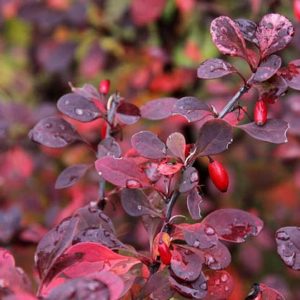
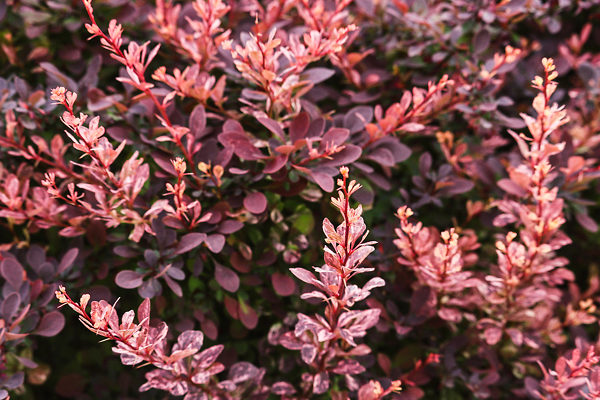
Rose Glow is a stunner from spring through frost. New growth emerges in shades of deep red and burgundy, then matures to a rich chocolate-brown heavily variegated with bright pink and cream streaks—imagine someone took a paintbrush to each leaf and went a little wild with blush tones. This variegation is the plant’s signature look, and it intensifies as the season progresses. Come fall, the foliage takes on even warmer burgundy tones before dropping. Small, pale yellow flowers dot the branches in late spring, but let’s be honest—the foliage is the real show here. Bright red berries follow the flowers, persisting through winter and providing food for hungry birds during the lean months.
Growing it in your garden
Rose Glow Barberry is refreshingly low-maintenance, which is probably why it’s become such a favorite among Connecticut gardeners. Plant it in full sun to partial shade—though full sun really maximizes that stunning variegation. The plant isn’t fussy about soil; it tolerates poor, sandy, or clay-based soils with equal grace. Honestly, it’s harder to kill than to grow. It prefers slightly drier conditions once established, making it an excellent choice if you’re looking to reduce summer watering. The compact, mounded form means you won’t spend half your summer pruning. A light shape-up in early spring is all it needs to stay tidy.
Through the seasons
Spring is when Rose Glow announces itself. The new growth unfurls in those dramatic reds and pinks, creating an explosion of color before most other shrubs have even leafed out. By early summer, the variegation settles into its burgundy-with-cream pattern, and the pale yellow flowers make their brief appearance. Summer is all about watching that foliage deepen and intensify under the Connecticut sun. Fall brings warmer tones and the appearance of those brilliant red berries. Winter? The bare branches are attractive in their own right, and those berries create pops of color against the gray New England landscape—plus they provide crucial food for overwintering birds and early spring arrivals.
Where it shines
This barberry is perfect for foundation plantings where you want color and texture without height. Use it in mixed borders alongside vibrant perennials—the variegated foliage plays beautifully with purple coneflowers or golden day lilies. It works wonderfully as a low screen or informal hedge, creating visual interest where a solid green shrub would disappear into the background. Rose Glow also makes an excellent choice for containers, where you can appreciate the intricate variegation up close. In a cottage garden, it brings structure and seasonal color. You can even tuck it into a rock garden or xeriscaping situation where summer water is limited.
Perfect companions
Rose Glow’s warm tones pair beautifully with cool-colored plants. Try it with Russian sage (PEROVSKIA) for a lovely contrast, or pair it with the silvery foliage of artemisia. Dwarf ornamental grasses like PANICUM ‘SHENANDOAH’ echo the warm color palette while adding movement. Gold-foliaged hostas nearby create a sophisticated color echo. Spring bulbs like tulips in deep purple or cream look stunning emerging from the base, and hydrangeas in lavender or white tones complement it perfectly.
Care tips
Plant in spring or fall, giving it full sun to partial shade and well-draining soil. Water regularly during the first season to establish a deep root system, then pull back once established—this plant appreciates drier conditions. No serious pest or disease problems plague it in Connecticut. The small thorns mean you might want to position it where you’re not constantly brushing past it, but that same defensive trait makes it an excellent deer-resistant choice. A light pruning in early spring keeps it looking its best; prune out any all-green branches that appear, as they’re reversions to the species.
Quick facts
- Hardiness Zone: 4-8 (perfect for Connecticut)
- Mature Height & Spread: 3-4 feet tall and wide
- Bloom Season: Late spring with persistent fall and winter berries
- Light Requirements: Full sun to partial shade (full sun maximizes variegation)
- Water Needs: Moderate when young, drought-tolerant when established
- Available at: Both our retail and wholesale locations.