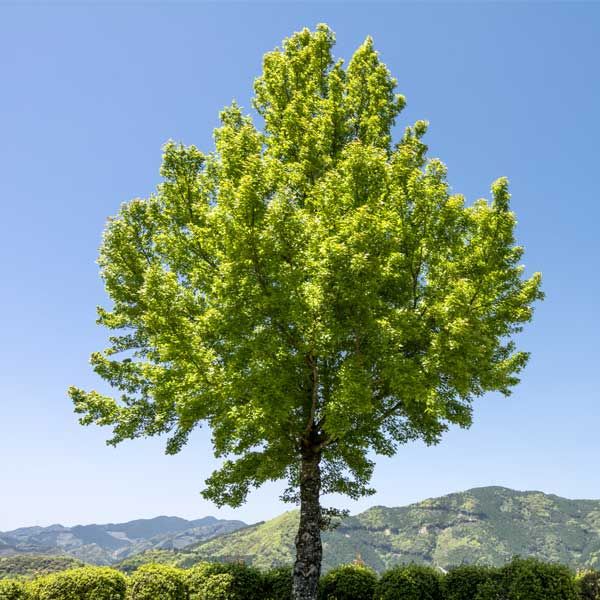
Trident Maple

ACER BUERGERIANUM

If you’ve ever yearned for a maple that breaks the mold—something elegant, manageable, and distinctly interesting—the Trident Maple deserves your attention. While native maples demand respect for their size and vigor, this Asian treasure offers refinement in a more intimate package. It’s the thinking gardener’s maple, the one that rewards close observation with architectural beauty, reliable performance, and a personality all its own.

What it looks like

The Trident Maple earns its common name honestly: each leaf is distinctly three-lobed, creating a delicate, almost hand-like appearance that feels almost tropical in its elegance. The foliage is a soft, medium green throughout the growing season, and the leaf texture is remarkably fine—nothing coarse or heavy here. What strikes many gardeners first is the branching structure. The tree develops a naturally graceful, spreading habit with an almost cloud-like silhouette when mature. The bark is smooth and gray-green, becoming more interesting with age as it develops subtle texture. Even winter reveals the Trident’s charm: the branching pattern is intricate and sculptural, never awkward or gangly.

Growing it in your garden

The Trident Maple is surprisingly agreeable once you understand what it wants. It thrives in full sun to partial shade—though in Connecticut, a spot with afternoon shade protection can actually enhance leaf color and reduce summer stress. It prefers well-draining soil with consistent moisture; think “woodland stream bank” rather than boggy swamp. Unlike some maples that demand acidic soil, the Trident is more flexible about pH, though it does appreciate slightly moist, fertile conditions. The tree grows at a moderate pace, never becoming the aggressive, space-hogging giant that some native maples become. This means you can actually fit it into a real garden, not just a sprawling estate. It establishes well when planted in spring or fall, and young trees benefit from consistent watering during their first season while they develop a sturdy root system.

Through the seasons

Spring arrives with delicate flowers—tiny, reddish tinged clusters that emerge with the leaves. They’re subtle, almost easy to miss, but they precede the winged samaras (seeds) that develop into an attractive feature by late summer. Summer is when the Trident shines in the garden; that fine-textured foliage creates dappled shade and moves beautifully in the slightest breeze. The tree maintains a clean, disease-free appearance throughout the growing season in Connecticut’s climate. Autumn is the grand finale. The leaves transform into shades of orange, red, and sometimes purple—never the shocking crimson of a Sugar Maple, but rather a sophisticated, warm glow that feels more refined. The color develops earlier than many maples and lasts well into November. Winter exposes that beautiful branching architecture, reminding you why Trident Maples have been favored subjects for bonsai cultivation for centuries.

Where it shines

Use the Trident Maple as a specimen tree where its form can be appreciated from multiple angles. It’s perfect for the garden that values individual character over massed effect. It works beautifully in Japanese-inspired gardens, in naturalistic woodland edges, or in any landscape where you want a tree that feels like a thoughtful choice rather than a default. The moderate size makes it ideal for smaller properties and urban gardens where larger native maples would eventually overwhelm the space. It’s also stunning near patios or seating areas where you can observe the leaf movement and enjoy its seasonal transitions up close.

Perfect companions

The Trident Maple pairs beautifully with understory plantings that respect its refined aesthetic. Try it with shade-tolerant hostas, hellebores, or Japanese forest grass beneath. Nearby evergreens like boxwood or dwarf conifers provide winter structure that complements the maple’s delicate branching. For seasonal interest, plant spring ephemerals like trilliums or bloodroot, which will bloom before the maple’s canopy fully leafs out.

Care tips

The Trident Maple is relatively low-maintenance once established. Water deeply but infrequently during dry spells; the tree prefers consistent moisture without waterlogging. No heavy pruning is necessary—the tree naturally develops an attractive shape. In very early spring, you can remove any crossing branches or dead wood. Unlike some maples, it’s not plagued by significant pests or diseases in the Northeast. Avoid planting it in areas with wind tunnel effects or intense afternoon heat without shade protection. A light mulch layer helps maintain soil moisture and temperature consistency through Connecticut’s sometimes-extreme seasonal transitions.

Quick facts

  • Hardiness Zone: 5-8 (Perfect for Connecticut)
  • Mature Height & Spread: 20-30 feet tall and wide
  • Bloom Season: Spring (inconspicuous flowers)
  • Light Requirements: Full sun to partial shade
  • Water Needs: Moderate; prefers consistent, well-draining moisture
  • Available at: Both our retail and wholesale locations.

Trident Maple

Category:

Trident Maple is a very attractive small maple, effective as a lawn specimen, patio or shade tree. It has interesting flaky bark, and has a neat appearance, except for the hanging seeds in the winter.

Trunk Diameter: 3-3.5″

Description

Trident Maple

ACER BUERGERIANUM

If you’ve ever yearned for a maple that breaks the mold—something elegant, manageable, and distinctly interesting—the Trident Maple deserves your attention. While native maples demand respect for their size and vigor, this Asian treasure offers refinement in a more intimate package. It’s the thinking gardener’s maple, the one that rewards close observation with architectural beauty, reliable performance, and a personality all its own.

What it looks like

The Trident Maple earns its common name honestly: each leaf is distinctly three-lobed, creating a delicate, almost hand-like appearance that feels almost tropical in its elegance. The foliage is a soft, medium green throughout the growing season, and the leaf texture is remarkably fine—nothing coarse or heavy here. What strikes many gardeners first is the branching structure. The tree develops a naturally graceful, spreading habit with an almost cloud-like silhouette when mature. The bark is smooth and gray-green, becoming more interesting with age as it develops subtle texture. Even winter reveals the Trident’s charm: the branching pattern is intricate and sculptural, never awkward or gangly.

Growing it in your garden

The Trident Maple is surprisingly agreeable once you understand what it wants. It thrives in full sun to partial shade—though in Connecticut, a spot with afternoon shade protection can actually enhance leaf color and reduce summer stress. It prefers well-draining soil with consistent moisture; think “woodland stream bank” rather than boggy swamp. Unlike some maples that demand acidic soil, the Trident is more flexible about pH, though it does appreciate slightly moist, fertile conditions. The tree grows at a moderate pace, never becoming the aggressive, space-hogging giant that some native maples become. This means you can actually fit it into a real garden, not just a sprawling estate. It establishes well when planted in spring or fall, and young trees benefit from consistent watering during their first season while they develop a sturdy root system.

Through the seasons

Spring arrives with delicate flowers—tiny, reddish tinged clusters that emerge with the leaves. They’re subtle, almost easy to miss, but they precede the winged samaras (seeds) that develop into an attractive feature by late summer. Summer is when the Trident shines in the garden; that fine-textured foliage creates dappled shade and moves beautifully in the slightest breeze. The tree maintains a clean, disease-free appearance throughout the growing season in Connecticut’s climate. Autumn is the grand finale. The leaves transform into shades of orange, red, and sometimes purple—never the shocking crimson of a Sugar Maple, but rather a sophisticated, warm glow that feels more refined. The color develops earlier than many maples and lasts well into November. Winter exposes that beautiful branching architecture, reminding you why Trident Maples have been favored subjects for bonsai cultivation for centuries.

Where it shines

Use the Trident Maple as a specimen tree where its form can be appreciated from multiple angles. It’s perfect for the garden that values individual character over massed effect. It works beautifully in Japanese-inspired gardens, in naturalistic woodland edges, or in any landscape where you want a tree that feels like a thoughtful choice rather than a default. The moderate size makes it ideal for smaller properties and urban gardens where larger native maples would eventually overwhelm the space. It’s also stunning near patios or seating areas where you can observe the leaf movement and enjoy its seasonal transitions up close.

Perfect companions

The Trident Maple pairs beautifully with understory plantings that respect its refined aesthetic. Try it with shade-tolerant hostas, hellebores, or Japanese forest grass beneath. Nearby evergreens like boxwood or dwarf conifers provide winter structure that complements the maple’s delicate branching. For seasonal interest, plant spring ephemerals like trilliums or bloodroot, which will bloom before the maple’s canopy fully leafs out.

Care tips

The Trident Maple is relatively low-maintenance once established. Water deeply but infrequently during dry spells; the tree prefers consistent moisture without waterlogging. No heavy pruning is necessary—the tree naturally develops an attractive shape. In very early spring, you can remove any crossing branches or dead wood. Unlike some maples, it’s not plagued by significant pests or diseases in the Northeast. Avoid planting it in areas with wind tunnel effects or intense afternoon heat without shade protection. A light mulch layer helps maintain soil moisture and temperature consistency through Connecticut’s sometimes-extreme seasonal transitions.

Quick facts

  • Hardiness Zone: 5-8 (Perfect for Connecticut)
  • Mature Height & Spread: 20-30 feet tall and wide
  • Bloom Season: Spring (inconspicuous flowers)
  • Light Requirements: Full sun to partial shade
  • Water Needs: Moderate; prefers consistent, well-draining moisture
  • Available at: Both our retail and wholesale locations.