
Description

HYDRANGEA ARBORESCENS ‘TUFF STUFF’
Here’s the honest truth about Tuff Stuff Hydrangea: it’s basically the plant equivalent of that reliable friend who always shows up on time and never complains about the weather. This cultivar was bred specifically for gardeners who want knockout blooms without the fussy requirements that make so many hydrangeas temperamental. In Connecticut’s unpredictable climate, where late frosts can zap tender growth and dry spells test your patience, Tuff Stuff delivers blooms with admirable resilience. It’s the smooth operator of the hydrangea world.
What it looks like
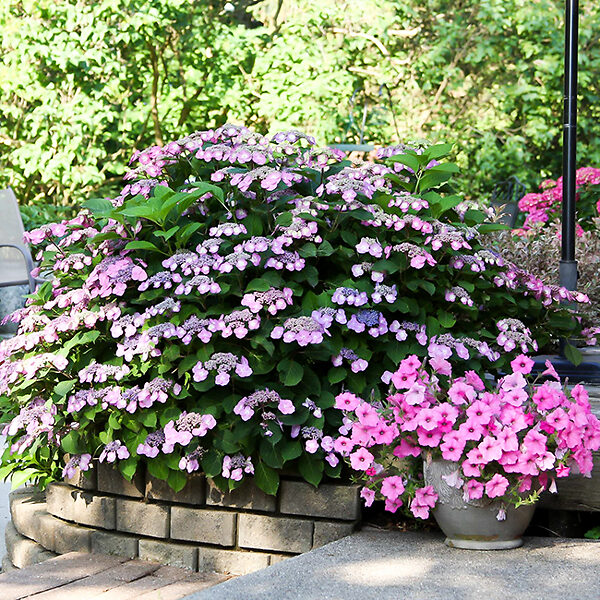
Tuff Stuff grows as a compact, well-branched deciduous shrub with a naturally tidy silhouette. The foliage is deep green and attractive throughout the growing season, with the kind of fine texture that makes the plant look polished even when not in bloom. Starting in early to mid-summer, enormous creamy-white flowers emerge in the characteristic lacecap formation of panicle hydrangeas. Unlike the heavy, drooping blooms of some varieties, these flowers have an airy, somewhat open structure. As summer progresses and temperatures cool in late August and September, the flowers gently shift to soft pink and blushed tones—a change so gradual it feels like the plant is settling in for autumn. The dried seed heads persist into winter, adding structure and textural interest to the garden long after the ornamental display fades.
Growing it in your garden
This is where Tuff Stuff truly earns its name. The plant was developed with improved hardiness and disease resistance, making it an exceptional choice for New England conditions. It establishes quickly, develops strong branching, and maintains its shape without excessive pruning. Unlike some panicle hydrangeas that can look rangy or require constant fussing, Tuff Stuff has a compact, well-proportioned form that fills in nicely over 3-4 seasons. The stems are sturdy enough to support the flowers without staking, even during heavy rain or wind—a real advantage here in Connecticut.
Plant in full sun to part shade, though at least six hours of direct sun will give you the best bloom production. Tuff Stuff is less finicky about soil pH than its mophead cousins, making it a genuinely forgiving plant for mixed borders and foundation plantings. It prefers consistently moist but well-draining soil; add compost at planting time to help with moisture retention during our variable New England springs and summers.
Through the seasons
Spring arrives with fresh growth breaking along the stems—no need to worry about frost damage like you might with more tender varieties. By early summer, flower buds are forming at the branch tips. Mid-summer brings the main event: abundant white flowers that seem to float above the foliage. Late summer and early fall transform those flowers into dusty rose and mauve tones, especially as nights cool. The dried flowers and seed heads provide subtle beauty through fall and early winter, giving you three solid seasons of visual interest. Come late winter, you’ll prune back the stems before new growth emerges in spring—a straightforward maintenance task that keeps the plant vigorous and full.
Where it shines
Tuff Stuff is perfect as a focal point shrub in mixed borders, where you want reliable summer color without drama. It works beautifully in cottage-style gardens paired with perennials, in foundation plantings where you need year-round structure, and in shrub borders where consistency matters. Because of its compact size and excellent branching, it’s also an outstanding choice for smaller properties where every plant needs to earn its space. The flowers cut beautifully for fresh arrangements and dry exceptionally well for persistent home décor.
Perfect companions
Plant Tuff Stuff with shade-tolerant perennials like hosta, heuchera, or astilbe to create visual layering. Pair it with ornamental grasses such as Karl Foerster feather reed grass for textural contrast. Nearby shrubs like ILEX VERTICILLATA (winterberry) add winter interest while the hydrangea handles summer color duty. In sunnier spots, combine it with COREOPSIS, RUDBECKIA, or other sun-loving perennials that bridge seasons beautifully.
Care tips
Prune in late winter or early spring before new growth breaks. Remove any dead wood and thin out the oldest canes to encourage renewal. You can head back the entire plant by about one-third annually to maintain shape, or leave it to grow naturally—Tuff Stuff is flexible. Water deeply during establishment (the first year) and during dry spells. A 2-3 inch mulch layer helps regulate moisture and keeps the root zone cool. Fertilizing is rarely necessary if you’ve amended the soil with compost; if you want to feed, a balanced, slow-release fertilizer applied in spring is sufficient.
Quick facts
- Hardiness Zone: Zones 3-9
- Mature Height & Spread: 4-5 feet tall and wide
- Bloom Season: Early summer through fall, with color shift from white to pink
- Light Requirements: Full sun to part shade (six or more hours of direct sun preferred)
- Water Needs: Consistently moist but well-draining soil; moderate once established
- Available at: Both our retail and wholesale locations