
Description
HYDRANGEA PANICULATA ‘RENHY’
Here’s the honest truth about Vanilla Strawberry Hydrangea: it’s almost too good to be true. A plant that blooms prolifically from summer straight through fall? That transitions from creamy white to blushing pink to deep rose? That actually gets *better* with age and improves your entire garden’s presence? We didn’t believe it either until we watched it transform our display beds year after year. Now we’re convinced it’s one of the smartest plant investments you can make in a Connecticut garden.
What it looks like
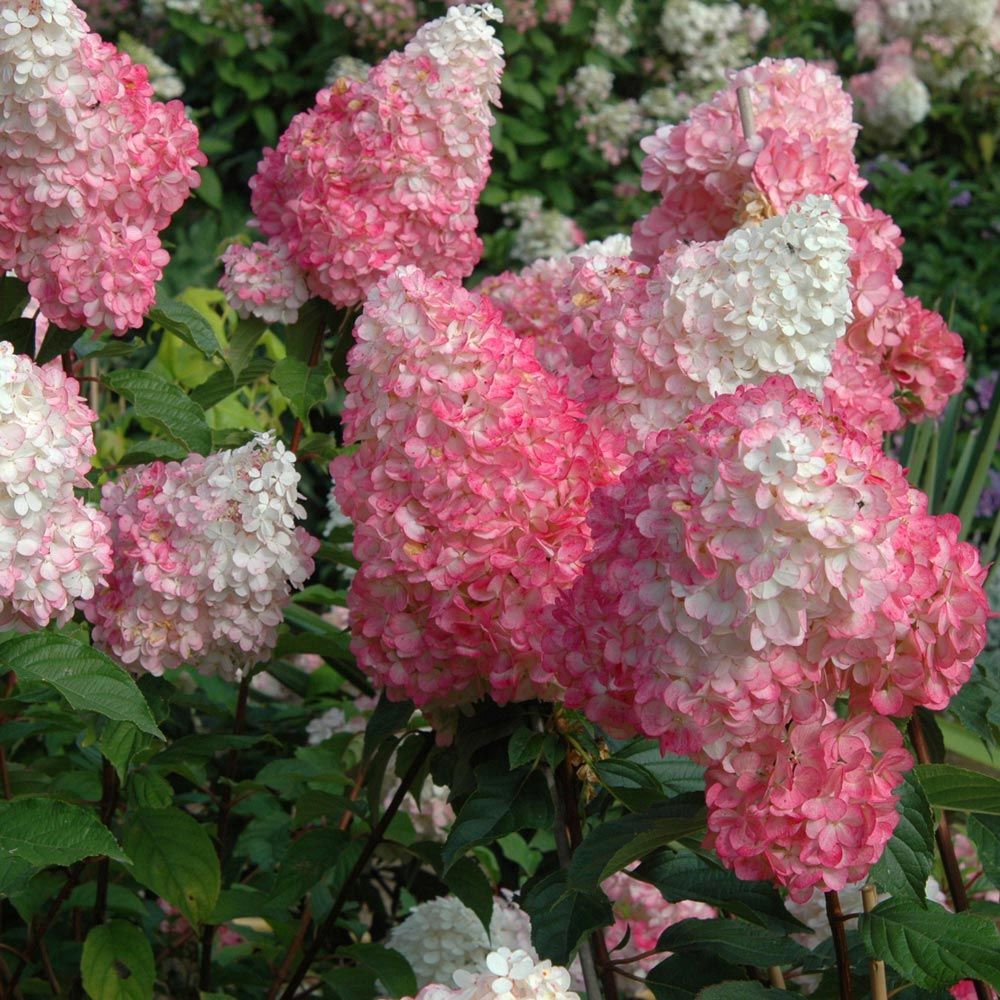
Vanilla Strawberry is a panicle hydrangea that arrives on the scene like a fireworks show. The plant develops a naturally tidy, somewhat upright form with elegant branching that doesn’t require heavy pruning to look polished. What really steals the show are those show-stopping flower panicles—they emerge creamy white in mid-summer, elongated and full, resembling vanilla-colored candles held upright on every branch. As temperatures cool and the growing season progresses, the flowers gradually blush pink, then deepen to a strawberry red that intensifies with fall’s chill. By October, you’re looking at rich burgundy tones that persist well into late autumn. The foliage provides a handsome deep green backdrop throughout the season.
Growing it in your garden
This is where Vanilla Strawberry really earns its place in Connecticut gardens. HYDRANGEA PANICULATA varieties are the workhorses of the shrub world—far more forgiving than their macrophylla cousins and infinitely more reliable in our variable New England climate. Vanilla Strawberry thrives in full sun (six or more hours daily), which actually intensifies those color transitions and keeps the plant compact and floriferous. It’s not fussy about soil either, tolerating everything from slightly acidic to slightly alkaline conditions, though well-draining soil is always appreciated. Unlike many hydrangeas, this variety won’t suffer from our summer dry spells once established, though consistent moisture during the first growing season helps it settle in beautifully.
Through the seasons
Spring arrives with fresh growth—the new foliage unfurls a lively green, and you’ll notice the plant leafing out reliably even after our harshest winters. Summer is when the magic begins, typically around early July in Connecticut, as those first white panicles emerge and elongate. Mid-summer through early fall is peak bloom time, with flowers continuously developing and transforming. The color show accelerates as September arrives—watch that pink blush deepen week by week. Fall and early winter are extraordinary; the persistent flowers dry beautifully on the stem and add architectural interest even after they fade to tan and buff. The plant remains ornamental through winter, and come spring, you simply prune back to your desired height (we recommend cutting to about two feet for a fuller form) before new growth begins.
Where it shines
Vanilla Strawberry earns its keep in mixed borders, where its height (4-6 feet) allows it to anchor the middle or back of a planting scheme beautifully. It’s equally stunning as a specimen plant where you want to draw the eye—plant it somewhere you’ll see that fall color transformation daily. Foundation plantings benefit enormously from its upright habit and long season of interest. Because it handles Connecticut’s cold winters without flinching and flowers reliably even in less-than-perfect growing conditions, it’s an excellent choice for newer gardeners or for beds where other plants have disappointed you.
Perfect companions
Plant Vanilla Strawberry with golden-foliaged plants like SPIRAEA ‘GOLDFLAME’ to echo its warm color transitions. Purple-leafed coneflowers and ornamental grasses (particularly those with golden autumn tones) make excellent nearby companions. Pair it with white-blooming natives like New England aster to create contrast when Vanilla Strawberry is still in its white phase. Low-growing sedums at its feet extend the interest right down to ground level.
Care tips
Pruning is the primary care task, and it’s beautifully simple: in early spring, before growth begins, cut the entire plant back to about two feet tall. This might seem severe, but it encourages a fuller, more densely flowered form. Always prune in early spring rather than fall, as fall pruning can reduce hardiness. Water deeply and regularly during the first growing season to establish a strong root system. Established plants are remarkably drought-tolerant, but they’ll reward consistent moisture with more abundant blooms. A light application of balanced fertilizer in early spring supports vigorous growth and abundant flowering. That’s it—no fussy feeding schedules or complicated amendments needed.
Quick facts
- Hardiness Zone: Zones 3-8 (reliably hardy throughout Connecticut)
- Mature Height & Spread: 4-6 feet tall and 4-5 feet wide
- Bloom Season: Early July through November
- Light Requirements: Full sun (6+ hours daily)
- Water Needs: Moderate; consistent moisture during establishment, then drought-tolerant when mature
- Available at: Both our retail and wholesale locations