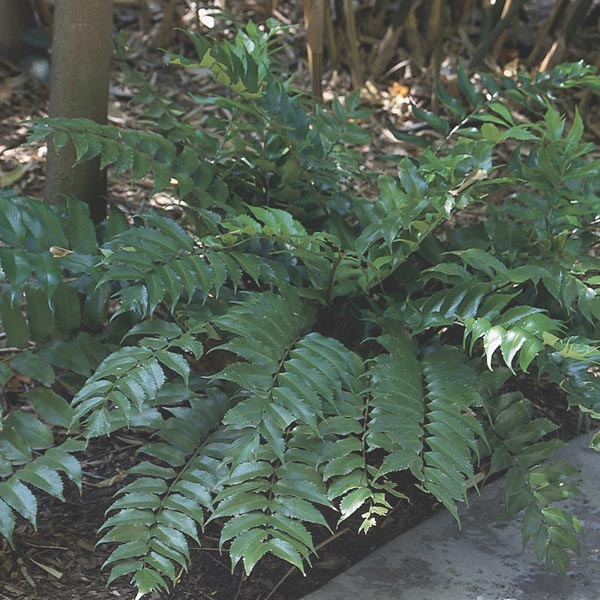
If you’re looking for a fern that brings lush, tropical elegance to your Connecticut shade garden without requiring a greenhouse or constant fussing, the Holly Fern (CYRTOMIUM FALCATUM) might just be your answer. This beautiful evergreen fern is tougher than it looks, handling our New England winters with grace while maintaining that rich, glossy foliage year-round that makes everyone ask, “Where did you get that?” The Holly Fern is proof that shade gardening doesn’t mean sacrificing beauty or substance.

What it looks like

The Holly Fern is absolutely gorgeous in person. Its leathery, deep green fronds are divided into leaflets that look remarkably like holly leaves (hence the common name), giving the plant an elegant, almost architectural quality that’s quite different from typical feathery ferns. The fronds emerge with a slightly silvery-blue tint before deepening to that rich, glossy green that persists all year long in our Connecticut climate. Unlike many ferns that turn brown and papery after the first frost, CYRTOMIUM FALCATUM maintains its beauty through winter, which is wonderful for creating visual interest in your shade beds during the quieter months. The plant grows in a nice, compact mound, and the individual leaflets have a slight curve and shine that catches light beautifully, especially on overcast New England days when that shimmer really stands out.

Growing it in your garden

Here’s what I love about the Holly Fern for our region: it’s genuinely hardy in Connecticut and tolerates the humidity, moisture fluctuations, and mild winters we typically experience. It’s not fussy about soil pH and actually performs better in slightly alkaline to neutral soil than some other ferns, which is helpful if you’re working with our naturally sweet Connecticut soils. The Holly Fern prefers consistently moist (but not waterlogged) soil, so amending your planting area with compost before installation is your best friend. Once established, it becomes increasingly drought-tolerant than you might expect, though it never loves being dry for extended periods. Plant it where it’ll receive dappled shade or filtered light—those shaded spots east of your house or beneath deciduous trees where it gets morning sun filtered through leaves are perfect. It struggles with deep, dark shade, so while it’s a shade plant, it does appreciate some brightness.

Through the seasons

What makes the Holly Fern special in our climate is its year-round presence. Spring brings new fronds unfurling in a surprising blue-green tone that matures to that deep forest green we love. Summer is when the fern looks its most lush, and it’s a genuine beacon of cool greenery in the hottest months—very helpful for making a shady area feel refreshing. Unlike many New England shade plants that go dormant or turn crispy by October, the Holly Fern keeps on looking fabulous through fall. Winter, honestly, is when this plant really earns its keep in Connecticut gardens. While deciduous shade plants are bare and dormant, your Holly Fern stands there providing real structure and color. You might get some fronds that show slight damage from the harshest winters, but the plant bounces right back as soon as conditions warm.

Where it shines

The Holly Fern is fantastic in shaded woodland gardens, beneath mature trees where you’re trying to establish understory planting. It’s perfect along the north side of your house where light is limited but you want something more interesting than hostas alone. This fern is excellent in containers too—planting several in a large pot and nestling that pot into a shaded corner creates such a sophisticated look. It’s also wonderful in shade borders where you want texture and form without needing constant maintenance. I’ve seen them used beautifully along shaded pathways and in Japanese-inspired gardens where their architectural foliage fits right in. They’re also great near water features—they love the humid conditions near ponds or streams.

Perfect companions

The Holly Fern plays beautifully with other shade lovers. Pair it with Hellebores or Epimedium for spring interest, add Japanese painted ferns (ATHYRIUM NIPONICUM) nearby for a subtle textural contrast, or combine it with hostas of different sizes and colors. Shade-loving sedges work wonderfully nearby, and don’t overlook herbaceous groundcovers like Ajuga or sweet woodruff around the base. Heuchera adds wonderful foliar color without competing for attention, and shade-tolerant shrubs like Oakleaf Hydrangea or Japanese Pieris create a beautiful backdrop. The Holly Fern’s formal, glossy quality also complements more delicate woodland wildflowers nicely.

Care tips

Water regularly during the growing season and don’t let the soil dry out completely during summer heat waves, even though established plants are tougher than you might expect. In spring, I like to apply a light layer of compost or well-aged mulch around the base (keeping it away from the center of the plant), which helps retain moisture and feeds the soil. You can remove any damaged or brown fronds in early spring—don’t hesitate to clean up winter damage. The Holly Fern doesn’t need much fertilizer, but feeding once in spring with a balanced, slow-release fertilizer or a light dressing of compost supports healthy growth. Slugs and snails might nibble occasionally, but they’re usually not problematic. Occasionally, spider mites can be an issue indoors, but outdoor plants in our humid New England climate rarely struggle with pests.

Quick facts

  • Hardiness Zone: Zones 6-9 (reliably hardy in Connecticut)
  • Mature Height & Spread: 18-24 inches tall and wide
  • Bloom Season: Non-flowering; grown for foliage
  • Light Requirements: Partial to full shade; prefers dappled light
  • Water Needs: Keep consistently moist; more drought-tolerant once established
  • Available at: Both our retail and wholesale locations.

Holly Fern

Category:

Named for its serrated, sharp-tipped, holly-like leaves, is one of the few plants that will grow happily in the dark corners of your garden.

Description

If you’re looking for a fern that brings lush, tropical elegance to your Connecticut shade garden without requiring a greenhouse or constant fussing, the Holly Fern (CYRTOMIUM FALCATUM) might just be your answer. This beautiful evergreen fern is tougher than it looks, handling our New England winters with grace while maintaining that rich, glossy foliage year-round that makes everyone ask, “Where did you get that?” The Holly Fern is proof that shade gardening doesn’t mean sacrificing beauty or substance.

What it looks like

The Holly Fern is absolutely gorgeous in person. Its leathery, deep green fronds are divided into leaflets that look remarkably like holly leaves (hence the common name), giving the plant an elegant, almost architectural quality that’s quite different from typical feathery ferns. The fronds emerge with a slightly silvery-blue tint before deepening to that rich, glossy green that persists all year long in our Connecticut climate. Unlike many ferns that turn brown and papery after the first frost, CYRTOMIUM FALCATUM maintains its beauty through winter, which is wonderful for creating visual interest in your shade beds during the quieter months. The plant grows in a nice, compact mound, and the individual leaflets have a slight curve and shine that catches light beautifully, especially on overcast New England days when that shimmer really stands out.

Growing it in your garden

Here’s what I love about the Holly Fern for our region: it’s genuinely hardy in Connecticut and tolerates the humidity, moisture fluctuations, and mild winters we typically experience. It’s not fussy about soil pH and actually performs better in slightly alkaline to neutral soil than some other ferns, which is helpful if you’re working with our naturally sweet Connecticut soils. The Holly Fern prefers consistently moist (but not waterlogged) soil, so amending your planting area with compost before installation is your best friend. Once established, it becomes increasingly drought-tolerant than you might expect, though it never loves being dry for extended periods. Plant it where it’ll receive dappled shade or filtered light—those shaded spots east of your house or beneath deciduous trees where it gets morning sun filtered through leaves are perfect. It struggles with deep, dark shade, so while it’s a shade plant, it does appreciate some brightness.

Through the seasons

What makes the Holly Fern special in our climate is its year-round presence. Spring brings new fronds unfurling in a surprising blue-green tone that matures to that deep forest green we love. Summer is when the fern looks its most lush, and it’s a genuine beacon of cool greenery in the hottest months—very helpful for making a shady area feel refreshing. Unlike many New England shade plants that go dormant or turn crispy by October, the Holly Fern keeps on looking fabulous through fall. Winter, honestly, is when this plant really earns its keep in Connecticut gardens. While deciduous shade plants are bare and dormant, your Holly Fern stands there providing real structure and color. You might get some fronds that show slight damage from the harshest winters, but the plant bounces right back as soon as conditions warm.

Where it shines

The Holly Fern is fantastic in shaded woodland gardens, beneath mature trees where you’re trying to establish understory planting. It’s perfect along the north side of your house where light is limited but you want something more interesting than hostas alone. This fern is excellent in containers too—planting several in a large pot and nestling that pot into a shaded corner creates such a sophisticated look. It’s also wonderful in shade borders where you want texture and form without needing constant maintenance. I’ve seen them used beautifully along shaded pathways and in Japanese-inspired gardens where their architectural foliage fits right in. They’re also great near water features—they love the humid conditions near ponds or streams.

Perfect companions

The Holly Fern plays beautifully with other shade lovers. Pair it with Hellebores or Epimedium for spring interest, add Japanese painted ferns (ATHYRIUM NIPONICUM) nearby for a subtle textural contrast, or combine it with hostas of different sizes and colors. Shade-loving sedges work wonderfully nearby, and don’t overlook herbaceous groundcovers like Ajuga or sweet woodruff around the base. Heuchera adds wonderful foliar color without competing for attention, and shade-tolerant shrubs like Oakleaf Hydrangea or Japanese Pieris create a beautiful backdrop. The Holly Fern’s formal, glossy quality also complements more delicate woodland wildflowers nicely.

Care tips

Water regularly during the growing season and don’t let the soil dry out completely during summer heat waves, even though established plants are tougher than you might expect. In spring, I like to apply a light layer of compost or well-aged mulch around the base (keeping it away from the center of the plant), which helps retain moisture and feeds the soil. You can remove any damaged or brown fronds in early spring—don’t hesitate to clean up winter damage. The Holly Fern doesn’t need much fertilizer, but feeding once in spring with a balanced, slow-release fertilizer or a light dressing of compost supports healthy growth. Slugs and snails might nibble occasionally, but they’re usually not problematic. Occasionally, spider mites can be an issue indoors, but outdoor plants in our humid New England climate rarely struggle with pests.

Quick facts

  • Hardiness Zone: Zones 6-9 (reliably hardy in Connecticut)
  • Mature Height & Spread: 18-24 inches tall and wide
  • Bloom Season: Non-flowering; grown for foliage
  • Light Requirements: Partial to full shade; prefers dappled light
  • Water Needs: Keep consistently moist; more drought-tolerant once established
  • Available at: Both our retail and wholesale locations.