

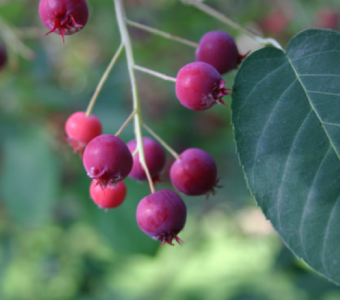
Serviceberry
(Amelanchier Canadensis)
- Flowers have 5 narrow, white petals, to give
them a star-like appearance where they often
appear in drooping clusters at the branch tips. - Fruit starts red and ripen to a dark blue or
purple which look like tiny blueberries- they’re
edible!

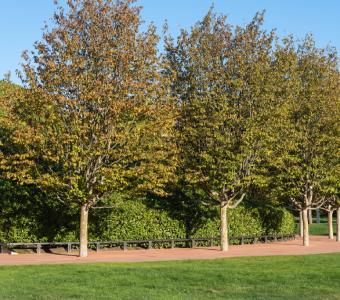
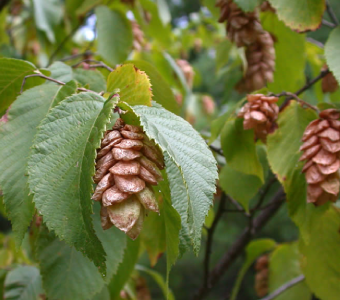
American Hophornbeam / Ironwood
(Ostrya Virginiana)
- Bark is light brown to gray, grooved, and sheds in thin, vertical strips to look stringy.
- Fruit looks like clusters of small, papery-enclosed nutlets that look like hops flowers.
River Birch
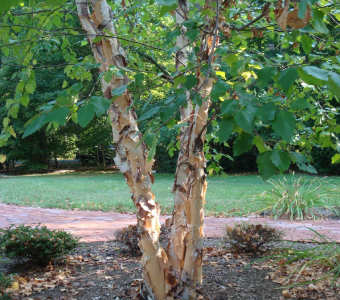
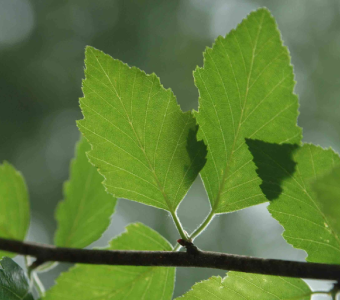
(Betula Nigra)
- Bark is papery and reddish-brown to silvery-gray color.
- Leaves are double-toothed, shiny, and green.
Eastern Redbud
(Cercis Canadensis)
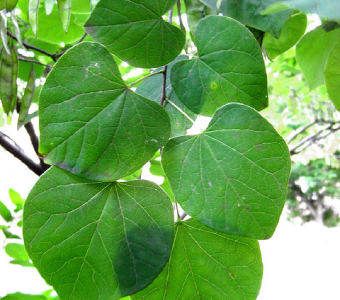
- Bark has a “muscular” appearance and sinewy feel– it is smooth and dark gray.
- Leaves are ovate, alternate, and have a doubly-serrated margin (tiny teeth on top of bigger teeth along the edges).

Witchhazel
(Hamamelis Virginiana)
- It grows as a large shrub or small tree in the shaded understory and its branches have a zigzag pattern.
- Leaves are broad, oval, with wavy edges where the base of the leaf is often asymmetrical. Ornamental flowers in the Fall.


Red Maple
(Acer Rubrum)
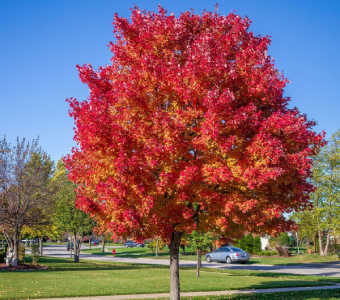
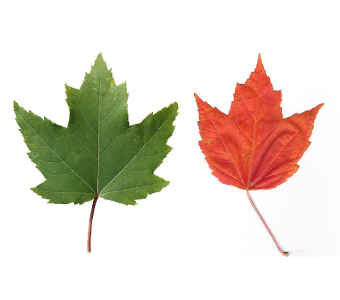
- It grows as a large shrub or small tree in the shaded understory and its branches have a zigzag pattern.
- Leaves are broad, oval, with wavy edges where the base of the leaf is often asymmetrical. Ornamental flowers in the Fall.
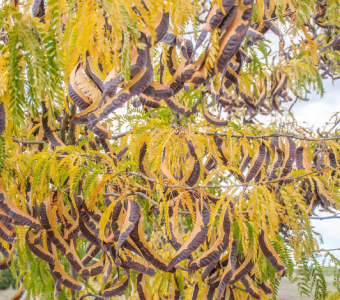
Honey Locust
(Gleditsia Triacanthos)
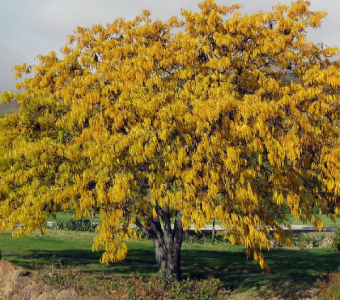
- Leaves are fern-like and bipinnately compound meaning each leaf is made up of several small leaflets to give that feathery look.
- Makes long, dark brown pods that are twisted and are produced in clusters which contains seeds and a sweet pulp.
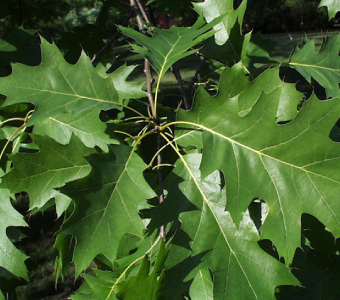
Northern Red Oak
(Quercus Rubra)
- Leaves have 7-11 sharp pointed lobes that are bristle-tipped, smooth and waxy on both surfaces, and have a dark green color above and a dull green underneath with shallow and rounded sinuses.
- Bark is usually dark gray with long vertical ridges and shiny stripes in the grooves often. resembling a ski track of bigger teeth along the edges.

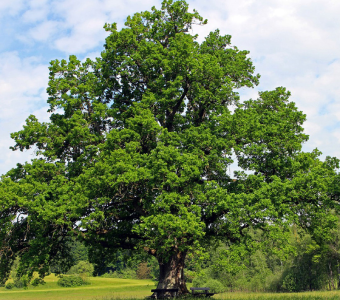
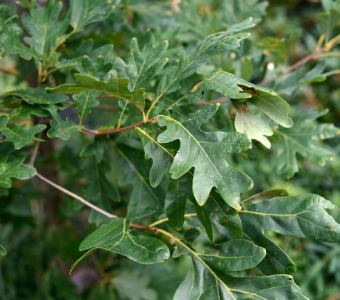
White Oak
(Quercus Alba)
- Leaves have 7-9 rounded lobes that are deep, even, and cut to the midrib lacking bristle-tips with the color being a bluish-green on top and slightly fuzzy underneath.
- Bark is usually light gray and may have scaly or flaky with bigger teeth along the edges.
Free Shade Trees for Norwalkers - https://www.courvillenursery.com/free-shade-trees-for-norwalkers/