
ALCHEMILLA MOLLIS

If you’ve been searching for something that handles dry shade, poor soil, and New England’s temperamental springs without complaint, meet the plant that gardeners have relied on for centuries. Lady’s Mantle is the quiet hero of the perennial border—reliable, beautiful, and somehow capable of making everything around it look more refined. This is the plant that transforms an ordinary garden into one that feels thoughtfully designed.

What it looks like

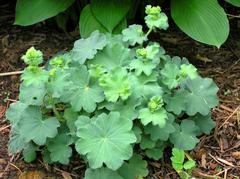
ALCHEMILLA MOLLIS is a chartreuse dream. The delicate, yellow-green flower clusters float above soft, pleated foliage like a cloud of tiny stars, creating an ethereal quality that photographs never quite capture. The lime-green color is pure magic—it brightens shady corners, softens bold perennial neighbors, and photographs beautifully in morning light. The deeply veined, fan-shaped leaves are equally striking, with a subtle blue-green undertone that catches water droplets like tiny jewels after rain. There’s something almost architectural about how the foliage forms neat mounds of texture and movement.

Growing it in your garden

This is where Lady’s Mantle earns its reputation as a workahorse. It thrives in the tricky spots where other plants sulk—dry shade beneath mature trees, the challenging area under eaves where rain rarely reaches, along fence lines, and in poor, compacted soil. While it performs admirably in difficult conditions, it’s equally happy in partial shade with average moisture. The real magic is its adaptability. Plant it in spring or early fall in Connecticut, give it moderate water its first season while it establishes, and then step back. It’s not fussy about pH, doesn’t demand rich soil amendments, and honestly seems to resent being overwatered or over-fussed-with. This is a plant that asks to be left alone and rewards that neglect with abundance.

Through the seasons

Spring arrives with fresh, bright green foliage that looks like it’s just been washed. By early summer, the chartreuse flowers appear and persist for weeks, sometimes into August depending on deadheading. Here’s a gardener’s secret: if you cut Lady’s Mantle back hard after its first bloom flush, it’ll reward you with a second, sometimes even fuller flowering cycle later in the season. In New England gardens, this often means a second show in late July or August when other plants are looking tired. The foliage remains attractive through fall, turning golden before fading to tan. It dies back completely over winter, leaving clean crown areas for spring growth. There are no disease problems, no pest issues, no seasonal dramas.

Where it shines

Lady’s Mantle is the secret weapon of garden designers. Use it as an edging plant along borders where it softens hard lines and creates movement. Plant it in masses for impact—three or five plants together create a glowing, cloud-like effect that reads from across the yard. It’s exceptional in shade gardens, where its bright color seems to glow from within. It looks stunning fronting darker foliage plants like HEUCHERA or ASTILBE. Many gardeners treasure it in cutting gardens; the flower clusters are beautiful in fresh arrangements and dry beautifully for winter bouquets. Container gardeners love it too, as it performs well in pot gardens and doesn’t mind slightly drier conditions.

Perfect companions

Lady’s Mantle is the diplomatic plant that works with nearly everything, but it’s particularly stunning paired with purple or deep blue flowers. Try it with SALVIA, DELPHINIUM, or late-blooming ALLIUMS. It looks sophisticated alongside silver-foliaged plants like ARTEMISIA or DUSTY MILLER. In shade gardens, combine it with shade-loving companions like HELLEBORUS, BRUNNERA, or LAMIUM for a textured, layered effect. It’s also a bridge plant—something soft and bright enough to separate bold colors that might otherwise clash.

Care tips

Once established, Lady’s Mantle essentially takes care of itself. In spring, cut back last year’s foliage just as new growth emerges—usually mid to late April in Connecticut. Deadhead spent flowers regularly to encourage additional blooming, or leave some flowers to develop seeds and create self-sown seedlings throughout your garden (they’re usually easy to relocate if they pop up in inconvenient spots). She requires no staking, no division for years, and no special fertilizing. In very hot, dry summers, occasional watering during extreme drought stress will keep plants looking freshest, but honestly, they’re incredibly drought-tolerant once established.

Quick facts

  • Hardiness Zone: Zones 3–8 (thrives throughout Connecticut)
  • Mature Height & Spread: 12–18 inches tall, 24–30 inches wide
  • Bloom Season: June through August, with potential repeat blooms if deadheaded
  • Light Requirements: Part shade to full shade; tolerates afternoon sun with consistent moisture
  • Water Needs: Moderate; drought-tolerant once established; prefers not to be waterlogged
  • Available at: Both our retail and wholesale locations

Achemilla Lady’s Mantle

Category:

Easily grown in average, medium moisture, well-drained soils in full sun to part shade, but tolerates close to full shade. Prefers part afternoon shade in hot summer climates. Performs well in moist garden areas.

Pot Size (gallons), Height: #1

Description

ALCHEMILLA MOLLIS

If you’ve been searching for something that handles dry shade, poor soil, and New England’s temperamental springs without complaint, meet the plant that gardeners have relied on for centuries. Lady’s Mantle is the quiet hero of the perennial border—reliable, beautiful, and somehow capable of making everything around it look more refined. This is the plant that transforms an ordinary garden into one that feels thoughtfully designed.

What it looks like

ALCHEMILLA MOLLIS is a chartreuse dream. The delicate, yellow-green flower clusters float above soft, pleated foliage like a cloud of tiny stars, creating an ethereal quality that photographs never quite capture. The lime-green color is pure magic—it brightens shady corners, softens bold perennial neighbors, and photographs beautifully in morning light. The deeply veined, fan-shaped leaves are equally striking, with a subtle blue-green undertone that catches water droplets like tiny jewels after rain. There’s something almost architectural about how the foliage forms neat mounds of texture and movement.

Growing it in your garden

This is where Lady’s Mantle earns its reputation as a workahorse. It thrives in the tricky spots where other plants sulk—dry shade beneath mature trees, the challenging area under eaves where rain rarely reaches, along fence lines, and in poor, compacted soil. While it performs admirably in difficult conditions, it’s equally happy in partial shade with average moisture. The real magic is its adaptability. Plant it in spring or early fall in Connecticut, give it moderate water its first season while it establishes, and then step back. It’s not fussy about pH, doesn’t demand rich soil amendments, and honestly seems to resent being overwatered or over-fussed-with. This is a plant that asks to be left alone and rewards that neglect with abundance.

Through the seasons

Spring arrives with fresh, bright green foliage that looks like it’s just been washed. By early summer, the chartreuse flowers appear and persist for weeks, sometimes into August depending on deadheading. Here’s a gardener’s secret: if you cut Lady’s Mantle back hard after its first bloom flush, it’ll reward you with a second, sometimes even fuller flowering cycle later in the season. In New England gardens, this often means a second show in late July or August when other plants are looking tired. The foliage remains attractive through fall, turning golden before fading to tan. It dies back completely over winter, leaving clean crown areas for spring growth. There are no disease problems, no pest issues, no seasonal dramas.

Where it shines

Lady’s Mantle is the secret weapon of garden designers. Use it as an edging plant along borders where it softens hard lines and creates movement. Plant it in masses for impact—three or five plants together create a glowing, cloud-like effect that reads from across the yard. It’s exceptional in shade gardens, where its bright color seems to glow from within. It looks stunning fronting darker foliage plants like HEUCHERA or ASTILBE. Many gardeners treasure it in cutting gardens; the flower clusters are beautiful in fresh arrangements and dry beautifully for winter bouquets. Container gardeners love it too, as it performs well in pot gardens and doesn’t mind slightly drier conditions.

Perfect companions

Lady’s Mantle is the diplomatic plant that works with nearly everything, but it’s particularly stunning paired with purple or deep blue flowers. Try it with SALVIA, DELPHINIUM, or late-blooming ALLIUMS. It looks sophisticated alongside silver-foliaged plants like ARTEMISIA or DUSTY MILLER. In shade gardens, combine it with shade-loving companions like HELLEBORUS, BRUNNERA, or LAMIUM for a textured, layered effect. It’s also a bridge plant—something soft and bright enough to separate bold colors that might otherwise clash.

Care tips

Once established, Lady’s Mantle essentially takes care of itself. In spring, cut back last year’s foliage just as new growth emerges—usually mid to late April in Connecticut. Deadhead spent flowers regularly to encourage additional blooming, or leave some flowers to develop seeds and create self-sown seedlings throughout your garden (they’re usually easy to relocate if they pop up in inconvenient spots). She requires no staking, no division for years, and no special fertilizing. In very hot, dry summers, occasional watering during extreme drought stress will keep plants looking freshest, but honestly, they’re incredibly drought-tolerant once established.

Quick facts

  • Hardiness Zone: Zones 3–8 (thrives throughout Connecticut)
  • Mature Height & Spread: 12–18 inches tall, 24–30 inches wide
  • Bloom Season: June through August, with potential repeat blooms if deadheaded
  • Light Requirements: Part shade to full shade; tolerates afternoon sun with consistent moisture
  • Water Needs: Moderate; drought-tolerant once established; prefers not to be waterlogged
  • Available at: Both our retail and wholesale locations