
Description

ADONIDIA MERRILLII
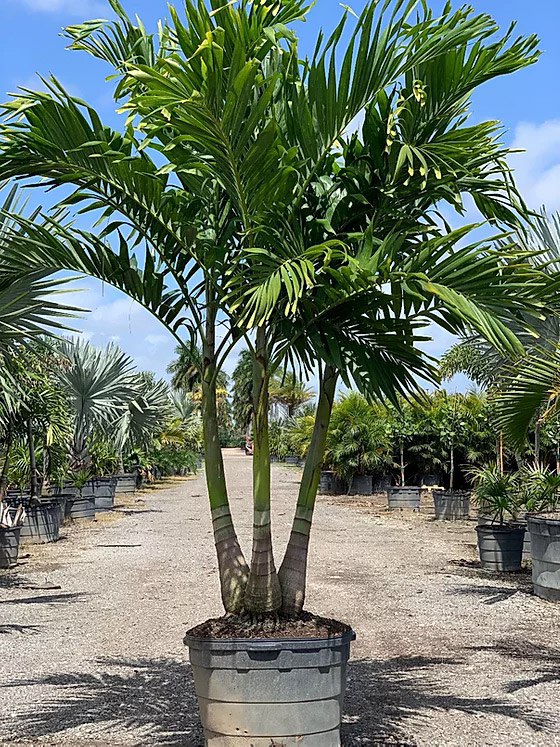
If you’ve been searching for a tropical accent that brings resort-style elegance to your Connecticut landscape without the tropical climate guilt, the Triple Palm might just be your answer. This stunner creates an instant focal point—three slender trunks rise gracefully from the soil, each crowned with feathery, fountain-like fronds that seem to dance even when the air is still. It’s the kind of plant that makes visitors stop mid-conversation and ask, “Wait, where did you find that?”
What it looks like
The Adonidia’s nickname tells you everything you need to know about its structure: three elegant canes emerge from a single base, typically creating a mature height of 25 to 30 feet in tropical settings (though most Connecticut gardeners keep theirs considerably more compact through container growing and seasonal care). The fronds are the real showstopper—glossy, deep green, and finely textured, arranged in a soft, airy fountain that catches light beautifully. In late spring or early summer, delicate yellow flowers appear among the fronds, eventually developing into bright red berries that add another layer of visual interest. The overall effect is refined and architectural, with a distinctly tropical sensibility that transforms any garden space it inhabits.
Growing it in your garden
Here’s the honest truth: the Triple Palm is a warm-weather lover, which means Connecticut gardeners have a few options. The most popular approach is growing it as a specimen in a substantial container that can be moved indoors during our cold months. This actually works beautifully—it gives you flexibility and allows you to create a stunning summer display on a patio, deck, or entryway. Position your container in full sun to partial shade, and you’ll find it responds enthusiastically. If you’re in the milder microclimates of southern Connecticut and want to experiment with year-round outdoor planting, choose your location carefully: against a south-facing wall with reflected warmth and winter protection is your best bet. But we’re realistic here—containers with seasonal migration are the way most New England gardeners successfully grow ADONIDIA MERRILLII.
Through the seasons
In spring and summer, your Triple Palm becomes a focal point of lush, tropical abundance. The new growth emerges with that fresh, pale green that gradually deepens, and if you’re lucky, those charming yellow flowers will grace your garden. Come autumn, when you’re harvesting your containers of tender plants to bring inside, your Adonidia moves into its winter home—a bright, warm space indoors (think conservatory, bright sunroom, or well-lit entryway). The fronds maintain their beauty through winter, offering that touch of the tropics during Connecticut’s gray season. Come May, once frost danger has completely passed and nighttime temperatures stay reliably above 50°F, you’ll stage your plant back outside again, often emerging stronger and more vigorous than the year before.
Where it shines
This is the plant for the gardener who wants to make a statement. Container planting on a sunny patio, flanking a doorway, anchoring a poolside garden, or creating a tropical corner—the Triple Palm excels in all these scenarios. It pairs beautifully with other seasonal container plants like hibiscus, mandevilla, or fragrant gardenias. In southern New England, it’s particularly valuable because it bridges that gap between our temperate landscape plants and the lush abundance we all crave. It’s also surprisingly low-maintenance once you establish the rhythm of seasonal movement, which means you can achieve that high-impact tropical look without needing to be a plant expert.
Perfect companions
The Adonidia works beautifully with other container plants that share similar light and water preferences: tropical gingers, bird of paradise, mandevilla vines, and caladiums all make excellent partners. In the ground (for those with microclimate advantages), underplant with shade-tolerant foliage plants or seasonal annuals. The key is letting the Triple Palm’s architectural form be the star while using companions to add texture or seasonal color without competing for visual attention.
Care tips
Water thoroughly during the growing season, allowing the soil to dry slightly between waterings—this prevents root rot while keeping your palm happy. Fertilize monthly from spring through early autumn with a slow-release palm fertilizer, then reduce feeding during winter dormancy indoors. Watch for spider mites (they love the dry indoor air) and mist fronds occasionally to keep them glossy and healthy. Prune away any dead fronds promptly, and repot every two to three years in spring. Don’t panic if a few fronds yellow when you transition the plant between indoors and outdoors—this is normal acclimation, and new growth quickly replaces them.
Quick facts
- Hardiness Zone: 11-12 (container-grown in Connecticut)
- Mature Height & Spread: 25-30 feet tropical; typically 8-12 feet in containers
- Bloom Season: Late spring to early summer
- Light Requirements: Full sun to partial shade
- Water Needs: Moderate; allow soil to dry slightly between waterings
- Available at: Both our retail and wholesale locations.