Ajuga Black Scallop

AJUGA REPTANS ‘BLACK SCALLOP’

If you’ve been searching for something that handles wet soil, deep shade, and Connecticut winters without complaint, while looking absolutely stunning doing it—well, stop searching. AJUGA REPTANS ‘BLACK SCALLOP’ is the groundcover that answers prayers gardeners didn’t even know they were making. This is a plant that quietly transforms problem areas into showpieces, turning those perpetually damp spots under your porch eaves or beneath your evergreens into something you’ll actually want to look at.

What it looks like

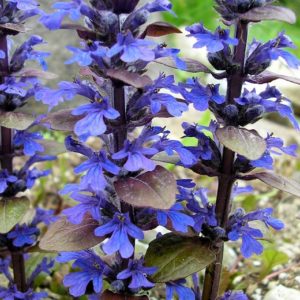
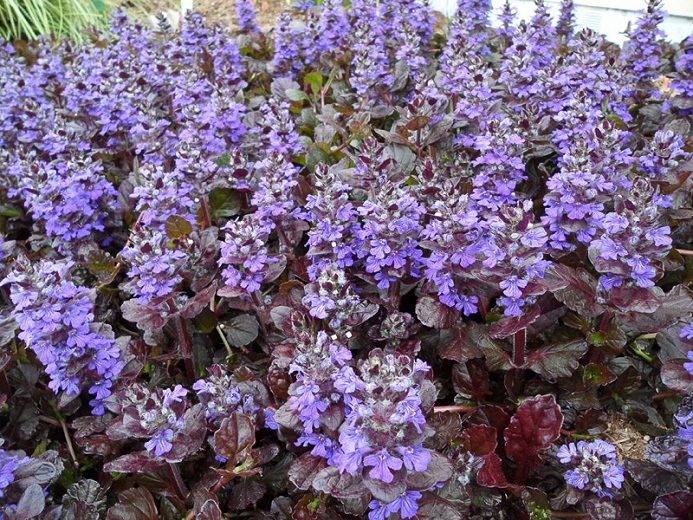
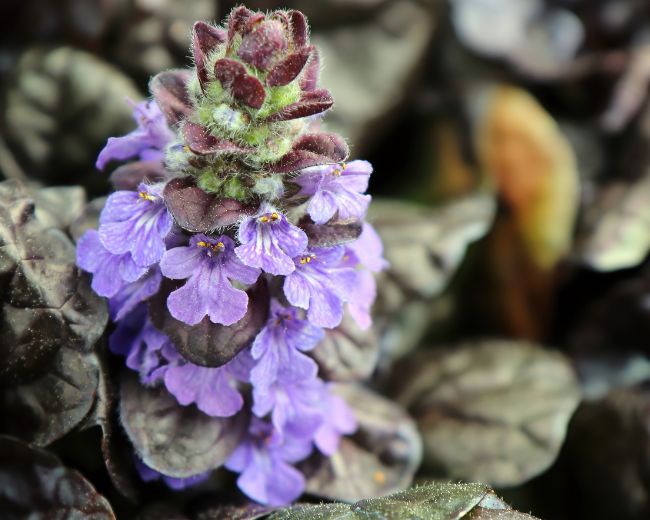
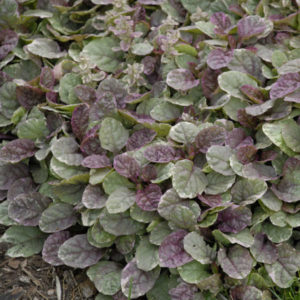
Black Scallop is a compact, low-growing groundcover with one of the most dramatic foliage colors in the Ajuga family. Its leaves are deeply scalloped—hence the delightful name—with a rich, dark purple-black color that deepens as temperatures cool in fall. In spring, it sends up spikes of deep violet-blue flowers that seem to glow against the dark foliage. The whole effect is moody, sophisticated, and architectural in a way that most groundcovers simply aren’t. This isn’t a plant that disappears into the landscape; it’s one that commands attention while staying appropriately low-key.

Growing it in your garden

Black Scallop is practically foolproof for New England gardeners, which is exactly why we love it. It spreads steadily through runners, eventually creating a dense mat that crowds out weeds—a genuine game-changer if you’re tired of fighting with maintenance. Plant it in shade to partial shade, though it can handle full sun if the soil stays consistently moist. In Connecticut’s humid climate, it thrives in areas that would make other plants sulk. Wet clay? Perfect. Compacted soil under trees? Bring it on. This is a plant that doesn’t just tolerate difficult conditions; it seems to prefer them.

Through the seasons

Spring brings those striking violet-blue flower spikes—they typically appear in April and May, creating a charming contrast against the dark leaves. The flowers are bee magnets, too, so you’re supporting pollinators while you’re at it. Through summer, the foliage intensifies and the plant fills in beautifully, creating solid coverage. Fall is when Black Scallop really shines: the leaves deepen to an almost black-purple, and the scalloped edges become even more pronounced and architectural. Winter? The foliage remains attractive and evergreen in our zone, providing year-round interest and color when everything else has faded to brown.

Where it shines

This is the groundcover you install under that birch tree where nothing else grows. Use it to edge shaded pathways, fill in the gaps around woodland plantings, or create dramatic borders in containers. It’s equally at home cascading down a slope or softening the edges of a raised bed. In Connecticut gardens where shade and moisture go hand-in-hand, Black Scallop becomes an indispensable workhorse. Try it as an edging plant along shaded foundation plantings—it’s low enough not to block windows, but striking enough to matter.

Perfect companions

Black Scallop’s dark foliage provides an incredible backdrop for shade-loving plants with lighter flowers or foliage. Pair it with hostas—particularly golden varieties like ‘Sum and Substance’—for stunning contrast. Combine it with hellebores and early spring bulbs to create layered interest. Ferns, especially ostrich or Christmas ferns, create a gorgeous textural combination. In sunnier spots, pair it with coral bells (HEUCHERA) for double the foliage drama. The violet-blue flowers also pair beautifully with white shade-tolerant perennials like ASTILBE ‘White Feather’.

Care tips

Black Scallop is genuinely low-maintenance. Once established, it rarely needs watering except during drought—and even then, it usually prefers to stay moist anyway. Fertilize lightly in spring if you want vigorous growth, though it doesn’t demand it. You can shear it back in late fall or very early spring if it gets leggy, though many gardeners just let it sprawl naturally. The real secret to success is ensuring good drainage despite its moisture tolerance; standing water in winter can be problematic. Space plants about 12 inches apart for fairly quick coverage, or wider if you’re patient and your budget prefers it.

Quick facts

  • Hardiness Zone: Zones 3-9
  • Mature Height & Spread: 4-6 inches tall, 12-18 inches spread
  • Bloom Season: April-May
  • Light Requirements: Shade to partial shade (tolerates full sun with consistent moisture)
  • Water Needs: Moderate to high; prefers consistently moist soil
  • Available at: Both our retail and wholesale locations.
Ajuga Black Scallop

Category:

Lush darkest burgundy/black foliage blankets the ground. Leaves are slightly more upright and wavy. Ajuga Black Scallop achieves best foliage color in sunny locations. Blue flower spikes appearing in late spring. Evergreen in milder climates.

Pot Size (gallons), Height: #1

Description

Ajuga Black Scallop

AJUGA REPTANS ‘BLACK SCALLOP’

If you’ve been searching for something that handles wet soil, deep shade, and Connecticut winters without complaint, while looking absolutely stunning doing it—well, stop searching. AJUGA REPTANS ‘BLACK SCALLOP’ is the groundcover that answers prayers gardeners didn’t even know they were making. This is a plant that quietly transforms problem areas into showpieces, turning those perpetually damp spots under your porch eaves or beneath your evergreens into something you’ll actually want to look at.

What it looks like

Black Scallop is a compact, low-growing groundcover with one of the most dramatic foliage colors in the Ajuga family. Its leaves are deeply scalloped—hence the delightful name—with a rich, dark purple-black color that deepens as temperatures cool in fall. In spring, it sends up spikes of deep violet-blue flowers that seem to glow against the dark foliage. The whole effect is moody, sophisticated, and architectural in a way that most groundcovers simply aren’t. This isn’t a plant that disappears into the landscape; it’s one that commands attention while staying appropriately low-key.

Growing it in your garden

Black Scallop is practically foolproof for New England gardeners, which is exactly why we love it. It spreads steadily through runners, eventually creating a dense mat that crowds out weeds—a genuine game-changer if you’re tired of fighting with maintenance. Plant it in shade to partial shade, though it can handle full sun if the soil stays consistently moist. In Connecticut’s humid climate, it thrives in areas that would make other plants sulk. Wet clay? Perfect. Compacted soil under trees? Bring it on. This is a plant that doesn’t just tolerate difficult conditions; it seems to prefer them.

Through the seasons

Spring brings those striking violet-blue flower spikes—they typically appear in April and May, creating a charming contrast against the dark leaves. The flowers are bee magnets, too, so you’re supporting pollinators while you’re at it. Through summer, the foliage intensifies and the plant fills in beautifully, creating solid coverage. Fall is when Black Scallop really shines: the leaves deepen to an almost black-purple, and the scalloped edges become even more pronounced and architectural. Winter? The foliage remains attractive and evergreen in our zone, providing year-round interest and color when everything else has faded to brown.

Where it shines

This is the groundcover you install under that birch tree where nothing else grows. Use it to edge shaded pathways, fill in the gaps around woodland plantings, or create dramatic borders in containers. It’s equally at home cascading down a slope or softening the edges of a raised bed. In Connecticut gardens where shade and moisture go hand-in-hand, Black Scallop becomes an indispensable workhorse. Try it as an edging plant along shaded foundation plantings—it’s low enough not to block windows, but striking enough to matter.

Perfect companions

Black Scallop’s dark foliage provides an incredible backdrop for shade-loving plants with lighter flowers or foliage. Pair it with hostas—particularly golden varieties like ‘Sum and Substance’—for stunning contrast. Combine it with hellebores and early spring bulbs to create layered interest. Ferns, especially ostrich or Christmas ferns, create a gorgeous textural combination. In sunnier spots, pair it with coral bells (HEUCHERA) for double the foliage drama. The violet-blue flowers also pair beautifully with white shade-tolerant perennials like ASTILBE ‘White Feather’.

Care tips

Black Scallop is genuinely low-maintenance. Once established, it rarely needs watering except during drought—and even then, it usually prefers to stay moist anyway. Fertilize lightly in spring if you want vigorous growth, though it doesn’t demand it. You can shear it back in late fall or very early spring if it gets leggy, though many gardeners just let it sprawl naturally. The real secret to success is ensuring good drainage despite its moisture tolerance; standing water in winter can be problematic. Space plants about 12 inches apart for fairly quick coverage, or wider if you’re patient and your budget prefers it.

Quick facts

  • Hardiness Zone: Zones 3-9
  • Mature Height & Spread: 4-6 inches tall, 12-18 inches spread
  • Bloom Season: April-May
  • Light Requirements: Shade to partial shade (tolerates full sun with consistent moisture)
  • Water Needs: Moderate to high; prefers consistently moist soil
  • Available at: Both our retail and wholesale locations.