
Description

MAGNOLIA X SOULANGEANA ‘ALEXANDRINA’
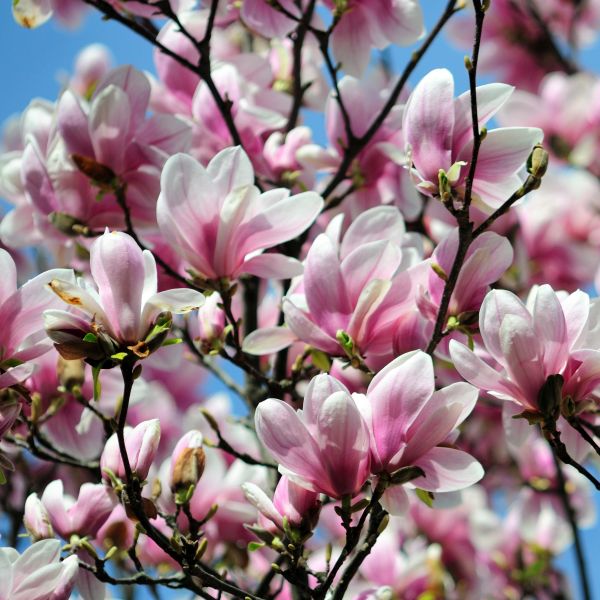
What if you could have spring arrive in your garden a full two weeks early? The Alexandrina Magnolia makes that dream real. This is the showstopper that stops traffic on your street—the one that makes neighbors knock on your door asking what it is. Picture this: it’s early April in Connecticut, the forsythia is just thinking about budding, and your Alexandrina bursts into bloom with tulip-shaped flowers so stunningly pink-purple they seem almost unreal. They cover the bare branches in such profusion that you can barely see the wood underneath. This is the magnolia that reminds you why you garden in the first place.
What it looks like
Alexandrina Magnolia is a deciduous, multi-stemmed tree with an upright, vase-like form that grows dense and full as it matures. The real magic happens in spring: before a single leaf unfurls, the branches are covered in enormous tulip-shaped flowers. These are rose-pink on the outside, with white interiors flushed with deep magenta near the base—a color combination that photographs almost too beautifully to be true. Each flower can reach 6 inches across, and the display lasts about two to three weeks depending on the weather. Once the flowers fade, large, deep green leaves emerge, creating an attractive, somewhat tropical appearance through summer and fall.
Growing it in your garden
Here’s the honest truth: Alexandrina Magnolias aren’t difficult, but they do have preferences, and honoring those preferences is what makes them thrive. They want a spot with full sun to part shade—at least four hours of direct sunlight, but they’ll appreciate afternoon shade in hotter spots. They’re not terribly fussy about soil, but they dislike being waterlogged and detest being moved once established. Think carefully about placement before planting. They need well-draining soil enriched with organic matter. Connecticut’s clay-heavy soils should be amended generously with compost or peat moss to improve drainage. These magnolias appreciate slightly acidic to neutral soil, so if your garden runs very alkaline, a soil test might be worthwhile.
Through the seasons
Spring is obviously the star of the show—those breathtaking flowers arrive before the trees around you have even leafed out, making the Alexandrina seem almost magical against the brown Connecticut landscape. Summer brings a dense canopy of elegant foliage that stays clean and attractive, never suffering from the pest problems that plague some other ornamental trees. Fall offers a quiet beauty—the leaves turn a soft yellow-bronze before dropping, and if you’re lucky, you might get a second, more modest round of flowers in September or October, a bonus show when most other gardens are winding down. Winter reveals the tree’s architectural structure: a graceful branching pattern that’s quite attractive in the landscape.
Where it shines
The Alexandrina Magnolia is absolutely magnificent as a specimen tree—plant it where you can see it from inside your house, because you’ll want to watch it bloom from your bedroom or kitchen window. It works beautifully as an accent near an entryway, where it creates immediate curb appeal and drama. Plant it where morning sun can warm those early spring blooms (they’re actually more cold-tolerant than many magnolias, but warmth helps the flowers last longer). It’s also excellent in shrub borders where it provides structure and interest even after blooming. Because it blooms before leafing out, it won’t shade out early spring bulbs beneath it—plant snowdrops, hellebores, or early daffodils at its base for continuous spring color.
Perfect companions
Underplant your Alexandrina with shade-tolerant spring ephemerals: Virginia bluebells, bloodroot, or hellebores. These enjoy the dappled shade cast by the magnolia’s summer foliage and won’t compete with the tree’s roots. For nearby color coordination, plant pure white rhododendrons or pink-flowered pieris—the color echoes the magnolia’s palette without competing for attention. Serviceberry (AMELANCHIER) works as a beautiful companion tree, offering subtle white flowers just as the magnolia’s show ends. Late-blooming hydrangeas in shades of pink or white provide late-summer interest in the same area.
Care tips
Water newly planted trees regularly for their first season as they establish roots. Once established, Alexandrina magnolias are fairly drought-tolerant, but they’ll bloom more reliably with consistent moisture during growing season. Prune immediately after flowering if needed—magnolias set next year’s flower buds in summer, so pruning later in the season means sacrificing spring blooms. Magnolias have shallow roots and resent heavy cultivation nearby; use mulch rather than digging under them. Late spring frosts can damage emerging flowers, but the Alexandrina is one of the more frost-tolerant magnolia varieties. In severe Connecticut winters, occasional tip dieback might occur, but the tree recovers beautifully.
Quick facts
- Hardiness Zone: 4-9
- Mature Height & Spread: 20-30 feet tall and 15-20 feet wide
- Bloom Season: Early to mid-spring
- Light Requirements: Full sun to part shade (4+ hours direct sun)
- Water Needs: Moderate; prefers consistent moisture but good drainage
- Available at: Both our retail and wholesale locations