
Description
 CALLICARPA AMERICANA
If you’ve been searching for something that handles wet soil, deep shade, and Connecticut winters without complaint while still delivering pure magic come fall, the American Beautyberry might just be the plant that changes your whole approach to the garden. This native shrub doesn’t ask for much—but what it gives back is absolutely disproportionate to its modest needs. Come September, when most of your garden is winding down, the American Beautyberry throws a party in shades of violet so vivid, so utterly unforgettable, that people will stop in your yard just to stare.
What it looks like
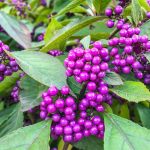
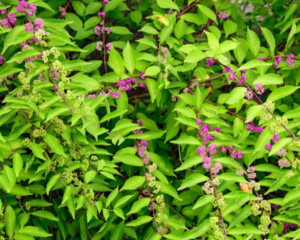
Picture this: an airy, fountain-like shrub with soft green foliage that looks refreshingly informal and natural. The American Beautyberry grows in a loose, open habit—not stiff or formal, but gently spreading. The leaves are simple and lance-shaped, with a pleasant texture that catches the light beautifully. But the real show? That comes in late summer and early fall, when clusters of the most stunning violet-purple berries line the stems like tiny jeweled bracelets. Some selections produce white berries instead—and they’re equally mesmerizing in their own delicate way. The berries persist well into winter, providing color long after frost has taken most ornamentals.
Growing it in your garden
Here’s what makes the American Beautyberry such a gift to New England gardeners: it’s tough as nails and genuinely unfussy. It thrives in full sun to part shade—even deep shade, which makes it a rare treasure for those darker corners of your property. It prefers moist soil but will adapt to average conditions once established. The shrub is deciduous, so it’ll leaf out fresh each spring, and it tolerates the temperature swings and humidity that come with Connecticut growing beautifully. It’s not bothered by pests or diseases, and it won’t exhaust you with demanding maintenance routines. Simply put, it’s a plant that rewards you for neglect rather than punishing you for it.
Through the seasons
Spring brings soft green foliage and new growth on a graceful framework. Summer features delicate, pale-purple to pink flowers that form in clusters near the branch tips—these flowers are wonderful for pollinators and set the stage for what’s coming. By late August and September, the magic begins: fruit production starts in earnest, and the berries gradually deepen to that signature jewel-tone violet. Fall color in the foliage is modest—a soft yellow—but the berries are the true star here. Winter reveals the berry-laden branches in their glory, and the structure of the plant becomes sculptural without its leaves. Early spring brings dormancy, then the cycle begins anew.
Where it shines
The American Beautyberry is at its best in gardens that value season-long interest and native plant appeal. Use it in shrub borders where its open habit won’t crowd other plants. It’s perfect for naturalizing in areas with moisture (near rain gardens, along stream banks, or in boggy sections of your property). In woodland settings, it brings unexpected elegance. It’s also magnificent in contemporary gardens where you want texture and movement without fussiness. Because it tolerates shade well, it’s ideal for north-facing borders or dappled light areas under mature trees. Group three or more together for a stronger berry display, or use it as a specimen where its autumn show can take center stage.
Perfect companions
The American Beautyberry partners beautifully with other shade-tolerant natives like ILEX VERTICILLATA (winter berry) and CLETHRA ALNIFOLIA (sweet pepperbush). Pair it with ferns and hellebores for textural contrast. Ornamental grasses like CHASMANTHIUM LATIFOLIUM (northern sea oats) echo its graceful, loose habit. In sunnier spots, combine it with SAMBUCUS CANADENSIS (elderberry) or CORNUS ALBA (red-twig dogwood) for a dynamic native shrub border. The violet berries also complement silvery-foliaged plants beautifully.
Care tips
Plant in spring or early fall in moist, well-draining soil. Water regularly during the first growing season to establish a deep root system. Prune in early spring to remove any winter damage and maintain a tidy shape—or don’t prune at all if you prefer the natural, billowing look. The American Beautyberry produces fruit on current-year growth, so even if you prune hard, you’ll still get a fantastic berry display. No fertilizer needed once established. Mulch around the base to retain moisture and keep roots cool, especially in shadier spots.
Quick facts
- Hardiness Zone: 6–11 (reliably hardy in Connecticut)
- Mature Height & Spread: 4–6 feet tall and wide
- Bloom Season: Late summer flowers; berry display August through December
- Light Requirements: Full sun to full shade
- Water Needs: Moderate to moist; tolerates wet soils
- Available at: Both our retail and wholesale locations