
Description
FAGUS GRANDIFOLIA
The American Beech commands respect—a tree that seems to have been here longer than Connecticut itself, standing with quiet nobility in our forests and gardens. There’s something almost mythical about it: smooth gray bark that invites you to run your hand along it, deep emerald leaves that hold their copper-bronze color well into winter, and an architectural silhouette that’s nothing short of magnificent. This is a tree that doesn’t shout; it whispers about permanence, beauty, and belonging.
What it looks like
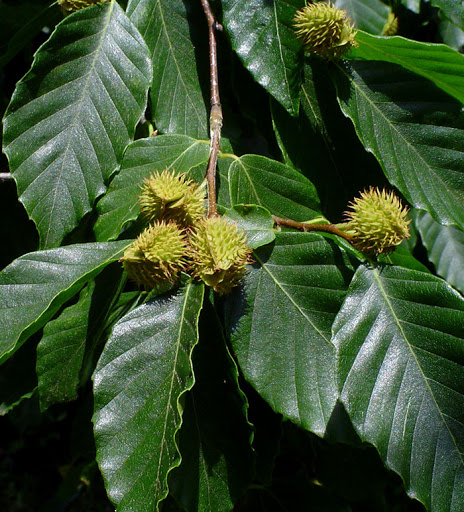
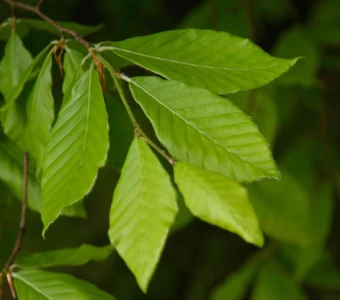
If you’ve ever been struck by the beauty of a beech forest on a golden autumn afternoon, you understand why this native tree deserves a place of honor in your landscape. American Beech grows into a graceful, spreading tree with a dense canopy and distinctly horizontal branching that creates an almost sculptural form. The bark remains smooth and gray throughout the tree’s life—gray like elephant skin, smooth like silk—which means it’s as beautiful in February as it is in July. The leaves are simple, elegant, and elliptical, with fine serrations along the edges. They emerge a tender lime-green in spring, deepen to a glossy dark green in summer, then transform into copper and bronze tones that persist well into winter, even as brown, papery leaves. In fall, small, triangular beechnuts develop in prickly husks—nature’s perfect packaging—and they’re beloved by wildlife throughout Connecticut.
Growing it in your garden
Growing American Beech is an exercise in patience rewarded. This tree thrives in our New England climate, preferring a slightly acidic soil with good drainage and consistent moisture during its establishment years. It’s not fussy about soil fertility, but it does appreciate a location with afternoon shade or dappled light—full sun in our hotter summers can stress younger trees. Unlike some shade trees, FAGUS GRANDIFOLIA doesn’t tolerate drought well once established, so a location where it receives gentle moisture throughout the growing season will see it flourish. Avoid compacted soils and root disturbance; beech trees develop sensitive, fibrous root systems that prefer undisturbed ground. Plant in spring or early fall to give roots time to establish before extreme weather.
Through the seasons
Spring arrives quietly, with unfurling leaves so pale and tender you can almost see light through them. By early summer, the canopy has filled in completely, creating the kind of dappled shade that makes you want to sit beneath it with a book. This is when the delicate, reddish flowers appear—small and easy to miss, but charming if you know to look for them. Summer sees those glossy green leaves at their finest, catching light beautifully even on overcast Connecticut days. Fall is when American Beech truly steals the show: those copper and bronze tones seem to glow from within, and the tree becomes a focal point of your garden’s autumn display. Winter reveals the tree’s remarkable architecture—those horizontal branches and smooth gray trunk create visual interest when everything else is dormant. And if you’re lucky, you’ll have wildlife visitors attracted to the fallen beechnuts throughout fall.
Where it shines
This tree is perfect as a specimen plant where you want it to be the focal point—perhaps on a lawn where its branching structure and smooth bark can be appreciated from all angles. It’s equally at home in a woodland garden or naturalized area, where it provides food and shelter for native Connecticut wildlife. American Beech works beautifully as a shade tree for a seating area, creating that cool, dappled light perfect for summer afternoons. Its moderate growth rate means it never becomes overwhelming, and its dense canopy makes it effective for privacy screening. If you’re creating a native plant garden that celebrates New England’s natural heritage, American Beech is a cornerstone plant.
Perfect companions
Beneath an American Beech’s canopy, shade-tolerant understory plants thrive. Consider native woodland perennials like trilliums, hellebores, and shade ferns. American Hornbeam and Eastern Hemlock make excellent companions for a woodland aesthetic. In a more formal setting, pair American Beech with smaller shade plants like Oakleaf Hydrangea or Rhododendrons. The smooth gray trunk and horizontal branching actually benefit from the textural contrast of fine-foliaged shrubs planted at a respectful distance.
Care tips
Young American Beeches benefit from consistent moisture their first two to three years; deep, infrequent watering encourages strong root development. Avoid fertilizing unless soil testing indicates a genuine deficiency—these trees prefer undisturbed, natural conditions. Prune only to remove damaged or crossing branches, and do this in late winter before growth begins. Be patient with growth rate; American Beech grows at a measured pace, but the wait is absolutely worth it. Watch for beech scale insect in Connecticut gardens, though healthy trees typically shrug this off. Never carve or wound the bark—those smooth gray trunks are part of the tree’s charm and vulnerability.
Quick facts
- Hardiness Zone: 4–9 (excellent for Connecticut)
- Mature Height & Spread: 50–70 feet tall, 40–50 feet wide
- Bloom Season: Spring (small, easily overlooked flowers)
- Light Requirements: Part shade to full sun (afternoon shade preferred in hot climates)
- Water Needs: Consistent moisture; prefers well-drained, acidic soil
- Available at: Both our retail and wholesale locations