Amethyst Falls Wisteria

WISTERIA X ‘AMETHYST FALLS’ (WISTERIA FRUTESCANS ‘AMETHYST FALLS’)

What if one plant could deliver the romance of an English cottage garden while actually thriving in Connecticut’s unpredictable climate? AMETHYST FALLS WISTERIA breaks the mold of its temperamental Asian cousins, offering New England gardeners a chance to grow this iconic beauty without the heartbreak. This is the wisteria that blooms reliably, behaves itself, and transforms whatever structure you give it into something straight out of a garden magazine.

What it looks like

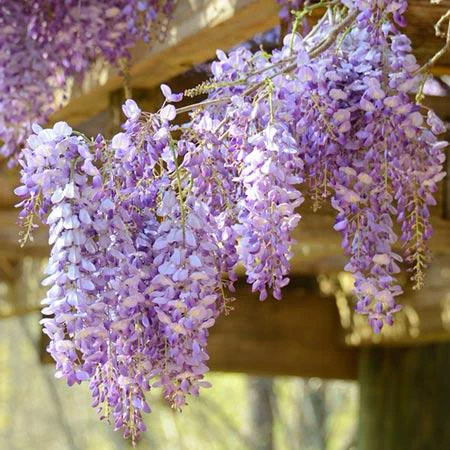
AMETHYST FALLS creates a living cascade of delicate, purple-blue flowers that seem to float on air. The blooms appear in elongated clusters—called panicles—that dangle gracefully from the vine like nature’s own jewelry. Unlike the massive flower clusters of Asian varieties, these are more restrained and refined, with an elegant lavender-purple color that deepens as they mature. The foliage is fine and feathery, composed of small leaflets that create dappled shade rather than the heavy, thick coverage of its Asian relatives. Even when bare in winter, the vine’s structure is attractive, with stems that develop character and texture as they mature.

Growing it in your garden

This is where AMETHYST FALLS truly earns its place in Connecticut gardens. It’s a deciduous vine that grows at a moderate, manageable pace—not the aggressive, overtaking monster that keeps many gardeners wary of wisteria. Plant it where it can climb a sturdy arbor, pergola, fence, or wall. It prefers full sun, though it’ll tolerate afternoon shade in hot summers. Give it well-draining soil enriched with compost at planting time, and water regularly during its first growing season to establish deep roots. Once established, it’s surprisingly drought-tolerant, which is a huge advantage during New England’s dry spells.

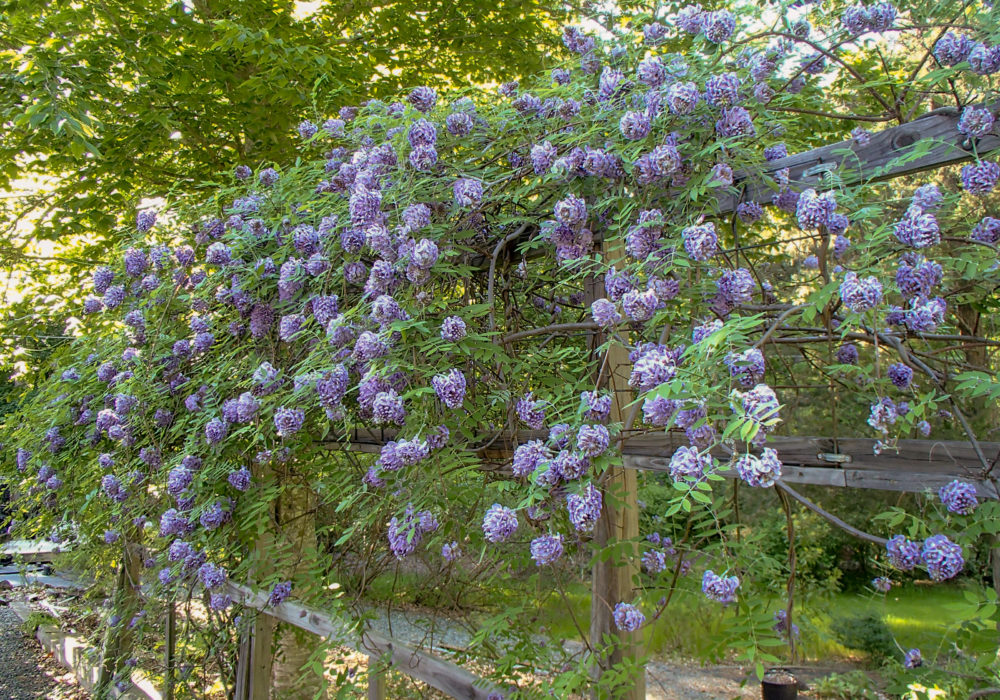
The real secret to success with AMETHYST FALLS is choosing the right structure. Make sure whatever you’re training it onto is solid—this vine will be there for decades, and you want it supported properly. Many gardeners use this variety on wooden pergolas, over mailboxes, or trained against stone walls where the flowers can cascade freely and catch the light.

Through the seasons

Spring is AMETHYST FALLS’ moment to shine. Flowers typically appear in May and June, with a lighter repeat bloom often coming in late summer if you deadhead spent flowers. There’s something almost magical about watching these lavender clusters unfurl—they open gradually over several weeks, extending the show. By early summer, the fine foliage has filled in completely, creating a fresh green backdrop. Fall color is subtle—the leaves turn a soft yellow before dropping. Winter reveals the architectural bones of the vine, which many gardeners find attractive against stone or brick.

Where it shines

AMETHYST FALLS performs beautifully as a specimen vine on a well-sited pergola where you can see it from your patio or garden seating area. It’s perfect for training over a modest arbor at the entrance to a garden bed or along a fence line where you want vertical interest without an overwhelming, jungle-like effect. Some gardeners train it to a sturdy wooden post for a more sculptural presence. In small to medium Connecticut gardens where Asian wisteria varieties would quickly consume everything in sight, this American hybrid is the answer. It’s also less aggressive than its cousins, making it a better neighbor to nearby plants.

Perfect companions

Plant AMETHYST FALLS where it can be framed by complementary shrubs and perennials. Clematis varieties bloom at different times and can share the same support structure, creating layered interest. Beneath the vine, consider shade-tolerant perennials like hostas, ferns, or hellebores that appreciate the dappled shade it casts. For color contrast, pair it with white-blooming companions like PHILADELPHUS or white clematis. If you’re training it along a fence, ornamental grasses at its base add movement and texture that play off the delicate wisteria foliage.

Care tips

Pruning keeps AMETHYST FALLS beautiful and manageable. In summer, cut back any vigorous shoots that are heading where you don’t want them. A harder prune in late winter—before growth starts—shapes the vine and encourages better flowering. Deadheading spent flower clusters encourages that lighter second bloom in late summer. Once established, it needs very little else: no special fertilizer, no coddling. The moderate growth habit means you won’t be battling it every season like you would with more aggressive varieties.

Quick facts

  • Hardiness Zone: 5-9 (reliably hardy throughout Connecticut and New England)
  • Mature Height & Spread: 15-20 feet with training
  • Bloom Season: May-June, with lighter repeat bloom in late summer
  • Light Requirements: Full sun to part afternoon shade
  • Water Needs: Regular during establishment; drought-tolerant once mature
  • Available at: Both our retail and wholesale locations

Amethyst Falls Wisteria

Wisteria frutescens is a deciduous, woodland flowering vine 25 – 30′ in length, native to the coastal plain along our southeastern states, around along the Gulf coast over to Louisiana and up the Mississippi Rivery valley to Arkansas and Kentucky. It grows in damp habitats.

Pot Size (gallons), Height: 5-6′

Description

Amethyst Falls Wisteria

WISTERIA X ‘AMETHYST FALLS’ (WISTERIA FRUTESCANS ‘AMETHYST FALLS’)

What if one plant could deliver the romance of an English cottage garden while actually thriving in Connecticut’s unpredictable climate? AMETHYST FALLS WISTERIA breaks the mold of its temperamental Asian cousins, offering New England gardeners a chance to grow this iconic beauty without the heartbreak. This is the wisteria that blooms reliably, behaves itself, and transforms whatever structure you give it into something straight out of a garden magazine.

What it looks like

AMETHYST FALLS creates a living cascade of delicate, purple-blue flowers that seem to float on air. The blooms appear in elongated clusters—called panicles—that dangle gracefully from the vine like nature’s own jewelry. Unlike the massive flower clusters of Asian varieties, these are more restrained and refined, with an elegant lavender-purple color that deepens as they mature. The foliage is fine and feathery, composed of small leaflets that create dappled shade rather than the heavy, thick coverage of its Asian relatives. Even when bare in winter, the vine’s structure is attractive, with stems that develop character and texture as they mature.

Growing it in your garden

This is where AMETHYST FALLS truly earns its place in Connecticut gardens. It’s a deciduous vine that grows at a moderate, manageable pace—not the aggressive, overtaking monster that keeps many gardeners wary of wisteria. Plant it where it can climb a sturdy arbor, pergola, fence, or wall. It prefers full sun, though it’ll tolerate afternoon shade in hot summers. Give it well-draining soil enriched with compost at planting time, and water regularly during its first growing season to establish deep roots. Once established, it’s surprisingly drought-tolerant, which is a huge advantage during New England’s dry spells.

The real secret to success with AMETHYST FALLS is choosing the right structure. Make sure whatever you’re training it onto is solid—this vine will be there for decades, and you want it supported properly. Many gardeners use this variety on wooden pergolas, over mailboxes, or trained against stone walls where the flowers can cascade freely and catch the light.

Through the seasons

Spring is AMETHYST FALLS’ moment to shine. Flowers typically appear in May and June, with a lighter repeat bloom often coming in late summer if you deadhead spent flowers. There’s something almost magical about watching these lavender clusters unfurl—they open gradually over several weeks, extending the show. By early summer, the fine foliage has filled in completely, creating a fresh green backdrop. Fall color is subtle—the leaves turn a soft yellow before dropping. Winter reveals the architectural bones of the vine, which many gardeners find attractive against stone or brick.

Where it shines

AMETHYST FALLS performs beautifully as a specimen vine on a well-sited pergola where you can see it from your patio or garden seating area. It’s perfect for training over a modest arbor at the entrance to a garden bed or along a fence line where you want vertical interest without an overwhelming, jungle-like effect. Some gardeners train it to a sturdy wooden post for a more sculptural presence. In small to medium Connecticut gardens where Asian wisteria varieties would quickly consume everything in sight, this American hybrid is the answer. It’s also less aggressive than its cousins, making it a better neighbor to nearby plants.

Perfect companions

Plant AMETHYST FALLS where it can be framed by complementary shrubs and perennials. Clematis varieties bloom at different times and can share the same support structure, creating layered interest. Beneath the vine, consider shade-tolerant perennials like hostas, ferns, or hellebores that appreciate the dappled shade it casts. For color contrast, pair it with white-blooming companions like PHILADELPHUS or white clematis. If you’re training it along a fence, ornamental grasses at its base add movement and texture that play off the delicate wisteria foliage.

Care tips

Pruning keeps AMETHYST FALLS beautiful and manageable. In summer, cut back any vigorous shoots that are heading where you don’t want them. A harder prune in late winter—before growth starts—shapes the vine and encourages better flowering. Deadheading spent flower clusters encourages that lighter second bloom in late summer. Once established, it needs very little else: no special fertilizer, no coddling. The moderate growth habit means you won’t be battling it every season like you would with more aggressive varieties.

Quick facts

  • Hardiness Zone: 5-9 (reliably hardy throughout Connecticut and New England)
  • Mature Height & Spread: 15-20 feet with training
  • Bloom Season: May-June, with lighter repeat bloom in late summer
  • Light Requirements: Full sun to part afternoon shade
  • Water Needs: Regular during establishment; drought-tolerant once mature
  • Available at: Both our retail and wholesale locations