
Description

ANGELONIA ANGUSTIFOLIA
What if one plant could deliver month after month of tall, elegant spikes of flowers without demanding constant deadheading, without throwing a tantrum in the heat, and without needing you to fuss over it constantly? Angelonia is exactly that plant—a quiet overachiever that Connecticut gardeners are just beginning to discover. Unlike some of the fussier annuals that sulk in our sometimes-unpredictable New England summers, Angelonia actually thrives in heat and humidity, making it perfect for those muggy July and August stretches when other plants start looking tired and stressed.
What it looks like
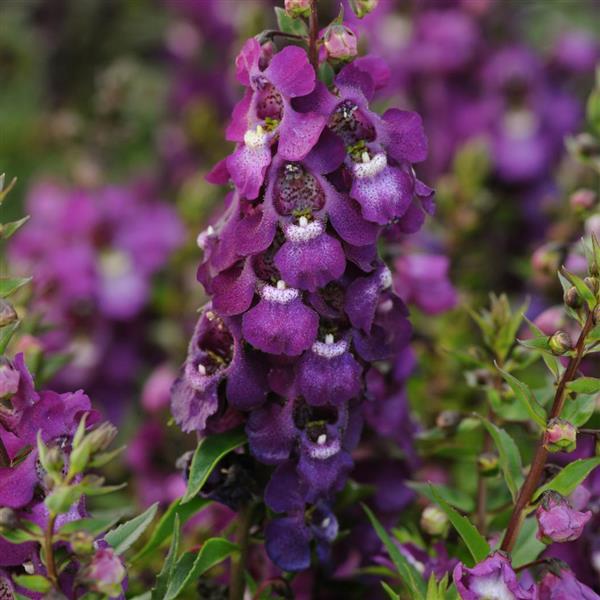
Angelonia grows into a graceful, upright plant with narrow, lance-shaped foliage that stays neat and attractive throughout the season. The real stars, though, are the flowers. Imagine delicate, two-lipped blooms stacked densely along tall, slender spires—they look almost like tiny snapdragons, which is why ANGELONIA is sometimes called the Summer Snapdragon. The flower spikes rise well above the foliage, creating beautiful vertical lines in the garden. Colors range from soft pastels like lavender, pink, and white to more dramatic purples and deep blues. Some varieties have charming bicolor combinations too.
Growing it in your garden
Here’s what makes Angelonia so refreshingly easy: it’s not fussy about soil. While it prefers well-draining conditions, it’s remarkably forgiving compared to many annuals. Full sun is its happy place—give it at least six hours of direct sunlight daily, and it’ll reward you with fuller, more abundant blooms. In Connecticut’s sometimes-muggy climate, that full sun exposure also helps prevent the fungal issues that can plague shade-grown plants. Space plants about 12 to 18 inches apart to allow for good air circulation. That’s it. Plant, water until established, and then step back and watch it perform.
Through the seasons
Angelonia is an annual, so it’ll bloom enthusiastically from late spring through the first frost. In Connecticut, you can expect flowers from late June straight through September and often into early October, depending on your location and the year’s weather. Unlike plants that peak in early summer and then fade, Angelonia maintains consistent, beautiful bloom throughout the hottest parts of the season. This makes it invaluable for keeping color in the garden during those dog days of August when so many other plants look exhausted.
Where it shines
Angelonia is a versatile performer. Use it in mixed borders where its vertical growth habit adds much-needed structure and elegance. It’s spectacular in containers—particularly tall planters where those flower spikes can really show off. Group several plants together in drifts for maximum impact, or use solitary specimens as focal points. Because it handles heat and sun so well, it’s perfect for difficult spots: south-facing walls, hot corners near pavement, or areas reflected heat from structures. It also works beautifully in cutting gardens; the flowers last quite well in a vase and just keep blooming on the plant even as you harvest.
Perfect companions
Angelonia’s vertical form pairs beautifully with mounding plants. Combine it with soft yellow LANTANA, dusty miller, or trailing verbena for textural contrast. Purple varieties look stunning next to silver-foliaged plants like artemisia. Try pairing pink Angelonia with white flowering plants like GAURA or cleome. The key is letting Angelonia’s elegant spikes be the hero—pair it with lower-growing or softer-textured companions that won’t compete for attention.
Care tips
Water deeply after planting, then water regularly during the establishment period. Once established, Angelonia is quite drought-tolerant compared to many annuals, though it’ll perform better with consistent moisture during dry Connecticut summers. Here’s the pleasant surprise: unlike snapdragons or petunias, Angelonia doesn’t require regular deadheading. The flowers fade and new ones keep opening below them continuously. That said, an occasional pinch or light trim in mid-summer can encourage branching and even fuller plants. Fertilize monthly with a balanced fertilizer, or use a slow-release formula at planting time. That’s genuinely all it needs.
Quick facts
- Hardiness Zone: Annual (10-11 in warmer climates)
- Mature Height & Spread: 18-24 inches tall, 12-18 inches wide, depending on variety
- Bloom Season: Late June through first frost (typically October in Connecticut)
- Light Requirements: Full sun (6+ hours direct sunlight)
- Water Needs: Regular watering; drought-tolerant once established
- Available at: Both our retail and wholesale locations