
Description
ARONIA MELANOCARPA
If you’ve been searching for something that handles wet soil, deep shade, and Connecticut winters without complaint, while simultaneously delivering year-round visual interest and feeding the birds that make your garden come alive—here it is. Black Chokeberry isn’t just another native shrub. It’s the kind of plant that earns its place in your landscape through sheer reliability and quiet beauty, season after season.
What it looks like
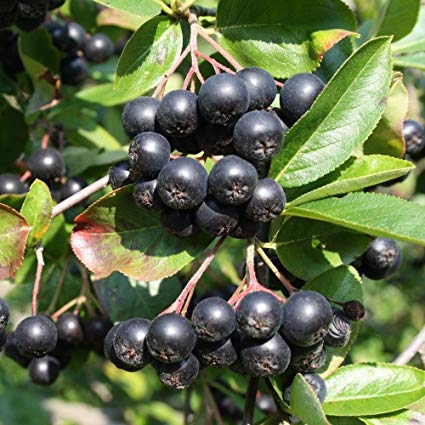
Black Chokeberry grows as a compact, multi-stemmed shrub with a naturally tidy, upright habit that requires minimal pruning to look intentional. In spring, delicate white or pale pink flowers appear in small clusters, creating an airy, understated elegance that doesn’t demand attention but rewards close observation. The real show begins in summer and carries straight through fall: glossy, deep green foliage that transitions to stunning burgundy and purple tones as temperatures drop. But the crowning achievement comes with the fruit. By late summer, glossy black berries emerge—almost metallic in their depth—and persist on the branches well into winter, even as the leaves drop. These aren’t just beautiful; they’re nutritional powerhouses that songbirds, migrating species, and wildlife simply cannot resist.
Growing it in your garden
This is where Black Chokeberry truly shines for Connecticut gardeners. Unlike fussy ornamentals that require perfect conditions, ARONIA MELANOCARPA is remarkably adaptable. It thrives in both wet and dry soils, making it ideal for that low spot in your yard that stays boggy in spring, or for drier areas under tree canopies where water is scarce. It handles full sun beautifully, but equally impresses in partial shade or even dense shade—a rare quality that makes it invaluable for problem areas. The plant is extremely hardy throughout New England and requires no special winter protection or coddling. Plant it in spring or fall, settle it into the soil with some organic matter worked in, and it will establish itself without drama.
Through the seasons
Spring arrives with those delicate, modest flowers that appeal to early pollinators when food sources are still scarce. Summer brings lush, healthy foliage and the beginnings of fruit development—a relatively quiet season, but the plant is quietly hardworking. Fall is when Black Chokeberry commands attention: the foliage becomes a stunning display of deep burgundy and purple, while the black berries reach peak glossy perfection. Winter is perhaps the most magical season here in Connecticut. After the leaves drop, the berries remain on bare branches like tiny black pearls, creating striking silhouettes against snow and providing essential food for cedar waxwings, robins, and other species during the lean months.
Where it shines
Use Black Chokeberry as a focal point in a native plant landscape, where its year-round presence anchors the design. Plant it in groupings of three or more for dramatic fall and winter impact. It’s exceptional in rain gardens and bioswales—those areas designed to temporarily hold and filter water—because it genuinely thrives where moisture lingers. Tuck it into shadier woodland borders, place it near windows where you’ll enjoy watching birds visit the berries, or use it to create a living privacy screen that’s wildlife-friendly and requires minimal maintenance. It’s also outstanding for native plant gardens, rain gardens, and any landscape designed with ecological value in mind.
Perfect companions
Black Chokeberry pairs beautifully with other Connecticut natives that share its adaptability. Consider pairing it with Winterberry Holly for extended berry season and textural contrast. Combine it with native ferns and woodland groundcovers like Pennsylvania Sedge in shadier spots. In mixed borders, it works wonderfully alongside fall-blooming Asters, native Goldenrod, and ornamental grasses like Panicum that provide complementary texture and seasonal interest. In sunnier locations, pair it with conifers like Eastern Red Cedar for structural contrast that carries through winter.
Care tips
Black Chokeberry is genuinely low-maintenance. Water regularly during the first growing season to establish a strong root system, then it becomes quite drought-tolerant. Minimal pruning is needed—simply remove any dead or crossing branches in late winter or early spring if desired. The plant’s dense habit naturally keeps weeds at bay. No fertilizer is necessary unless your soil is particularly poor; native plants like this one are evolved for typical Connecticut soils. It’s not bothered by pests or diseases that plague high-maintenance alternatives. This is gardening made simple.
Quick facts
- Hardiness Zone: 3–9 (thrives throughout Connecticut)
- Mature Height & Spread: 3–6 feet tall and wide (dwarf cultivars available)
- Bloom Season: May–June
- Light Requirements: Full sun to full shade
- Water Needs: Low to moderate; highly adaptable to wet or dry soils
- Available at: Both our retail and wholesale locations