CORNUS MAS ‘AUREO-ELEGANTISSIMA’

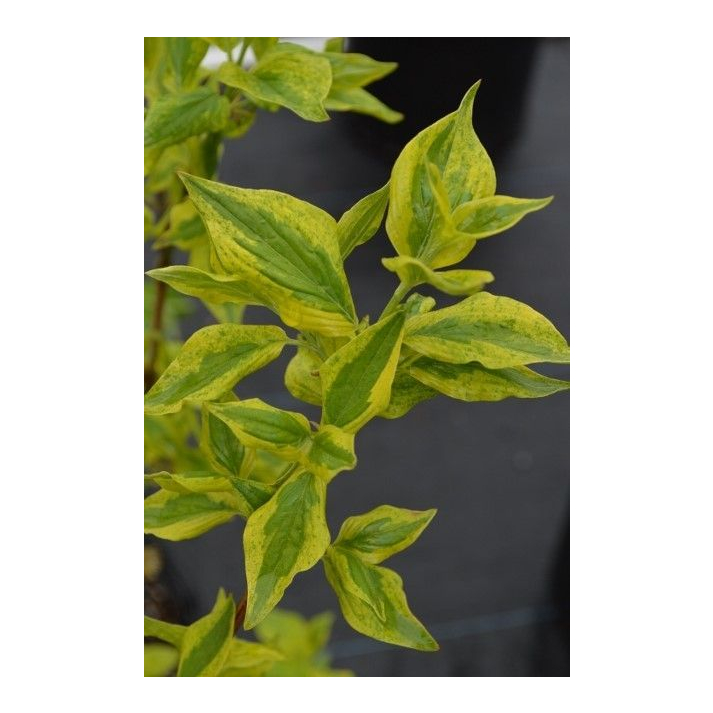
What if you could have a shrub that lights up your entire garden without a single flower? The Cornelian Cherry ‘Aureo-Elegantissima’ is that rare plant—a golden variegated beauty that brings warmth and shimmer to even the grayest Connecticut spring days. Unlike its solid-colored cousins, this cultivar features leaves splashed and streaked with butter-yellow and cream, creating a luminous effect that makes you stop and stare every time you pass. It’s the kind of plant that makes your neighbors ask, “What is that?” And when you tell them it’s also loaded with tiny golden-yellow flowers in early spring followed by edible red berries, they’ll want one too.

What it looks like

This is a deciduous shrub (occasionally trained as a small tree) with an elegant, upright-spreading habit. The real showstopper is the foliage: each leaf is deeply marbled and variegated with golden yellow and pale cream against a soft green base, creating a dappled, almost painted appearance that intensifies throughout the growing season. In early spring—often before most other plants wake up—it produces clusters of tiny, four-petaled flowers in a cheerful golden yellow that practically glow against the variegated leaves. These flowers give way to small, cherry-like fruits in late summer that ripen to a glossy ruby red. Even bare branches in winter have appeal, with smooth, warm-toned bark that catches winter light.

Growing it in your garden

The Cornelian Cherry ‘Aureo-Elegantissima’ is a wonderfully adaptable plant that settles into Connecticut gardens like it was meant to be here. It’s hardy through Zone 4 and unfussy about soil, tolerating everything from clay to sandy loam—even alkaline conditions that would fussy plants into a sulk. What it does love is full sun to part shade; this is where the golden variegation reaches peak intensity and the plant flowers most abundantly. While it will tolerate some shade, less light means more of that variegation can wash out, so give it the sunniest spot you can spare. It doesn’t require any coddling or staking and won’t spread aggressively or overtake its neighbors.

Through the seasons

Early spring brings the first real magic—those tiny golden flowers appear in March or April, sometimes even poking through late snow. They’re subtle and sophisticated, drawing in early pollinators when little else is blooming. Through May and June, the plant’s glory is its foliage, which seems to glow from within, especially in morning light. By July and August, the small red berries develop, hanging like tiny jewels among the golden-variegated leaves. The berries are tart and edible if you want to harvest them for jam (though birds will happily do it for you). Fall brings little color change before the leaves drop, but the overall effect is one of graceful transition. Winter reveals the plant’s attractive structure and quietly colored bark.

Where it shines

This is your answer if you want to brighten a shaded corner or add luminous interest to a mixed border. It works beautifully as a specimen plant where its unique foliage can be appreciated from multiple angles. Use it near seating areas where you’ll enjoy the spring flowers and summer berries up close. It’s also excellent in screens or informal hedges, where the variegation creates a softer, more artistic effect than solid green evergreens. In containers on patios or decks, its compact growth and stunning foliage make it a conversation starter. It’s particularly valuable in New England gardens because it flowers so early, before many other shrubs are even thinking about spring.

Perfect companions

Plant ‘Aureo-Elegantissima’ near dark-foliaged plants to make its golden variegation pop—think purple-leafed smokebush or dark heucheras. Shade-tolerant shade lovers like hellebores, pulmonarias, and epimediums create lovely understory combinations. Early-blooming companions like hellebores and winter aconite will echo its spring-forward nature. Ornamental grasses add movement and texture contrast beside its stiff branching habit. For a sophisticated look, pair it with white-flowering spring bulbs or the clean green of boxwoods.

Care tips

Once established, this is an easy plant. Water regularly during its first season to develop a strong root system, then it becomes quite drought-tolerant. Minimal pruning is needed—remove any dead or crossing branches in late winter. The plant naturally develops an attractive form without heavy-handed shaping. If you want to encourage bushier growth, light heading-back after flowering encourages branching. Watch for scale insects in summer and treat early if needed, though this plant is generally pest-resistant. In Connecticut, no winter protection is necessary.

Quick facts

  • Hardiness Zone: 4–8
  • Mature Height & Spread: 12–15 feet tall, 10–12 feet wide
  • Bloom Season: March–April
  • Light Requirements: Full sun to part shade (best variegation in sun)
  • Water Needs: Moderate; drought-tolerant once established
  • Available at: Both our retail and wholesale locations.
Aureo-Elegantissima ‘ Cornelian-Cherry

Category:

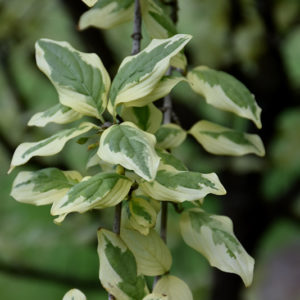
An elusive corneliancherry dogwood of considerable beauty showcasing deep green leaves prominently edged and accentuated with broad gold coloration. The show is at its best in spring yet is also quite prominent in summer, especially when the plants add considerable crops of thumb-sized red fruit. Though slower growing and more compact than the species plants add 4-6” of growth annually and are capable of adding considerable garden presence.

Pot Size (gallons), Height: 5-6′

Description

CORNUS MAS ‘AUREO-ELEGANTISSIMA’

What if you could have a shrub that lights up your entire garden without a single flower? The Cornelian Cherry ‘Aureo-Elegantissima’ is that rare plant—a golden variegated beauty that brings warmth and shimmer to even the grayest Connecticut spring days. Unlike its solid-colored cousins, this cultivar features leaves splashed and streaked with butter-yellow and cream, creating a luminous effect that makes you stop and stare every time you pass. It’s the kind of plant that makes your neighbors ask, “What is that?” And when you tell them it’s also loaded with tiny golden-yellow flowers in early spring followed by edible red berries, they’ll want one too.

What it looks like

This is a deciduous shrub (occasionally trained as a small tree) with an elegant, upright-spreading habit. The real showstopper is the foliage: each leaf is deeply marbled and variegated with golden yellow and pale cream against a soft green base, creating a dappled, almost painted appearance that intensifies throughout the growing season. In early spring—often before most other plants wake up—it produces clusters of tiny, four-petaled flowers in a cheerful golden yellow that practically glow against the variegated leaves. These flowers give way to small, cherry-like fruits in late summer that ripen to a glossy ruby red. Even bare branches in winter have appeal, with smooth, warm-toned bark that catches winter light.

Growing it in your garden

The Cornelian Cherry ‘Aureo-Elegantissima’ is a wonderfully adaptable plant that settles into Connecticut gardens like it was meant to be here. It’s hardy through Zone 4 and unfussy about soil, tolerating everything from clay to sandy loam—even alkaline conditions that would fussy plants into a sulk. What it does love is full sun to part shade; this is where the golden variegation reaches peak intensity and the plant flowers most abundantly. While it will tolerate some shade, less light means more of that variegation can wash out, so give it the sunniest spot you can spare. It doesn’t require any coddling or staking and won’t spread aggressively or overtake its neighbors.

Through the seasons

Early spring brings the first real magic—those tiny golden flowers appear in March or April, sometimes even poking through late snow. They’re subtle and sophisticated, drawing in early pollinators when little else is blooming. Through May and June, the plant’s glory is its foliage, which seems to glow from within, especially in morning light. By July and August, the small red berries develop, hanging like tiny jewels among the golden-variegated leaves. The berries are tart and edible if you want to harvest them for jam (though birds will happily do it for you). Fall brings little color change before the leaves drop, but the overall effect is one of graceful transition. Winter reveals the plant’s attractive structure and quietly colored bark.

Where it shines

This is your answer if you want to brighten a shaded corner or add luminous interest to a mixed border. It works beautifully as a specimen plant where its unique foliage can be appreciated from multiple angles. Use it near seating areas where you’ll enjoy the spring flowers and summer berries up close. It’s also excellent in screens or informal hedges, where the variegation creates a softer, more artistic effect than solid green evergreens. In containers on patios or decks, its compact growth and stunning foliage make it a conversation starter. It’s particularly valuable in New England gardens because it flowers so early, before many other shrubs are even thinking about spring.

Perfect companions

Plant ‘Aureo-Elegantissima’ near dark-foliaged plants to make its golden variegation pop—think purple-leafed smokebush or dark heucheras. Shade-tolerant shade lovers like hellebores, pulmonarias, and epimediums create lovely understory combinations. Early-blooming companions like hellebores and winter aconite will echo its spring-forward nature. Ornamental grasses add movement and texture contrast beside its stiff branching habit. For a sophisticated look, pair it with white-flowering spring bulbs or the clean green of boxwoods.

Care tips

Once established, this is an easy plant. Water regularly during its first season to develop a strong root system, then it becomes quite drought-tolerant. Minimal pruning is needed—remove any dead or crossing branches in late winter. The plant naturally develops an attractive form without heavy-handed shaping. If you want to encourage bushier growth, light heading-back after flowering encourages branching. Watch for scale insects in summer and treat early if needed, though this plant is generally pest-resistant. In Connecticut, no winter protection is necessary.

Quick facts

  • Hardiness Zone: 4–8
  • Mature Height & Spread: 12–15 feet tall, 10–12 feet wide
  • Bloom Season: March–April
  • Light Requirements: Full sun to part shade (best variegation in sun)
  • Water Needs: Moderate; drought-tolerant once established
  • Available at: Both our retail and wholesale locations.