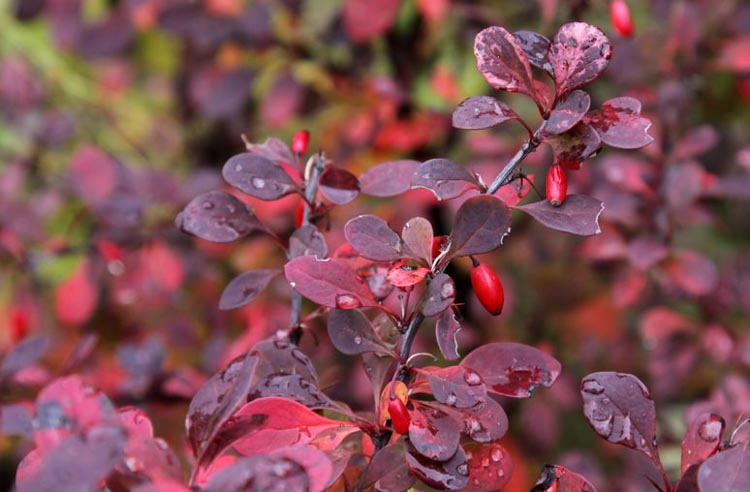
BERBERIS THUNBERGII ‘ROYAL BURGUNDY’

There’s a reason burgundy gets called “royal”—it commands attention without ever demanding it. BERBERIS THUNBERGII ‘ROYAL BURGUNDY’ does exactly that in the garden, offering deep wine-colored foliage that catches light like stained glass and turns heads from October through April. This is the barberry for gardeners who want drama with discipline, color with structure, and year-round interest that doesn’t quit.

What it looks like

Imagine a compact, densely branched shrub dressed in burgundy velvet for most of the year. ROYAL BURGUNDY barberry produces fine, narrow leaves in a rich deep red-purple that holds its color even as summer heats up—unlike some burgundy varieties that fade to bronze-green. The foliage gets even more vibrant as temperatures drop in fall, deepening to nearly black-wine as frost arrives. In spring, tiny pale yellow flowers appear along the stems, almost hidden by the foliage but sweetly scented if you lean in close. Later, small red berries develop and persist through winter, providing food for birds and adding another layer of visual interest when snow is on the ground.

Growing it in your garden

ROYAL BURGUNDY is refreshingly unfussy about where you plant it. It thrives in full sun to partial shade, though you’ll get the richest color saturation with at least six hours of direct sunlight daily. Connecticut’s variable spring and fall temperatures? Not a problem. Winter snow and ice? Bring it on. This barberry was bred for the kind of conditions New England throws at it, and it responds with vigor and reliability.

Soil-wise, ROYAL BURGUNDY adapts to almost everything Connecticut gardeners encounter—clay, sandy soil, acidic, alkaline, poor, rich. The only thing it truly won’t tolerate is sitting in waterlogged ground. If your planting area is prone to standing water, add some compost or sand to improve drainage, and you’re golden. Once established, this shrub is drought-tolerant, making it ideal for water-wise landscapes or those times when summer heat grips the region and watering becomes a challenge.

Through the seasons

Spring brings awakening—fresh burgundy leaves emerge, followed by those delicate pale flowers that seem almost ethereal against the dark foliage. Summer is when ROYAL BURGUNDY truly shines in the landscape. The color holds steady, providing a jewel-tone anchor to mixed borders and giving you something reliable when temperatures soar. Fall deepens the show, and as days shorten and temperatures cool, you’ll watch the foliage intensify, becoming nearly black-burgundy. Winter reveals the architecture of the plant—that dense branching structure—and the persistent red berries create striking contrast against snow or gray winter skies.

Where it shines

Plant ROYAL BURGUNDY where you want a focal point that works hard year-round. It’s superb as a hedge or screen—the dense growth and thorny nature (yes, it has thorns, which adds security if that’s a consideration) make it an effective barrier. In foundation plantings, it provides color and structure where evergreens might feel monotonous. Mixed borders love it because the burgundy foliage plays beautifully as a backdrop for both cool-toned and warm-toned plants. Container gardening? ROYAL BURGUNDY is excellent in large pots, giving you moveable color and interest on patios or entryways.

Perfect companions

The deep burgundy foliage of ROYAL BURGUNDY is a conductor’s baton for orchestrating color combinations. Pair it with silver-leaved plants like artemisia or dusty miller for sophisticated contrast. Bright lime-green foliage plants like golden duranta or chartreuse hostas create eye-catching drama beside it. White-flowering perennials and shrubs—think white coneflowers or white hydrangeas—glow against this dark backdrop. Even ornamental grasses with golden or copper tones look elevated next to ROYAL BURGUNDY’s deep tones.

Care tips

Pruning is optional but rewarding. You can let ROYAL BURGUNDY grow into its naturally dense, mounded shape, or prune in early spring to maintain a more formal appearance or control size. Remove any dead or obviously damaged branches in late winter. The thorns mean you’ll want gloves, but don’t let that deter you—the color payoff is absolutely worth it. Fertilizer is rarely necessary; ROYAL BURGUNDY performs well in average soil and doesn’t expect pampering.

Quick facts

  • Hardiness Zone: Zones 4–8 (reliably hardy throughout Connecticut)
  • Mature Height & Spread: 3–5 feet tall and wide
  • Bloom Season: Spring (April–May)
  • Light Requirements: Full sun to partial shade (best color in full sun)
  • Water Needs: Low to moderate; drought-tolerant once established
  • Available at: Both our retail and wholesale locations

Barberry ‘Royal Burgudy’

Category:

A petite mounding version of this garden stalwart. It has small soft leaves that hold their purple/red color all summer without fading. They even turn darker in the fall , to a ravishing black-red.

Zoning: 4-7
Pot Size (gallons), Height: #3

Description

BERBERIS THUNBERGII ‘ROYAL BURGUNDY’

There’s a reason burgundy gets called “royal”—it commands attention without ever demanding it. BERBERIS THUNBERGII ‘ROYAL BURGUNDY’ does exactly that in the garden, offering deep wine-colored foliage that catches light like stained glass and turns heads from October through April. This is the barberry for gardeners who want drama with discipline, color with structure, and year-round interest that doesn’t quit.

What it looks like

Imagine a compact, densely branched shrub dressed in burgundy velvet for most of the year. ROYAL BURGUNDY barberry produces fine, narrow leaves in a rich deep red-purple that holds its color even as summer heats up—unlike some burgundy varieties that fade to bronze-green. The foliage gets even more vibrant as temperatures drop in fall, deepening to nearly black-wine as frost arrives. In spring, tiny pale yellow flowers appear along the stems, almost hidden by the foliage but sweetly scented if you lean in close. Later, small red berries develop and persist through winter, providing food for birds and adding another layer of visual interest when snow is on the ground.

Growing it in your garden

ROYAL BURGUNDY is refreshingly unfussy about where you plant it. It thrives in full sun to partial shade, though you’ll get the richest color saturation with at least six hours of direct sunlight daily. Connecticut’s variable spring and fall temperatures? Not a problem. Winter snow and ice? Bring it on. This barberry was bred for the kind of conditions New England throws at it, and it responds with vigor and reliability.

Soil-wise, ROYAL BURGUNDY adapts to almost everything Connecticut gardeners encounter—clay, sandy soil, acidic, alkaline, poor, rich. The only thing it truly won’t tolerate is sitting in waterlogged ground. If your planting area is prone to standing water, add some compost or sand to improve drainage, and you’re golden. Once established, this shrub is drought-tolerant, making it ideal for water-wise landscapes or those times when summer heat grips the region and watering becomes a challenge.

Through the seasons

Spring brings awakening—fresh burgundy leaves emerge, followed by those delicate pale flowers that seem almost ethereal against the dark foliage. Summer is when ROYAL BURGUNDY truly shines in the landscape. The color holds steady, providing a jewel-tone anchor to mixed borders and giving you something reliable when temperatures soar. Fall deepens the show, and as days shorten and temperatures cool, you’ll watch the foliage intensify, becoming nearly black-burgundy. Winter reveals the architecture of the plant—that dense branching structure—and the persistent red berries create striking contrast against snow or gray winter skies.

Where it shines

Plant ROYAL BURGUNDY where you want a focal point that works hard year-round. It’s superb as a hedge or screen—the dense growth and thorny nature (yes, it has thorns, which adds security if that’s a consideration) make it an effective barrier. In foundation plantings, it provides color and structure where evergreens might feel monotonous. Mixed borders love it because the burgundy foliage plays beautifully as a backdrop for both cool-toned and warm-toned plants. Container gardening? ROYAL BURGUNDY is excellent in large pots, giving you moveable color and interest on patios or entryways.

Perfect companions

The deep burgundy foliage of ROYAL BURGUNDY is a conductor’s baton for orchestrating color combinations. Pair it with silver-leaved plants like artemisia or dusty miller for sophisticated contrast. Bright lime-green foliage plants like golden duranta or chartreuse hostas create eye-catching drama beside it. White-flowering perennials and shrubs—think white coneflowers or white hydrangeas—glow against this dark backdrop. Even ornamental grasses with golden or copper tones look elevated next to ROYAL BURGUNDY’s deep tones.

Care tips

Pruning is optional but rewarding. You can let ROYAL BURGUNDY grow into its naturally dense, mounded shape, or prune in early spring to maintain a more formal appearance or control size. Remove any dead or obviously damaged branches in late winter. The thorns mean you’ll want gloves, but don’t let that deter you—the color payoff is absolutely worth it. Fertilizer is rarely necessary; ROYAL BURGUNDY performs well in average soil and doesn’t expect pampering.

Quick facts

  • Hardiness Zone: Zones 4–8 (reliably hardy throughout Connecticut)
  • Mature Height & Spread: 3–5 feet tall and wide
  • Bloom Season: Spring (April–May)
  • Light Requirements: Full sun to partial shade (best color in full sun)
  • Water Needs: Low to moderate; drought-tolerant once established
  • Available at: Both our retail and wholesale locations