
Description
 There’s something quietly magnetic about the Black Birch. Walk past one on a winter afternoon, and you’ll understand why—its dark, glossy bark practically glows against the gray New England sky. But wait until you brush your hand against a twig in spring, and you’ll discover the real magic. That sweet, spicy aroma? That’s wintergreen, and it’s the signature scent that makes this Connecticut native impossible to ignore once you know it’s there. This is a tree that rewards close attention, the kind of plant that becomes a favorite precisely because it asks you to notice it.
What it looks like
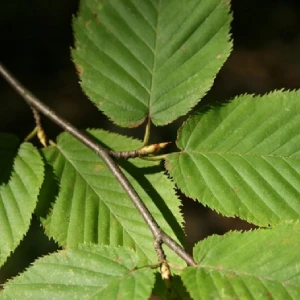
The Black Birch cuts a distinctive figure. Young trees wear smooth, dark mahogany-bronze bark with pale lenticels—those horizontal breathing pores that look like tiny dashes across the surface. As the tree matures, the bark deepens to almost charcoal black, developing subtle ridges but never the peeling quality of some birch relatives. The foliage is equally handsome: ovate leaves with serrated edges emerge in a fresh, limey green and deepen to rich forest green by summer. In fall, they turn a subtle butter yellow before dropping. Spring brings modest catkins that hang delicately from the branches—not showy, but charming in their restraint.
Growing it in your garden
Black Birch is one of Connecticut’s most adaptable native trees, and it handles the variable conditions that define our region with genuine ease. It prefers moist soil and actually does better in wetter situations than many ornamental trees—making it an excellent choice if you’re working with boggy spots or poorly drained areas where other specimens struggle. Unlike some birches that demand acidic soil, BLACK BIRCH LENTA is flexible enough to tolerate slightly alkaline conditions, which opens up possibilities for many New England gardens. Give it full sun to part shade; it performs beautifully in either, though you’ll get the densest branching and most vigorous growth in sunnier spots. The tree grows at a moderate pace, rarely becoming the problem that some faster-growing species can be.
Through the seasons
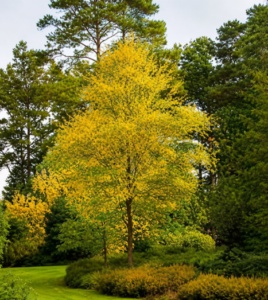
Spring arrives early for the Black Birch, with those slender catkins appearing before or just as leaves unfurl. Summer is when you’ll most appreciate the deep green canopy and the cooling shade it provides—plus you have the year-round option of crushing a twig between your fingers for that instant wintergreen reward. Fall brings that soft golden transformation, never garish but always elegant. Winter is when this tree truly earns its place in the garden. Without leaves to hide behind, the architectural beauty of that dark, lustrous bark becomes the main event. In a New England winter landscape, especially after a fresh snow, a mature Black Birch commands genuine presence.
Where it shines
This is a tree for naturalized settings and woodland gardens, though its refined appearance makes it equally at home in more cultivated landscapes. It’s particularly valuable along stream banks and in rain gardens where you want something native, elegant, and tough. The Black Birch also excels as a specimen tree where its winter bark can be appreciated from inside your home. Because it’s not fussy about soil type and handles moisture well, it’s an honest choice for challenging spots where you’re tired of watching things struggle. In mixed native plantings, it layers beautifully with understory shrubs and groundcovers.
Perfect companions
Pair Black Birch with other moisture-tolerant Connecticut natives: ILEX VERTICILLATA (winterberry) for winter berries, native dogwoods for flowering interest, and ferns for textural groundlevel detail. KALMIA LATIFOLIA (mountain laurel) thrives in the dappled shade of a mature Black Birch and offers spring blooms that bridge seasons. Shade-loving sedges and native wildflowers work beautifully at its base, creating a layered woodland effect without requiring supplemental fertilizer or coddling.
Care tips
Black Birch is genuinely low-maintenance once established. Water regularly during the first growing season to encourage deep rooting, then rely on natural rainfall afterward—this tree is built for New England precipitation patterns. No pruning is necessary unless you want to shape it young; the tree naturally develops good form. Birches can occasionally attract borers, but a healthy, properly sited tree rarely suffers significant damage. Avoid wounding the bark, and don’t be alarmed by minor insect activity that appears mid-season; native trees have native insect relationships that typically resolve themselves.
Quick facts
- Hardiness Zone: 3–9
- Mature Height & Spread: 40–60 feet tall, 25–40 feet wide
- Bloom Season: Spring (catkins)
- Light Requirements: Full sun to part shade
- Water Needs: Moist; tolerates wet soil
- Available at: Both our retail and wholesale locations